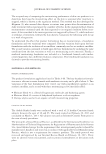
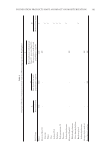
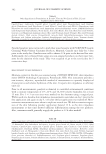
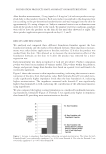
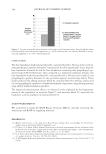
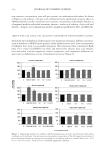
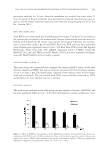
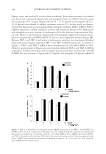
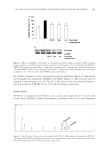
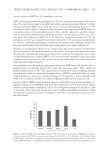
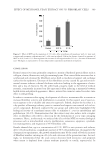
EFFECT OF METHANOL YEAST EXTRACT ON 3T3 FIBROBLAST CELLS 399 CONCLUSION Dermal connective tissue primarily comprises a matrix of hydrated protein fi bers such as collagen, elastin, fi bronectin, and glycosaminoglycans. This extracellular structure that is synthesized and colonized by fi broblasts serves both as mechanical support and exchange surface for the epidermis. Decrease of skin fi broblast activity caused by age and environ- mental stresses induces a dermal thickness reduction leading to the appearance of wrin- kles and a loss of elasticity. On the other hand, progress made in the fi eld of medical research, consistently increased our life expectancy often inducing a mismatch between health status and physical appearance. Hence, interest for cosmetics aimed to reduce time effect is still growing. In order to counteract skin aging, development of effective treatments able to sustain or increase fi broblast activity and proliferation is essential. In this regard, use of yeast ex- tracts appears to be a valuable and attractive approach. Indeed, despite the fact that it is a by-product of brewing industry, yeast is a natural and organic raw material rich in bio- active compounds. Research conducted by our group and others have highlighted the biological activity of a methanol extract able to stimulate S. cerevisiae metabolism and proliferation (16–19). Demonstration that this extract may also induce such a trophic effect on fi broblast cells will be a fi rst step for the formulation of a new topic antiaging treatment. Hence, in this study, we analyzed the effect of this MYE on various biological processes such as mitochondrial activity, proliferation, senescence, apoptosis, cytoskele- ton rearrangement, and migration of 3T3 fi broblast cells. Results showed that, up to a concentration of 0.1%, MYE is not cytotoxic and induces, after 72 h of incubation, a signifi cant increase of 3T3 cell proliferation. As suggested by clonogenicity experiments, the growth stimulation may be the result of both an increase of fi broblast number entering in cell cycle and a decrease of the generation time. Accord- ingly, we demonstrated that the yeast extract decreases both senescence and apoptosis when serum is depleted from culture medium (partially or totally, respectively). In Figure 9. Effect of MYE on the migration of 3T3 cells. After scratching cell monolayer with 2.2-mm-wide scrapper and treatment with mitomycin C, cells were incubated 24 h in the absence (control) or presence of MYE to 0.01% and 0.1%. Data represent the increase of cell migration after 24 h (i.e., decrease of the wound size). The fi gure is representative of four independent experiments performed in triplicate.

JOURNAL OF COSMETIC SCIENCE 400 addition, demonstration of F- and G-actin by fl uorescence microscopy revealed a signifi - cant modifi cation of cytoskeleton rearrangement that is characterized by an increase of actin fi bers. In agreement with this observation, we demonstrated that MYE induces a signifi cant increase of 3T3 fi broblast cells migration. Altogether, these results highlight the positive effect of MYE on fi broblast cells. In this view, one may assume that methanol extraction allows the recovery and the purifi cation of interesting bioactive compound(s) present in yeast cells. Of note, MYE is liquid at room temperature and, then, appears more suitable for use in cosmetics than yeast whole cells or classical yeast extracts. On the other hand, it should be stressed that nature of the bioactive compound(s) contained in MYE remains unknown, even if experimental data suggest a peptidic profi le (16–18). Up to now, LC-MS, IR, and NMR analyses failed to unambiguously identify this (or these) compound(s) ongoing preparative HPLC experi- ments are carried out in order to solve this question. AKNOWLEDGMENTS This study was supported by a grant from the Région wallonne (Theralev Project Conven- tion no. 816853). We thank Nadia Errami and Sabrine Zahout from the Institut Roger Lambion for their active contribution in this work and Guy Laurent from the Université de Mons-Hainaut for providing fl uorescent probes for actin detection. We are also indebted to Grégory Ploegaerts and Michel Van Krieken from the Institut Meurice for ICP analysis and Marie-Hélène Dupuche and Dominique Vinette from Sopura SA for fl uorescence mi- croscopy analyses. REFERENCES (1) J. Khavkin and D. A. Ellis, Aging skin: Histology, physiology, and pathology, Facial. Plast. Surg. Clin. North. Am., 19, 229–234 (2011). (2) J. Kanitakis, Anatomy, histology and immunohistochemistry of normal human skin, Eur. J. Dermatol., 12, 390–399 (2002). (3) L. Robert, J. Labat-Robert, and A. M. Robert, Physiology of skin aging, Pathol. Biol. Paris, 57, 336– 341 (2009). (4) L. C. Yourman, S. J. Lee, M. A. Schonberg, E. W. Widera, and A. K. Smith, Prognostic indices for older adults: A systematic review, JAMA, 307, 182–192 (2012). (5) P. U. Giacomoni, Ageing, science and the cosmetics industry. The micro-infl ammatory model serves as a basis for developing effective anti-ageing products for the skin, EMBO Rep., 6, Spec No:S45–48 (2005). (6) G. J. Fisher, S. Kang, J. Varani, Z. Bata-Csorgo, Y. Wan, S. Datta, and J .J. Voorhees. Mechanisms of photoaging and chronological skin aging, Arch. Dermatol., 138, 1462–1470 (2002). (7) Y. Ochiai, S. Kaburagi, K. Obayashi, N. Ujiie, S. Hashimoto, Y. Okano, H. Masaki, M. Ichihashi, and H. Sakurai, A new lipophilic pro-vitamin C, tetra-isopalmitoyl ascorbic acid (VC-IP), prevents UV- induced skin pigmentation through its anti-oxidative properties, J. Dermatol. Sci., 44, 37–44 (2006). (8) L. R. Gaspar, F. B. Camargo, Jr., M. D. Gianeti, and P. M. Maia Campos, Evaluation of dermatological effects of cosmetic formulations containing Saccharomyces cerevisiae extract and vitamins, Food Chem. Toxicol., 46, 3493–3500 (2008). (9) M. Simonoff, D. Shapcott, S. Alameddine, M. T. Sutter-Dub, and G. Simonoff, The isolation of glucose toler- ance factors from brewer’s yeast and their relation to chromium, Biol. Trace. Elem. Res., 32, 25–38 (1992). (10) J. Racek, L. Trefi l, D. Rajdl, V. Mudrová, D. Hunter, and V. Senft, Infl uence of chromium-enriched yeast on blood glucose and insulin variables, blood lipids, and markers of oxidative stress in subjects with type 2 diabetes mellitus, Biol. Trace. Elem. Res., 109, 215–230 (2006).
Purchased for the exclusive use of nofirst nolast (unknown)
From: SCC Media Library & Resource Center (library.scconline.org)