J. Cosmet. Sci., 65, 403–405 (November/December 2014) 403 No-lye not better than lye relaxers JENNIFER C. VAN WYK, KWEZIKAZI MKENTANE, FREEDOM GUMEDZE, and NONHLANHLA P. KHUMALO, Division of Dermatology, Groote Schuur Hospital, and Department of Statistical Sciences, University of Cape Town, South Africa. Accepted for publication August 17, 2014. The general perception that “no-lye relaxers are safer” is not based on valid scientifi c evidence. We are thus delighted by the contribution from Mamabolo and co-authors entitled, “Cos- metic and amino acid analysis of the effects of lye and no-lye relaxer treatment on adult black female South African hair” (1). The comparisons were based on six parameters (length, damage, straightness, softness, shine, and volume) made by fi ve subjects. One researcher assessed the same six parameters (but also added three others: split ends, dry- ness, and wash-off time). Comparisons also included amino acid analysis. The study raises various concerns, some of which may be minor omissions or typographic but others seem more fundamental: 1) It is not stated whether the hair was relaxed with both relaxers at the same time or at different times, on the same day or on different days? This is an important technicality as it can infl uence scalp irritation. 2) It is not stated whether the scoring system that was used for hair assessment was previ- ously published or specifi cally developed for the study—and if so, how it was validated. 3) How was the hair length measured? Were the 50 strands measured after removal from the scalp? How did the study participants measure their own hair? How many mea- surements were performed? Why are standard deviations not reported? 4) The table labels suggest that “means” were used for analysis instead of medians. The study utilized the non-parametric, Wilcoxon signed-rank test to determine the statis- tical signifi cance. 5) The “wash-off time” was not defi ned we inferred that it is the time that the relaxer treatment was left on before the subject complained of scalp irritation. The results indicate a 48 s difference between the lye (13.4 min) and no lye (14.2 min) relaxer. Although the difference was not statistically signifi cant (p = 0.690), the authors still used this as evidence that the no-lye relaxer caused less irritation and was safer than the lye relaxer. It is not clear how this conclusion was reached. Address all correspondence to Nonhlanhla P. Khumalo at n.khumalo@uct.ac.za.

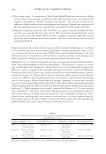
JOURNAL OF COSMETIC SCIENCE 404 6) The authors state, “A comparison of Table II and Table III indicates that product B (the no-lye relaxer) was assessed to perform better than product A (the lye relaxer) with regard to straightness, softness, shininess, and dryness.” Yet only the statistical sig- nifi cance of the researcher data for straightness was reported. Further, no comparison of the two relaxers is reported to conclude that one relaxer was better than the other. 7) Different confi dence intervals, 90% and 99%, are reported for the biochemical data, yet 95% was used for the rest of the article. We repeated the paired Student’s t-tests using manuscript data [Table VI] (1) at 95% confi dence intervals. Although cystine decreased after treatment with both relaxers, only the no-lye relaxer was statistical signifi cant (Table I). Studies document the adverse effects experienced by consumers following use of relaxers (2–4) however, few assess the biochemical and physical impact on Afro hair. Lee et al. (5), in a transmission electron microscopy (TEM) study, reported shaft damage in all three ethnicities (cuticle detachments, cell membrane complex, and hair cortex damage) seen with a single use damage increased with repeated chemical straightening. Mamabolo et al. (1) correlate the greater decrease in cystine after no-lye relaxer treatment with “increased straightness and better performance.” The decrease in cystine is a surro- gate for disulfi de bond disruption, which allows hair to be permanently straightened. However, cystine is crucial for hair strength and reduced levels are associated with fragile brittle hair that fails to grow long, similar to the hair in trichothiodystrophy, a genetic fragile-hair disease (6). Virgin African hair has identical sulfur staining (a surrogate for cystine) on TEM to “Asian and European hair” (6) however, it grows much shorter than that of other groups. Relaxed hair (which is straight compared to virgin hair) was also reported to grow much shorter than expected (7) and to have lower cystine levels in distal versus proximal hair (8). This led to the speculation that relaxers weaken hair and induce breakage (7). This hypothesis was recently confi rmed by Bryant et al. (9) who reported that, compared to virgin hair, relaxed hair had lower break stress and higher premature failure rates (more so in distal versus proximal hair. Thus, breakage in virgin hair is me- chanical from combing tight curls, whereas in relaxed hair, it is from chemical fragility. This partly explains the great length to which uncombed virgin Afro hair (dreadlocks) grows. Relaxers also cause contact dermatitis and alopecia (10–12). Table I p-Values for Pairs of Groups of Hair Samples Calculated Using Data (Cystine Levels) from Mamabolo et al.(1) Groups compared (n = 5) p-Value Mamabolo et al.(1) Original (1 used) CI Recalculated 95% CI BT vs. L 9.1[6.7–11.9] vs. 7.8 [2.5–9.9] 0.086 (p 0.1) 2.7 (0.20–5.20) [90% CI] 2.7 (−0.58 to 5.96) BT vs. N 9.1[6.7–11.9] vs. 4.0 [2.9–4.8] 0.005 (p 0.01) 5.38 (1–9.77) [99% CI] 5.38 (2.73–8.02) L vs. N 7.8[2.5–9.9] vs. 4.0 [2.9–4.8] 0.085 (p 0.1) 2.68 (0.16–5.20) [90% CI] 2.68 (−0.61 to 5.96) BT: before treatment, L: lye, N: no-lye, CI: confi dence interval for the mean difference.
Purchased for the exclusive use of nofirst nolast (unknown)
From: SCC Media Library & Resource Center (library.scconline.org)