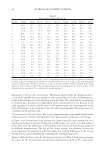
JOURNAL OF COSMETIC SCIENCE 32 The position of the extensional permanent test was similar to that used by Wortmann (4), who combined a static extensional permanent test with a dynamic method (5,6) and per- formed a bending test using hairs as loops hair. However, Wortmann reported only a modest correlation between the bending and extensional properties, suggesting that the desired goal of the present study does not seem to be possible. Therefore, the extensional permanent tests were performed using only the static method and a specially devised apparatus equipped with a tensile tester. In addition, the bending tests were performed in a carefully designed vessel in order to increase accuracy. The re- sults obtained using this approach were then compared to Wortmann’s results. Hair damage due to permanent treatment was defi ned as the ratio of the values for the Young’s modulus after and before treatment, and the 20% index values were used to es- timate the hair damage. EXPERIMENTAL METHODS All experiments were conducted on chemically untreated Japanese hair (except for the hair used in the hair-damage tests) obtained from “BOY beauty parlor” located in Japan. The hair fi bers were cleaned with a 1 g/100 g aqueous solution of sodium lauryl sulfate for 30 min, rinsed with de-ashed water for 1 h at room temperature, and then allowed to dry under ambient conditions. Single straight-hair fi bers with diameters of 55–70 μm were selected for the tests. Table I provides the origins and characteristics of the commer- cial wave lotions used in the tests. Manufacturers A, B, and C were selected as representa- tive manufacturers in Japan, and each manufacturer typically provides three product grades listed as S, N, and W, representing different molding strengths: strong, neutral, and weak, respectively. An aqueous solution (8 g/100g NaBrO3, pH 7.0) was applied as a neutralizer in all of the experiments. Deashed water was used in all the experiments. Table I Commercial Wave Lotions Used in Experiment Manufacturer Composition of sample Buffer system Sample (Waving lotion) Grade pH TGA (g/100g) DTDG (g/100g) A-S Manuf. A S 9.1 6.8 A-N Manuf. A N 8.6 6.5 NH3/NH4HCO3 A-W Manuf. A W 8.5 5.0 B-S Manuf. B S 8.8 6.2 B-N Manuf. B N 8.6 9.6 3.6 MEA/NH4HCO3 B-W Manuf. B W 8.0 6.4 C-S Manuf. C S 8.6 7.0 C-N Manuf. C N 7.8 6.8 NH3/NH4HCO3 C-W Manuf. C W 8.0 5.6 S, N, and W, strong, neutral, and weak strength of the wave lotions for molding TGA, ammonium salt of thioglycolic acid DTDG, ammonium salt of dithiodiglycolic acid MEA, monoethanolamine (2-aminoethanol). Analyzed according to the Japanese Standard for Permanent Waving Agents MHW amended Notifi cation No. 166, October 14, 1985.

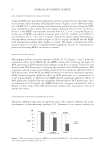
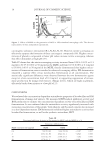
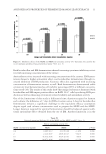
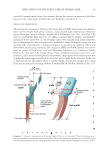
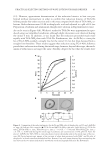
PRACTICAL SELECTING METHOD OF WAVE LOTION FOR HAIR DRESSER 33 EXTENSIONAL SETTING TEST The extensional setting experiments were performed on single hair fi bers in specially devised columns equipped with tensile tester (TENSILON UT-1-4-1, Toyo Baldwin, Tokyo, Japan). The columns are shown in Figure 1, and the experimental procedure is described sche- matically in Figure 2. The procedure of the extensional setting test was basically the same as that used by Wort- mann. However, there were some differences between the two methods. Figure 1. Apparatus used for the extensional permanent treatment. Column A is positioned on the lower jaw of the cross head of the tensile tester. Column B ensures a constant water level in Column A, such that the 20% index can be measured. Then, both columns A and B are combined and fi lled with water.
Purchased for the exclusive use of nofirst nolast (unknown)
From: SCC Media Library & Resource Center (library.scconline.org)