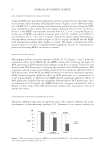
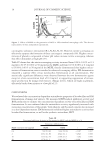
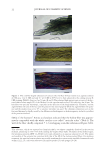
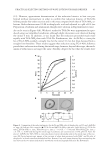
JOURNAL OF COSMETIC SCIENCE 34 First, the pretreatment of the hair was different. Wortmann conducted a stress–strain test in water with the hair held in the shape of the desired curve. The hair was then restored to its normal condition and mounted as a loop. Subsequently, the hair was relaxed for 20 min and then extended by 0.5%, after which the reduction/rinse/reoxidation/rinse sequence was initiated. In the present study, after selecting straight hairs and measuring their diameters, the fi bers were extended by 1.5% in water and then the reduction/rinse/ reoxidation/rinse sequence was immediately initiated. In addition, the hairs were not mounted as loops rather, each single hair was exactly fi xed to 120.0 mm as the original length to be extended before being placed in water. Thus, the hairs were not relaxed in water for 20 min followed by reduction with physical relaxation of the hair. The differ- ences in the procedures are due to the fact that in the present study, the aim was to simu- late the actual process used in beauty parlors. Second, the method used to determine the set length during the extensional test was dif- ferent. Wortmann determined the initial extended length and the set length after treat- ment by extrapolating the stress–strain curve to zero. We determined these lengths by direct measurement of the extended and set lengths using a method developed in house (see Step 6: Measurement of the set length). Third, the method for measuring the Young’s modulus of the hairs after treatment was different. Wortmann determined the value of the Young’s modulus using a dynamic method. In the present study, a static method performed under the same conditions as those used to measure the stress in water was employed (see section Step 7: Extension). Prior to the experiments, experimental column and single wet hair fi ber were prepared as described in the following section. Experimental column equipment. Specially designed experimental equipment was used for this study. As can be seen in Figure 1, glass columns A and B were connected via a tube Figure 2. Graphical depiction of the procedure adopted for measuring the extensional permanent treatment. Typical experimental curve obtained for a static extensional permanent treatment.

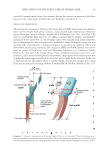
PRACTICAL SELECTING METHOD OF WAVE LOTION FOR HAIR DRESSER 35 attached to the bottom of each column. Column A was mounted on the lower jaw of the cross head of a tensile tester, and Column B was mounted on a stand with which the height of the column could be controlled. A single straight hair was exactly fi xed down the middle of Column A through a silicon stopper. Column A could be separated from Column B by shutting the lower jaw and closing the three-way stopcock. All permanent treatments of the fi bers were conducted in Column A. Column B was used to adjust the water level of Column A during measurement of the 20% index. Because the water level in Column A rose and fell with the movement of the cross head, the water level in Column A was kept constant by using Column B as an overfl ow system for measuring the 20% index. The temperature of the solution in the columns was maintained at 30°C using water circulating at a constant temperature through a jacket surrounding the columns. Fixing a single wet hair fi ber in the experimental apparatus. First, the standard position for the test was determined by placing a 120.0-mm-high metal block on the lower jaw and adjusting the position of the cross head such that the distance between the edge of the upper and lower jaws could be set exactly at 120.0 mm, as shown in Fig- ure 1. Second, one end of the hair fi ber was connected to a 100-g load cell using the upper jaw, and the other end was passed through the fi ne path of the silicon stopper and connected to a small 0.5-g weight in order to straighten the fi ber. After shutting the lower jaw using 3.0 kg/cm2 of air pressure and closing the three-way stopcock, Column A was fi lled with water. The straight hair fi ber was loosened in the water for 5 min. The water was then discharged, the lower jaw opened, and the wet fi ber was allowed to straighten. Subsequently, the lower jaw was shut and, if the fi ber loosened, the lower jaw was opened and the cross head was moved to a slightly higher position, whereupon the lower jaw was again shut at this position and the cross head was moved down such that the wet fi ber could be fi xed at the standard position without slack. By repeating this procedure through trial and error, the standard conditions for a 120.0- mm–long fi ber tensioned without slack in water with zero strain and stress at the stan- dard position was satisfi ed. Treatment procedure as illustrated in Figure 2. Step 1: Extension. The tensile tester was programmed to extend a single hair fi ber by 1.8 mm (1.5% of the original length) at a rate of 5.0 mm/min in water (1.5% extension) and re- turn to its original position. The extension was recorded at 200 mm/min on recording paper to confi rm the accuracy of the extended length. The value “Fo” measured here was regarded as an index of the Young’s modulus of the fi ber before permanent treatment. Step 2: Reduction. While retaining the strain, the water was discharged by opening the stopcock, and after the stopcock was closed again, a given waving lotion was im- mediately poured into the mouth of the column. Relaxation began at the point la- beled “R” in Figure 2, and the stress gradually decayed (recording speed: 10 mm/min). At a reduction time t (min), the waving lotion was discharged. The value Ft measured here was the apparent residual stress due to reduction and included the swelling stress.
Purchased for the exclusive use of nofirst nolast (unknown)
From: SCC Media Library & Resource Center (library.scconline.org)