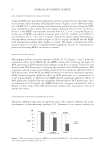
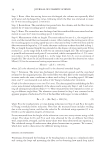
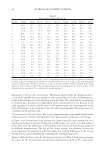
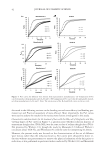
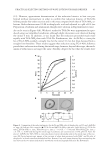
JOURNAL OF COSMETIC SCIENCE 60 same kinetics for the fi rst 4 h unlike sirt4, which responds inversely. Interestingly, a sub- sequent rise in transcription was observed for sirt6 after 6 h that was not detected in either sirt1 or sirt3 and may refl ect an increased need for DNA base repair related to cell cycle kinetics and replication. When NHEK were then either exposed to 10 mJ/cm2 UVB or sham-irradiated under the same conditions, a different pattern of sirtuin expression emerged. As shown in Figure 1. (A) Real-time RT-PCR analysis of sirtuin expression in synchronized NHEK 0, 2, 4, 6, and 8 h after repletion in complete media. Values were normalized to GAPDH housekeeping genes and expressed as 1 at the zero time point using the calculation method: 2−ΔΔCT. Sirt1, 3, and 6 followed a similar temporal pattern of expression whereas sirt6 increased at the 6-h time point. (B) UVB (10 mJ/cm2) irradiation of NHEK, followed by repletion in complete media, disrupted sirtuin expression over time although sirt6 ap- peared to recover and increase at the 6-hour time point. Error bars were calculated for both graphs using S.E. measurement (n = 3).

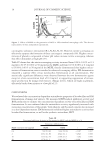
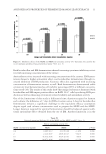
SIRTUIN EXPRESSION AS A FUNCTION OF TIME AND UVB IN EPIDERMAL KERATINOCYTES 61 Figure 1b, there is an abrogation of expression as a result of UVB irradiation indicating that, at a non-cytotoxic dose of UVB, as measured by the Alamar Blue assay for cell via- bility (data not shown), sirtuin expression is signifi cantly reduced. Thus, in the fi rst hours after irradiation, sirt 1, 3, and 6 are all reduced in contrast to their unirradiated controls. Sirt4 activity also changed after UVB exposure and instead of a reduced amount of activ- ity over the fi rst 4 hours, as seen in the controls, an overall increase that peaked at 8 h was also noted. Since SIRT4 inhibits the ability of glutam ate dehydrogenase to convert glu- tamate to α-ketoglutarate, leading to ATP synthesis, an increase in SIRT4 should con- tribute to reduced ATP levels. Inversely, impairment of SIRT3 activity by UVB exposure should also lead to reduced ATP levels due to a reduction in acetyl CoA synthetase activa- tion. Moreover, despite these changes, sirt6 recovered the fastest after 8 h again possibly due to its importance in DNA repair, genome maintenance, and infl ammation control. To determine the impact on energy production, the effects of 10 mJ/cm2 UVB on ATP and ROS were also measured in NHEK over time and correlated to sirtuin expression. Since sir- tuins are closely related to metabolism, we expected a strong effect on these after UVB expo- sure due to the loss of sirtuin expression. In Figure 2(A), a reduction in ATP was observed after UVB irradiation. Unexposed samples followed a temporal pattern similar to sirtuins 1, 3, and 6 expression and inversely to sirtuin 4 expression and demonstrate a correlation to metabolism. Alternatively, Figure 2(B) shows an increase in H2O2 in response to UVB com- pared to unexposed controls. Thus, after irradiation, an increase in H2O2 and a concomitant reduction in ATP were observed, which closely resembled the UVB-exposed expression pro- fi les for the sirtuins except for sirt6 at the 8 h time point. Signifi cant reduction in ATP as a result of UV exposure clearly correlates to changes in sirtuin transcription profi les. Figure 2. (A) ATP levels were plotted at 0, 2, 4, 6, 8, and 10 h after repletion with complete media and either exposed to UVB radiation or sham-irradiated. A temporal pattern similar to sirtuin expression was observed. However, UVB irradiation signifi cantly disrupted this pattern. (B) H2O2 levels in NHEK were plotted at 0, 2, 4, 6, 8, and 10 h after repletion with complete media and either exposed to UVB irradiation or sham-irradiated. UVB exposure signifi cantly increased H2O2 levels which were observed to modulate over time. Error bars were calculated for both graphs using S.E. measurement (n = 3).ABAB
Purchased for the exclusive use of nofirst nolast (unknown)
From: SCC Media Library & Resource Center (library.scconline.org)