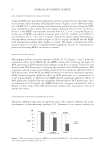
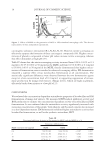
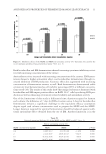
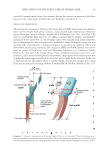
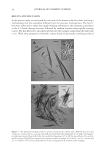
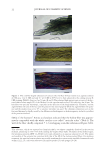
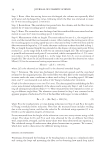
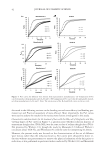
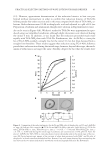
JOURNAL OF COSMETIC SCIENCE 8 CELL VIABILITY ESTIMATION USING MTT ASSAY Using the MTT assay procedures performed in previous studies (30,31), this study evalu- ated cytotoxic effects of mango leaf fermented extracts. Figures 2 and 3 show the viabili- ties of RAW 264.7 cells for mango leaf fermentation extracts measured using the MTT assay. Compared to the control, the cell viability decreased from 97.70%, 93.26% to 85.82% as the MEFE concentrations increased from 0.5, 1.25 to 2.5 mg/ml (Figure 2). In the case of MLFE, cell viability measures were 102.78%, 94.88%, and 85.90% at concentrations of 0.5, 1.25, and 2.5 mg/ml, respectively, which clearly demonstrates a dose-dependent cytotoxicity effect (Figure 3). At 0.5 mg/ml, the MEFE and the MLFE both demonstrated similar safety profi le to control. The higher concentrations of fer- mented extracts (1.25 and 2.5 mg/ml) showed signifi cant increase in cytotoxicity ex- pressed in decreasing EDA% in contrast to control. REACTIVE OXYGEN SPECIES Macrophages produce excessive amounts of ROS (32,33). Figures 4 and 5 show the antioxidant effects of the MLFE and the MEFE evaluated by estimating the degree of ROS generation in LPS-stimulated macrophages using fl ow cytometry. Untreated cells showed weak DCF fl uorescence, indicating the minimal level of ROS generation. LPS treatment induced a large amount ROS, evidenced by the signifi cant rightward shift of DCF fl uorescence. Both MLFE and MEFE showed a concentration-dependent response. MLFE showed marginal inhibitory effect on ROS generation at a concentration of 0.125 mg/ml (Figure 4). However, the MEFE showed signifi cant inhibitory effects of ROS generation, evidenced by the remarkable leftward shift of DCF fl uorescence. At a concentration of 0.05 mg/ml, the MEFE showed the strongest antioxidative effects (Figure 5). The results show EM fermentation enhances the antioxidative effects of mango leaf extract. ESTIMATION OF TYROSINASE INHIBITORY ACTIVITY Tyrosinase inhibition may play an important role in the cosmetic industry and in the development of skin-whitening products (34). Tyrosinase is an enzyme involved in Figure 2. Effects of mango leaf extracts MLFE vs. Control on RAW 264.7 cell viability measured by MTT assay. Data expressed as mean ± S.D. (n = 3).

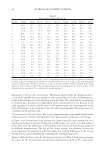
ANTIOXIDANT PROPERTIES OF FERMENTED MANGO LEAF EXTRACTS 9 production of melanin, which increases the immunity of the skin but may also accelerate skin damage in excessive amounts (35). Table III shows the increase in tyrosinase inhibitory activity from 7.89% to 15.78% and from 8.64% to 29.82%, with increasing concentrations of the MLFE and the MEFE, respectively. Both fermentation extracts had increasingly stronger tyrosinase inhibitory activity with increasing concentrations. All concentrations of the MEFE demonstrated statistically signifi cant increase in tyrosinase inhibitory activity com- pared to the MLFE (Figure 6). NITRITE-SCAVENGING ABILITY Nitrites can react with secondary amines (e.g., having a substituted hydrocarbon group R for two of the hydrogen atoms, and forming a R1 –R2–NH compound), to produce a Figure 3. Effects of mango leaf extracts MEFE vs. Control on RAW 264.7 cell viability measured by MTT assay. Data expressed as mean ± S.D. (n = 3). Figure 4. Effects of MLFE on the generation of ROS in LPS-stimulated macrophage cells. The data are rep- resentative of three independent experiments.
Purchased for the exclusive use of nofirst nolast (unknown)
From: SCC Media Library & Resource Center (library.scconline.org)