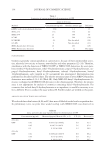
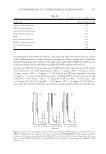
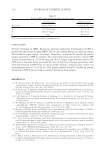
J. Cosmet. Sci., 66, 95–111 (March/April 2015) 95 Optimal aluminum/zirconium: Protein interactions for predicting antiperspirant effi cacy using zeta potential measurements SHAOTANG YUAN, JOHN VAUGHN, IRAKLIS PAPPAS, MICHAEL FITZGER ALD, JAMES G. MASTERS, and LONG PAN, Colgate-Palmolive Company Piscataway, NJ 08854 Accepted for publication February 11, 2015 Synopsis The interactions between commercial antiperspirant (AP) salts [aluminum chlorohydrate (ACH), acti- vated ACH, aluminum sesquichlorohydrate (ASCH), zirconium aluminum glycine (ZAG), activated ZAG], pure aluminum polyoxocations (Al13-mer, 30 Al -mer), and the zirconium(IV)–glycine complex ¯12+ ¡ ° 6 2 4 4 8 8 Zr O OH H O Gly (CP-2 or ZG) with Bovine serum albumin (BSA) were studied using zeta potential and turbidity measurements. The maximal turbidity, which revealed the optimal interac- tions between protein and metal salts, for all protein–metal salt samples was observed at the isoelectric point (IEP), where the zeta potential of the solution was zero. Effi cacy of AP salts was determined via three parameters: the amount of salt required to fl occulate BSA to reach IEP, the turbidity of solution at the IEP, and the pH range over which the turbidity of the solution remains suffi ciently high. By comparing active salt performance from this work to traditional prescreening methods, this methodology was able to provide a consistent effi cacy assessment for metal actives in APs or in water treatment. INTRODUCTION Charge neutralization (coagulation) and sweep fl occulation are well-known mechanisms of action between cationic coagulants and organic matter in the treatment of waste water (1,2). Salts of aluminum such as aluminum polyoxocations, aluminum chlorohydrate (ACH), or aluminum chloride (AlCl3) are often selected to treat waste water because they exhibit strong coagulation and fl occulation behavior (3–6). Besides water treatment and many other applications, these salts are the predominant active ingredients employed in antiperspirant (AP) formulations, which reduce more than 20% perspiration and show considerable odor inhibition in the underarm area (7,8). “Plug Theory,” a well-known theory of sweat reduction proposed by Reller and Luedders (9), postulates that dissolved AP salts diffuse into the sweat duct and are hydrolyzed upon contacting with sweat to form an amorphous metal hydroxide plug that physically blocks the escape of sweat from Address all correspondence to Long Pan at long_pan@colpal.com.
Purchased for the exclusive use of nofirst nolast (unknown)
From: SCC Media Library & Resource Center (library.scconline.org)