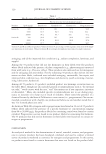
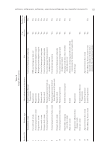
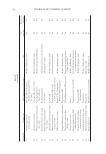
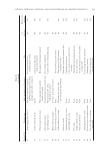
JOURNAL OF COSMETIC SCIENCE 96 the duct. On the basis of the plug model, it is clear that the effi cacy of AP salts critically dependents on the speed and depth with which the salt penetrates into the sweat glands to form a strong plug—deeper and less superfi cial plugs will be more substantive (10– 14). Bearing this in mind, actives of a smaller particle size should show better effi cacy. Consequently, the assessment of AP effi cacy lies mostly in particle size analysis, i.e., size- exclusion chromatography and light scattering. In addition to Plug Theory, other interpretations of this process are also plausible. For instance, previous research has investigated the interaction and formation of fl oc between metal cations or complexes and biomolecules (15–21). Since biomolecules (e.g., proteins) are important components of sweat (22), it is also conceivable that metal ions of AP salts react with the biomolecules in sweat to form water-insoluble complexes, which in turn triggers plug formation in the sweat gland. This mechanism would be similar to the mechanism of coagulation and fl occulation in water treatment. These interactions be- tween metal cationic species and biomolecules can be analyzed by zeta potential (ζ-potential) characterization, which is a powerful technique in the evaluation of coagu- lant agents in water treatment (13,23–26). ζ-Potential is the surface charge of a particle in a colloid system, and is a strong indica- tor for fl oc formation (23–28). Isoelectric point (IEP) or point of zero charge is the pH at which the solution has a zero ζ-potential. At this point, the lack of repulsive forces between dissolved substances and suspended colloids induces coagulation and precipi- tation (24). Gauckler and coworkers (27) proposed a two-step adsorption of bovine serum albumin (BSA) onto Al2O3 particles surface by ζ-potential measurement. Another study by Perry and coworkers (16) also used ζ-potential to demonstrate the interaction of aluminum polyoxocations (Al13-mer and Al30-mer) with BSA or lyso- zyme. However, to date, the critical coagulation ratios between commercial APs and a representative protein (BSA) have not been systematically characterized by using ζ-potential measurement. In this report, we present what’s believed to be the fi rst study of commercial AP actives and BSA by using ζ-potential and turbidity measurements with a focus on the forma- tion of insoluble AP–BSA complexes at the pH where ζ-potential of the solution is zero, and we use the term IEP to indicate this pH of AP–BSA complex under our experiment condition. We envision a critical ratio of polycation/protein characterized by the point where the ζ-potential of the system is zero. This ratio governs the precipitation process due to the optimal interaction between protein and AP salts, and would serve as an indicator of the effi cacy of the species in question. The goal of this work is to explore the possibility of using ζ-potential as a means to predict the effi cacy of AP actives and other simple Al or Zr salts and to guide us to develop more effi cacious AP salts. We also note that the proposed mechanism of plug formation with proteins in the sweat duct is very similar to the accepted mechanism of coagulation and fl occulation in primary water treatment. MATERIALS AND METHODS BSA and glycine were purchased from Sigma-Aldrich (St. Louis, MO). ACH, [Al2(OH)5Cl·H2O, 81.6% actives, 25.2% Al] and activated ACH, [Al2(OH)5Cl·H2O, 82% actives, 25.4% Al] aluminum sesquichlorohydrate (ASCH), [Al2(OH)4.8Cl1.2·H2O,

OPTIMAL ALUMINUM/ZIRCONIUM—PROTEIN INTERACTIONS 97 82% actives, 24.3% Al] aluminum zirconium glycine (ZAG) (Al3.6ZrCl3.3(OH)11.5·Gly, 77% actives, 14.9% Al, 14.2% Zr) and activated ZAG (Al3.6ZrCl4(OH)10.8·Gly, 74% actives, 13.9% Al, 13.3% Zr) were purchased from Summit (Huguenot, NY). Zirco- nium dichloride oxide, aluminum nitrate and aluminum chloride were purchased from Alfa Aesar (Ward Hills, MA). Concentrated hydrochloric acid, sodium carbonate and sodium hydroxide were purchased from J. T. Baker (Phillipsburg, NJ). The weight per- centage active and metal in the AP salts were provided by the certifi cates of analysis from suppliers. ZG (zirconium (IV)–glycine complex, [Zr6(O)4(OH)4(H2O)8(Gly)8]·12Cl·8H2O, 88.74% actives, 29.59% Zr), was prepared according to previous procedures (29) with slight modifi cation. Briefl y, 120 mmol of zirconium dichloride oxide octahydrate (ZrOCl2· 8H2O) and 177 mmol of glycine were placed in a fl ask with 500 ml deionized (DI) water. Concentrated HCl (4.5 ml, 33% wt) was added into this solution. The mixture was heated under refl ux at 80°C under vigorously stirring for 20 h. The product was collected as an off-white powder via freeze-drying. Powder X-ray diffraction analysis was performed to confi rm that the ZG powder was identical to the one reported in the literature (29). Al13-mer, AlO4Al12(OH)24(H2O)12(NO3)7 (80.09% actives, 23.8% Al), was prepared following the previous literature (30) and was confi rmed by both (27)Al nuclear mag- netic resonance (NMR) (AlTd: E= ~63ppm) and dynamic light scattering (0.5 nm radii) (17). The Al13-mer was prepared by adding 300 ml of a 0.6M Na2CO3 solution drop- wise into 300 ml of 0.5 M Al(NO3)3·9H2O solution at 75°C under vigorous stirring over a 3-h period. The hydrolysis ratio of [OH-]/[Al3+] was 2.46. The reaction was then cooled to room temperature and allowed to sit overnight. Slight white precipitate was removed by fi ltration. The fi ltrate was freeze-dried to remove water, and a white powder was collected (30). Al30-mer, Al30O8(OH)56(H2O)24Cl18 (80.74% actives, 27.3% Al), was prepared following the previous literature (32) and was confi rmed by both (27) Al NMR (AlTd: E = 70 ppm) and dynamic light scattering (1.0 nm radii) (17). The Al30-mer was prepared by drop- wise addition of 2 M NaOH solution into a 0.3 M AlCl3 solution at 95°C under fast stirring. The hydrolysis ratio of [OH-]/[Al3+] was 2.40. After the addition of NaOH, the solution was heated and stirred at 95°C for 48 h. The product was freeze-dried to remove water and a white powder was collected (31,32). ZG, Al13-mer, and Al30-mer were prepared by Colgate-Palmolive (Piscataway, NJ). Weight percentage active of these three compounds were calculated based on metal, OH or O, and Cl contents. PREPARATION OF PURE BSA, PURE AP, AND AP–BSA MIXTURE SOLUTIONS BSA solutions of 1, 5, 10, 20, and 40 mg/ml were prepared by dissolving 100, 500, 1000, 2000, and 4000 mg solid BSA, respectively, in 100 ml of DI water. 1 mg/ml of AP solu- tion was prepared by dissolving 100 mg of solid AP salt in 100 ml of DI water. Different molar ratios of AP–BSA solutions were prepared by combining varying amounts of solid AP salts with 18 ml of 20 mg/ml BSA solution in vials. A white homogenous suspension was formed immediately upon certain ratio.
Purchased for the exclusive use of nofirst nolast (unknown)
From: SCC Media Library & Resource Center (library.scconline.org)