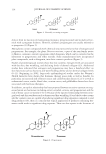
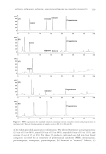
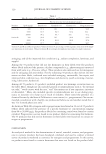
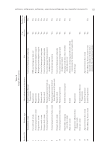
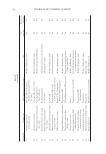
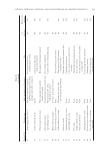
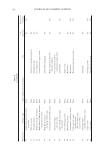
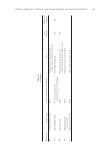
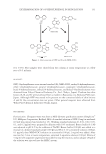
J. Cosmet. Sci., 66, 113–128 (March/April 2015) 113 Determination of estriol, estradiol, estrone, and progesterone in cosmetic products JEAN C. HUBINGER, Center for Food Safety and Applied Nutrition, U.S. Food and Drug Administration, College Park, MD 20740-3835. Accepted for publication March 1, 2015. Synopsis This report describes the development and validation of a reverse phase high-performance liquid chro- matography (HPLC) method with UV detection for the determination of the hormones estriol, estra- diol, estrone, and progesterone in topically applied products. The developed method was then used to conduct a postmarket survey of consumer products for these hormones. Each product was first mixed with Celite and then extracted with methanol. Extracts were cleaned on a Waters Oasis HLB solid phase extraction cartridge, and then analyzed using reversed phase HPLC. The analytes were separated using an Agilent Zorbax Eclipse XDB C8 (5 μm, 250 mm by 4.6 mm) analytical column and detected by their absorbance at 230 nm. Chromatographic separation was achieved by a 1.0-ml/min linear gradi- ent from 30% acetonitrile and 70% water to 80% acetonitrile and 20% water over 30 min. A final 5 min hold time and a re-equilibration time of 10 min were used to prepare the column for subsequent analysis. Recovery from two different brand lotions spiked with three different levels of estriol, estra- diol, estrone, and progesterone ranged from 81.8% to 101%. In this study, a total of 70 cosmetic prod- ucts were surveyed. Twenty two (63%) of the 35 products were labeled as containing an estrogen and/ or progesterone and also provided quantitative label information about the hormone ingredient. The most frequently labeled hormones were progesterone (66%), estriol (46%), estradiol (11%), and estrone (6%). Six products labeled as containing estriol were found to contain estradiol. An estrogen and/or progesterone were found in 34 products at concentrations ranging from 86.0 to 26,800 μg/g. Proges- terone was not found in one product labeled as containing this hormone. An additional 35 products, which did not list hormones on their labels, were analyzed and estrogen or progesterone was not de- tected in these products. INTRODUCTION The three naturally occurring estrogens in humans are the steroids estriol, 17β-estradiol, and estrone, with estriol being the predominant estrogen during pregnancy, 17β-estradiol being the major estrogen in nonpregnant women of child-bearing age, and estrone being the primary estrogen in postmenopausal women (1,2) (Figure 1). Another important class of hormones is progestagens (or progestogens), with progester- one being the naturally occurring pr ogestagen in humans. The term “progestagen” Address all correspondence to Jean C. Hubinger at Jean.Hubinger@fda.hhs.gov.
Purchased for the exclusive use of nofirst nolast (unknown)
From: SCC Media Library & Resource Center (library.scconline.org)