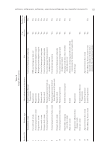
JOURNAL OF COSMETIC SCIENCE 116 225 nm. Feng et al. (24) used a monolithic capillary column and an 85% methanol and 15% 0.03 M phosphate solution to extract testosterone, methyltestosterone, and proges- terone in liquid cosmetic products followed by isocratic high-performance liquid chro- matography (HPLC) separation on a Hypersil ODS C18 (Thermo Electron Corporation, Waltham, Ma) column with 75% methanol and 25% water with UV detection at 245 nm. De Orsi et al. (25) also used the Agilent Zorbax Stable Bond Cyano substituted ana- lytical column to chromatographically separate minoxidil, progesterone, estrone, spi- ronolactone, canrenone, hydrocortisone, and triamcinolone in liquid cosmetic creams and lotions, but used gradient elution starting at 90% water (with 0.1% trifl uoroacetic acid) and 10% acetonitrile for 1 min, decreasing to 10% water and 90% acetonitrile in 40 min, and then returning to the initial condition in 10 min. Cosmetic samples were prepared for HPLC analysis by dissolution in methanol with sonication and centrifuga- tion. UV detection was at 230, 254, and 280 nm. Novakova et. al. (26) determined concentrations of estradiol, its degradation product estrone, and the preservatives methylparaben and propylparaben in topical FDA-approved estrogen therapy gel prep- arations by extraction into a acetonitrile solution with sonication followed by centrifu- gation and then chromatographic separation on a Supelco Discovery C18 analytical column (Supelco, Bellefonte, PA) and an isocratic mixture of acetonitrile, methanol, and water in the ratio of 23:24:53 v/v with UV detection at 225 nm. Finally, there are many reports describing the analysis of other matrices for female sex hormones. Of these later reports, reports of the analysis of water samples for female sex hormones may be relevant (27–31). Although the use of HPLC with UV detection for the analysis of cosmetic products and topically applied pharmaceutical preparations for various hormones, hormone degrada- tion products, and preservatives is not novel, such reports are limited and where analysis of such products is reported, HPLC with UV detection has been the method of choice and the HPLC method presented in this manuscript, in terms of specifi c elution solvents, specifi c gradient program, and specifi c column used, is novel and original. In addition, the use of extraction from Celite with methanol followed by cleanup with a commercially available solid phase extraction cartridge and then chromatographic separation on an extra-dense boding (XDB) C8 analytical column, as applied to all four hormones estriol, estradiol, estrone, and progesterone in cosmetic product matrices, has not been reported previously to our knowledge. In comparison to that reported in references 23–26, the method presented in this report is applicable to a more diverse set of sample matrices and product types and a wider range of concentration levels. Moreover, in addition to the HPLC method presented, this report also provides important details regarding the label information content (e.g., hormones present and concentrations) and product use claims for surveyed cosmetic products. EXPERIMENTAL REAGENTS AND MATERIALS The following reagents and materials were used: acetonitrile, methanol, water and Celite 545 [purchased from Fisher Scientifi c (Fairlawn, NJ)]. All solvents were of HPLC grade or better. Estriol (99%), estradiol (98%), estrone (99%), and progesterone (99%)

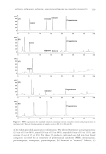
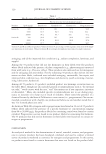
ESTRIOL, ESTRADIOL, ESTRONE, AND PROGESTERONE IN COSMETIC PRODUCTS 117 standards were purchased from Sigma Aldrich (Saint Louis, MO). The extraction tubes and fi lter disks were obtained from Supelco. Oasis HLB solid phase extraction cartridges were purchased from Waters Corporation (Milford, MA). A chromatographic separation was achieved using a Zorbax Eclipse XDB C8 (5 μm, 250 mm by 4.6 mm) analytical column obtained from Agilent Technologies. ESTROGEN AND PROGESTERONE CALIBRATION STANDARDS A stock solution of the three estrogens (~1.0 mg/ml each) was prepared by adding ap- proximately 100 mg of each estrogen to a 100 ml volumetric fl ask and diluting to the mark with methanol. A separate stock solution containing progesterone (~1.0 mg/ml) was prepared by adding approximately 100 mg of progesterone to a 100 ml volumetric fl ask and diluting to the mark with methanol. Because of the wide range of possible con- centrations in cosmetic products and because the linearity range for estriol, estradiol, and estrone (0.60 to 600 μg/g) is different from that for progesterone (0.30 to 300 μg/g), three different sets of working standards were prepared for estrogens and progesterone. For the estrogens, one set was at approximately 0.60, 1.8, 3.6, and 6.0 μg/ml. A second set was at approximately 6.0, 18, 36, and 60 μg/ml and a third set was at 60, 180, 360, and 600 μg/ml. Similarly, for progesterone, one set was at approximately 0.30, 0.90, 1.8, and 3.0 μg/ml. A second set was at approximately 3.0, 9.0, 18, and 30 μg/ml and a third set was at 30, 90, 180, and 300 μg/ml. Hormones were identifi ed in sample extracts by comparing HPLC retention times with standards, and quantifi ed using the standard calibration curve for each hormone. Sample extracts were diluted as necessary to assure that concentrations were in the linear range of the calibration curves. SAMPLE PREPARATION Approximately 300 mg of each sample was mixed thoroughly with about 1.5 g of Celite, and transferred to a 6-ml extraction tube containing a fi lter disk. The sample/Celite mixture was covered with a second fi lter disk and compacted fi rmly. The packed column was put on the top of a Waters Oasis HLB solid phase extraction cartridge for cleanup. The prepared extraction tube was eluted with suffi cient methanol to obtain 10 ml of extract in a volumetric fl ask. The extracted sample was mixed prior to HPLC analysis. Sample extracts were diluted as necessary to assure concentrations were in the linear range of the calibration curves. HPLC ANALYSIS HPLC analyses were carried out on an Agilent 1100 HPLC instrument equipped with a an Agilent Zorbax Eclipse XDB C8 (5 μm , 250 mm by 4.6 mm) analytical column, a quaternary pumping system, a vacuum degasser, a UV photodiode array detector, and a computer with Agilent ChemStation (Agilent Technologies, Santa Clara, CA) software. Because each estrogen has a different absorbance profi le, four different wavelengths, 230, 254, 280 and 300 nm, were evaluated for absorbance sensitivity and selectivity. For all four analytes, 230 nm was determined to be the best compromise.
Purchased for the exclusive use of nofirst nolast (unknown)
From: SCC Media Library & Resource Center (library.scconline.org)