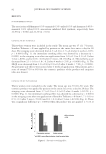
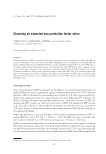
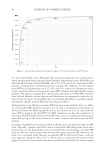
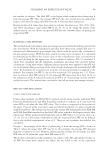
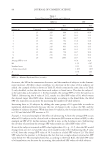
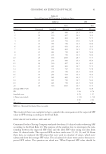
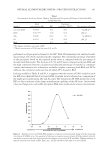
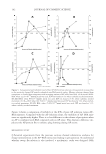
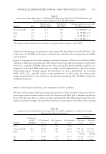
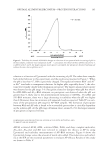
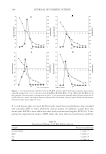
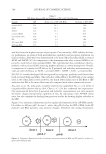
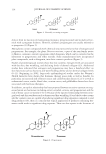
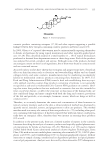
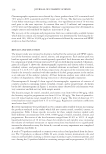
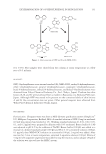
JOURNAL OF COSMETIC SCIENCE 130 case of cosmetics where the skin is washed after application (5). On the other hand, the Japanese government approved the use of OPP as a food additive for citrus fruits in 1977 with the permitted maximum residue level of 10 ppm in whole fruits (6,7). The World Health Organization’s view on the toxicity of OPP is as follows (8): “A health-based value of 1 mg/l can be calculated for OPP on the basis of an ADI of 0.4 mg/kg of body weight, based on a NOAEL of 39 mg/kg of body weight per day in a 2-year tox icity study for decreased body weight gain and hyperplasia of the urinary bladder and carcinogenicity of the urinary bladder in male rats, using an uncertainty factor of 100. Because of its low toxicity, however, the health-based value derived for OPP is much higher than OPP con- centrations likely to be found in drinking-water. Under usual conditions, therefore, the presence of OPP in drinking-water is unlikely to represent a hazard to human health.” Analysis of OPP in grapefruit juice has been performed by high-performance liquid chromatography with ultraviolet absorption detection (HPLC—UV) after pre-column labeling with 4-fl uoro-7-nitro-2,1,3-benzoxadiazole (NBD-F) (9). While this system is simple, it shows poor sensitivity. Yang et al. (7) developed a highly sensitive method of OPP determination by HPLC with electrochemical detection, using a microbore column this afforded a detection limit of 3.4 pg. Gas chromatography—mass spec- trometric (GC—MS) methods for determination of OPP after derivatization with pen- tafl uorobenzoyl bromide and ferrocenecarboxylic acid chloride have been applied to beer and citrus fruit samples, respectively (1,2). Blasco et al. (10) used liquid chroma- tography (LC)—atmospheric pressure chemical ionization MS for OPP determination in fruits and vegetables. However, MS or electrochemical detection requires expensive equipment. Instead, a simple and inexpensive method is desirable for routine OPP analysis. NBD-F has been used as a fl uorescence labeling agent of primary and secondary amino groups for HPLC—fl uorescence detection (11—15). The NBD heterocyclic ring is strongly fl uorescent, but NBD-labeling at the phenolic hydroxyl group of N-acetyltyrosine, chlorophenols, eugenol or OPP does not afford a fl uorescent derivative, so NBD-F has been used for labeling of these compounds in combination with UV detection (9,16— 19). Here, we set out to develop a simple, more sensitive HPLC-fl uorescence analysis for determination of OPP in skin lotion by means of pre-column derivatization with 4-(N- chloroformylmethyl-N-methylamino)-7-nitro-2,1,3-benzoxadiazole (NBD-COCl), which is expected to be available as a fl uorescence labeling agent for the phenolic hy- droxyl group of OPP. The derivatization scheme is shown in Figure 1. EXPERIMENTAL APPARATUS The HPLC system comprised a model L-6200 pump (Hitachi, Tokyo, Japan), a Rheo- dyne injection valve (Cotati, CA) with a 20-μl loop and a model RF-10A fl uorometer (Shimadzu, Kyoto, Japan) operating at an excitation wavelength of 470 nm and an emission wavelength of 540 nm. The HPLC column (ODS-4 GL Science, Tokyo, Ja- pan) was 150 mm × 3.0 mm i.d. in size, and contained 5 μm particles of C18 packing material. Quantifi cation of peaks was performed using a Chromatopac Model C-R3A integrator (Shimadzu, Kyoto, Japan). The mobile phase was prepared by the addition of acetonitrile (550 ml) to 450 ml of Milli-Q water containing trifl uoroacetic acid

DETERMINATION OF O-PHENYLPHENOL IN SKIN LOTION 131 (0.1 v/v%). The samples were eluted from the column at room temperature at a fl ow rate of 0.5 ml/min. REAGENTS OPP, 2-hydroxyfl uorene as an internal standard (IS), NBD-COCl, methyl 4-hydroxybenzoate, ethyl 4-hydroxybenzoate, propyl 4-hydroxybenzoate, isopropyl 4-hydroxybenzoate, butyl 4-hydroxybenzoate, isobutyl 4-hydroxybenzoate, and benzyl 4-hydroxybenzoate were obtained from Tokyo Chemical Industry Co., Ltd. (Tokyo, Japan). Paraben-free skin lotions (A, B, and C) were purchased from a market in Kanazawa city, Ishikawa Prefecture, Japan. Although OPP was stated to be present on the container labels of skin lotions A and B, the concentration was not given. Other general reagents were obtained from Wako Pure Chemical Industries (Osaka, Japan). PROCEDURES Derivatization. Ultrapure water was from a Milli-Q water purifi cation system (Simplicity® UV Millipore Corporation, Bedford, MA). A standard solution of OPP (2 mg) in methanol (10 ml) was prepared and stocked at 4˚C. Working standard solutions (0, 0.01, 0.02, 0.05, 0.1, and 0.2 μg/ml) were prepared by dilution with 10% methanol. Borate buffer (0.1 M) was adjusted to pH 8.5 by the addition of NaOH. Borate buffer (100 μl) was added to a mixture of a diluted standard sample (100 μl) and IS in 0.1% acetonitrile solution (100 μl, 0.1 μg/ml), then NBD-COCl solution in acetonitrile (100 μl, 2 mg/ml) was added. After reaction for 2 min at room temperature, saturated L-aspartate solution (100 μl, fi ltrate of 5 mg/ml of L-aspartate suspension) was added to stop the reaction, and an aliquot (20 μl) of the solution was injected into the HPLC system. Figure 1. Derivatization of OPP and IS with NBD-COCl.
Purchased for the exclusive use of nofirst nolast (unknown)
From: SCC Media Library & Resource Center (library.scconline.org)