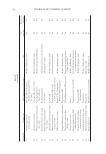
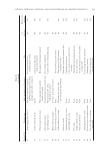
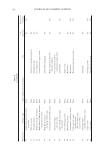
JOURNAL OF COSMETIC SCIENCE 128 (22) Cosmetic Ingredient Review Expert Panel, Final report on the amended safety assessment of Dioscorea villosa (wild yam) root extract, Int. J. Toxicol., 23 (Suppl 2), 49–54 (2004). (23) L. Havlikova, L. Novakova, L. Matysova, J. Sicha, and P. Solich, Determination of estradiol and its degradation products by liquid chromatography, J. Chromatogr., A, 1119, 216–223 (2006). (24) Y. Wen, Y. Wang, B. -S. Zhou, Y. Xu, and Y. -Q. Feng, Determination of sexual hormones in liquid cosmetics by polymer monolith microextraction couples with high performance liquid chromatography, Chin. J. Anal. Chem., 35, 681–684 (2007). (25) D. de Orsi, M. Pellegrini, S. Pichini, D. Mattioli, E. Marchei, and L. Gagliardi, High-performance liquid chromatography-diode array and electrospray-mass spectrometry analysis of non-allowed sub- stances in cosmetic products for preventing hair loss and other hormone-dependent skin diseases, J. Pharm. Biomed. Anal., 48, 641–648 (2008). (26) L. Novakova, P. Solich, L. Matysova, J. Sicha, HPLC Determination of estradiol, its degradation prod- uct, and preservatives in new topical formulation Estrogel HBF, Anal. Bioanal. Chem., 379, 781–787 (2004). (27) L. Wang, Y. -Q. Cai, B. He, C. -G. Yuan, D. -Z. Shen, J. Shao, and G. -B. Jiang, Determinations of estrogens in water by HPLC-UV using cloud point extraction, Talanta, 70, 47–51 (2006). (28) M. J. Lopez de Alda and D. Barcelo, Determination of steroid sex hormones and related synthetic com- pounds considered as endocrine disrupters in water by fully automated on-line solid-phase extraction liquid chromatography-diode array detection, J. Chromatogr., A, 911, 203–210 (2001). (29) M. J. Lopez de Alda and D. Barcelo, Determination of steroid sex hormones and related synthetic com- pounds considered as endocrine disrupters in water by liquid chromatography-diode array detection, J. Chromatogr. A, 892, 391–406 (2000). (30) L. Sun, W. Yong, X. Chu, and J. -M. Lin, Simultaneous determination of 15 steroidal oral contracep- tives in water using solid-phase disk extraction followed by high performance liquid chromatography- tandem mass spectrometry, J. Chromatogr. A, 1216, 5416–5423 (2009). (31) E. Vulliet, L. Wiest. R. Baudot, and M. -F. Genier-Loustalot, Multi-residue analysis of steroids at sub- ng/L levels in surface and ground-waters using liquid chromatography coupled to tandem mass spec- trometery, J. Chromatogr. A, 1210, 84–91 (2008).

J. Cosmet. Sci., 66, 129–137 (March/April 2015) 129 Simple determination of o-phenylphenol in skin lotion by high-performance liquid chromatography coupled with fl uorescence detection after pre-column derivatization with 4-(N-chloroformylmethyl-N-methylamino)-7-nitro- 2,1,3-benzoxadiazole YASUHIKO HIGASHI and KAZUNORI KONNO, Department of Analytical Chemistry, Faculty of Pharmaceutical Sciences, Hokuriku University, Kanagawa-machi, Kanazawa 920-1181, Japan. Accepted for publication February 15, 2015. Synopsis o-Phenylphenol (OPP) in skin lotion was quantitated by high-performance liquid chromatography coupled with fl uorescence detection after pre-column derivatization with 4-(N-chloroformylmethyl-N-methylamino)- 7-nitro-2,1,3-benzoxadiazole (NBD-COCl) in borate buffer (pH 8.5) at room temperature for 2 min. The col- umn [150 mm × 3.0 mm internal diameter (i.d.)], which contained 5 μm particles of C18 packing material, was eluted at room temperature (fl ow rate: 0.5 ml/min) with mobile phase prepared by addition of acetonitrile (550 ml) to 450 ml of Milli-Q water containing trifl uoroacetic acid (0.1 v/v%). 2-Hydroxyfl uorene was used as an internal standard. The retention times of NBD-CO-OPP and NBD-CO-IS derivatives were 16.2 and 22.2 min, respectively. The calibration plot was linear in the range of 0.01–0.2 μg/ml with an r2 value of 0.9960, and the lower limit of detection was 0.003 μg/ml (at a signal-to-noise ratio of 3:1 absolute amount of 12 pg/20 μl injection). The coeffi cient of variation was less than 8.8%. Contents of OPP in three skin lotions were deter- mined with the present system, and the recovery from spiked samples was satisfactory. INTRODUCTION o-Phenylphenol (OPP) has antibacterial and antiviral activities, and is widely used in house- holds, industry, and hospitals to disinfect surfaces, and as a preservative in cosmetics, plas- tics, etc. (1,2). Although OPP is an irritant for skin and mucous membranes, it exhibited low acute toxicity in animal experiments (3). Dermal administration of OPP promoted skin carcinogenesis in CD-1 female mice initiated with 7,12-dimethylbenz[a]anthracene (4). The Ministry of Health, Labour and Welfare in Japan recommends that the upper limit level of OPP in cosmetics should be 0.30 g/100 g for mucous membranes and for skin areas that are not washed after application, although the level has not been decided for the Address all correspondence to Yasuhiko Higashi at y-higashi@hokuriku-u.ac.jp.
Purchased for the exclusive use of nofirst nolast (unknown)
From: SCC Media Library & Resource Center (library.scconline.org)