JOURNAL OF COSMETIC SCIENCE 86 (24) A. Kligman, Human models for characterizing “se nsitive skin,” Cosmet. Dermatol., 14, 15–19 (2001). (25) G. Pauly, P. Moussou, L. L. Contet-Andonneau, L . Danoux, O. Freis, M. Sabadotto, et al., New peptidic active ingredient to reduce discomfort and painful sensations in sensitive skin. IFSCC Mag., 12, 25–30 (2009). (26) S. Palacio, J. Viac, A. Vinche, J. C. Huband, H . Gatto, and D. Schmitt, Suppressive effect of monosac- charides on ICAM-1/CD54 expression in human keratinocytes, Arch. Dermatol. Res., 289, 234–237 (1997). (27) E. Pelle, X. Huang, T. Mammone, K. Marenus, D. Maes, and K. Frenkel, Ultraviolet-B-induced oxida- tive DNA base damage in primary normal human epidermal keratinocytes and inhibition by a hydroxyl radical scavenger, J. Invest. Dermatol., 121, 177–183 (2003). (28) C. Korponyai, R. K. Kovács, G. Erös, S. Dikstei n, and L. Kemény. Antiirritant properties of polyols and amino acids, Dermatitis, 22, 141–146 (2011). (29) E. Corsini and C. L. Galli, Cytokines and irritant contact dermatitis, Toxicol. Lett., 102–103, 277–82 (1998).

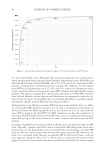
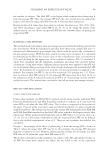
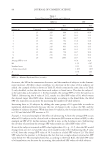
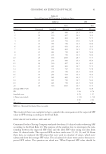
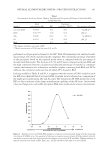
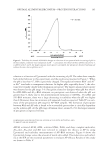
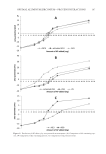
J. Cosmet. Sci., 66, 87–93 (March/April 2015) 87 Choosing an expected sun protection factor value JOHN R. SICA and MICHAEL CASWELL, Consumer Product Testing Company, Inc., Fairfi eld, NJ 07004. Accepted for publication February 8, 2015. Synopsis Sun protection factor, SPF, is a measure of the effi cacy of a topical sunscreen product the higher the SPF, the greater the blockage of ultraviolet-induced erythema. While there are several methods to determine SPF, the Food and Drug Administration (FDA) methods are unique. The FDA methods defi ne the label SPF value as the largest whole integer after subtracting an “A” value from the mean SPF. The A value, composed of the product of the upper 5% point of the t-distribution and the standard deviation (SD), divided by (n), where n equals the number of subjects, has a signifi cant impact on the label SPF value. Two examples explore this impact. Development of strategies to mitigate the impact of A using expected SPF values are explored using historical clinical trial data. A more enlightened choice of expected SPF values is shown to lead to higher label SPF values. INTRODUCTION Sun protection factor (SPF) is a measure of the effi cacy of a topical sunscreen product. A higher SPF means greater protection against erythema from ultraviolet (UV) radiation exposure. SPF is calculated by determining the increase in UV dose to perceptible ery- thema from unprotected skin to sunscreen-protected skin following UV exposure. An SPF of 2 doubles the time to perceptible erythema (e.g., from 10 to 20 min), an SPF of 4 doubles the SPF 2 times (e.g., from 20 to 40 min), an SPF of 8 doubles the SPF 4 times (e.g., from 40 to 80 min), and an SPF of 16 doubles the SPF 8 times (e.g., from 80 to 160 min). Figure 1 shows the nonlinear relationship between SPF and the blockage of UV-induced erythema. While the difference in percent blockage of UV-induced erythema between an SPF 32 and an SPF 64 is only 1.5% (98.4 - 96.9% = 1.5%), the SPF 64 product will allow the user to expose themselves to UV for twice as long (e.g., 320 min vs. 640 min). SPF is an important number because it indicates the effectiveness of the product to block UV-induced erythema. Recently, Garzarella and Caswell (1) published data comparing the SPF of test materials with three test methods, International (2,3) versus Australia/NZ (4), International versus Food and Drug Administration (FDA)-Final Monograph (FM) Address all correspondence to Michael Caswell at MCaswell@cptclabs.com.
Purchased for the exclusive use of nofirst nolast (unknown)
From: SCC Media Library & Resource Center (library.scconline.org)