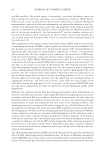
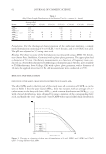
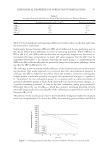
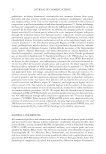
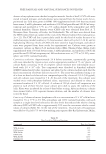
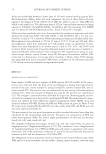
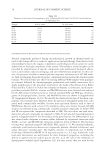
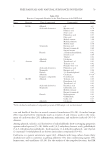
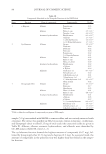
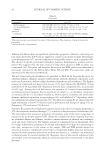
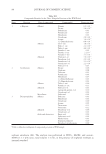
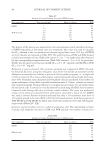
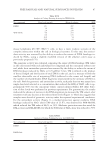
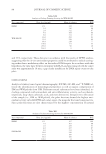
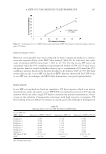
JOURNAL OF COSMETIC SCIENCE 82 Compounds m/z (%) Hydroquinone 110 (100) [M], 81 (37), 55 (26), 39 (24), 27 (21) 2,4-Dimethylphenol 122 (90) [M], 107 (100) [M-CH3], 103 (8), 91 (23), 77 (38) Thymol 150 (29) [M], 135 (100) [M-CH3], 115 (9), 91 (18), 77 (8) Alkaloids Colchicine 399 (54) [M], 371 (46) [M-H2O], 340 (8) [M-CH3CONH2], 312 (100), 297 (51), 281 (46), 269 (28) a Mass spectroscopy was performed by using a Varian apparatus. The abundance of peak is reported in parenthesis. b Analytical tools in experimental. Table X Continued Alkanes and alkenes have no signifi cant antioxidant properties. However, some long car- bon chain derivatives (C8–C10) are applied in cosmetics (or drugs) to make the formula- tions homogeneous (47), and are components of vegetable extracts, such as propolis (48). The absence of specifi c petroleum biomarkers, hopanes, homohopanes, steranes, and ter- panes (49), suggests that the main sources of long chain alkanes in DM are plant wax compounds (50). The polar and nonpolar fractions of the WM peloid were identifi ed as previously reported for the DM sample (Tables XI and XII). The extraction yields are reported in the Materials and Methods. The m/z values and peak abundances are provided in Table X. In the polar fractions, we identifi ed alkanes, alkanols, aromatic hydrocarbons, phenols, alkaloids, terpenoids, acids (and ester derivatives), and two sulfur derivatives (hexathione and octathione). The highest amount of compounds was detected in acetone (1.63 mg), followed by MeOH (0.72 mg) and EtOAc (0.19 mg) (Table XI). Terpenoids were the main component (for a total amount of 0.45 mg). Among the acid derivatives, the presence of 2-amino-4-mercaptobutyric acid (homocysteine) suggests the incorporation of sulfur (i.e., an abundant component in natural peloids) in a secondary metabolite. Homocysteine stimulates the antioxidant element–mediated expression in macrophages (51), and inhibits Cu2+-dependent oxida- tion of human low-density lipoproteins (52). Tocopherols (vitamin E) are characterized by high antioxidant activity (53) and are used in prevention and therapy of aging (54), in- fl ammatory (55) and cancer (56) diseases. Similarly, β-carotene shows high antioxidant activity and radical scavenging properties in UV solar radiation–mediated damage (57), as well as in the prevention of melanoma (58). The antioxidant and anticancer properties of limonene (one of the main component of essential oils) are widely reported (59). About the composition of the nonpolar fractions, we identifi ed alkanes and alkenes, besides to minor amounts of alkanols and carboxylic acids and esters derivatives. The highest amount of compounds was in diisopropyl ether (0.94 mg), followed by cyclohexane (0.58 mg) and heptane (0.10 mg). It is interesting to note that, irrespective to the nature of the sample, DM and WM peloids showed an amount of bioactive compounds several order of magnitude higher than that previously reported for mud samples produced by artifi cial procedures (i.e., synthetic clay maturated in thermal water for several months) (8). Moreover, most of the natural substances with antioxidant activity (terpenoids, phenols, and fatty acids) were concentrated in the polar fractions.

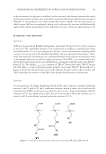
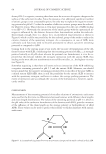
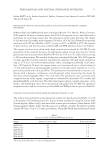
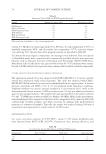
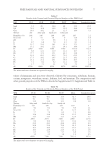
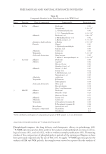
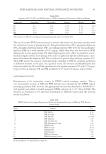
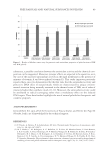
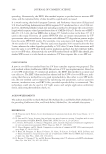
FREE RADICALS AND NATURAL SUBSTANCES IN PELOIDS 83 Table XI Compounds Identifi ed in the Polar Fractions of the WM Peloid Entry Fraction Class of compounds Compound(s) Extraction yield 1 EtOAc Alkanes Dodecane 0.01 Nonadecane 1.9 × 10⁻³ 2,3-Dimethylundecane 0.03 3,7,11-Trimethyldecane 4.3 × 10⁻³ Alkanols Dodecan-1-ol 4.8 × 10⁻³ 2-Methylhexadecan-1-ol 0.02 2-Butyl-ocatan-1-ol 5.7 × 10⁻³ Aromatics hydrocarbons p-Xylene 2.3 × 10⁻³ Phenols Phenol 0.01 2-Hydroxybenzaldehyde 0.01 Salicylic acid 0.03 Alkaloids Colchicine 0.04 Terpenoids Limonene 3.2 × 10⁻³ Acids and derivatives Butyl acetate 0.02 2-amino-4-mercaptobutyric ac. 3.4 × 10⁻³ 2 Acetone Alkanes Dodecane 0.05 Alkenes isoprene 0.02 Heicos-10-ene 0.01 Hexadec-9-en-1-ol 0.02 Alkanols Octan-1,2-diol 0.01 Icosan-1-ol 0.22 5-Methylicosan-1-ol 0.16 Nonadecan-1-ol 0.05 Alkaloids colchicine 0.01 Terpenoids β-Carotene 0.14 α-Tocopherol 0.50 Acids and derivatives Oleic acid 0.04 Dioctyl adipate 0.30 Hex-2-enylhexanoate 0.10 3 MeOH Alkanes Dodecane 0.01 Alkenes Nonadec-1-ene 0.23 Henicos-10-ene 0.21 Alkanols Icosan-1-ol 0.12 Alkaloids Colchicine 0.01 Terpenoids α-Tocopherol (vitamin E) 0.05 δ-Tocopherol (vitamin E) 0.06 Miscellanea Isonicotinic acid 0.03 Inorganic compounds Hexathione n.d Octathione n.d a Yield is defi ned as milligram of compounds per gram of WM sample. n.d. not determined ANALYSIS OF PHOSPHOLIPIDS BY 31 P-MNR SPECTROSCOPY Phospholipids improve the drug delivery and therapeutic effi cacy in pelotherapy (60). 31 P-NMR spectroscopy has been used for the analysis of phospholipids in extracts of bio- logical tissues (61), and oils (62), with or without sample purifi cation (63). Pioneering studies of the composition of phospholipids in peloids of the spring pool Bagnaccio have been previously reported only by use of TLC (13). To apply 31 P-NMR spectroscopy for the analysis of DM and WM peloids, the samples were treated as reported for the analysis of
Purchased for the exclusive use of nofirst nolast (unknown)
From: SCC Media Library & Resource Center (library.scconline.org)