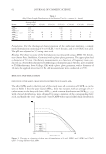
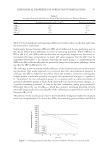
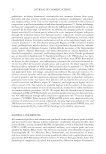
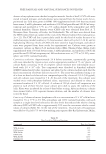
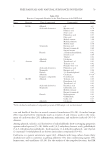
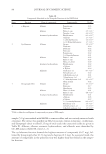
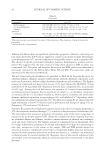
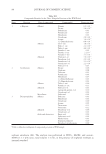
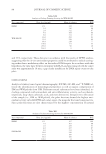
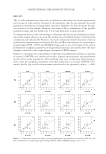
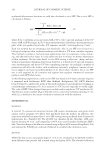
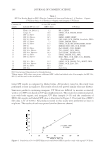
JOURNAL OF COSMETIC SCIENCE 84 Table XII Compounds Identifi ed in the Three Nonpolar Fractions of the WM Peloid Entry Fraction Class of compounds Compound(s) Extraction yield 1 n-Heptane Alkanes Nonane 6.2 × 10⁻³ Decane 2.8 × 10⁻³ Dodadecane 0.01 Pentadecane 0.01 Hexadecane 0.01 Octadecane 2.0 × 10⁻³ Icosane 1.0 × 10⁻³ 3,5-Dimethyloctane 8.8 × 10⁻³ Alkenes Oct-1-ene 1.8 × 10⁻³ Dodec-1-ene 2.2 × 10⁻³ Tridec-1-ene 4.6 × 10⁻³ Pentadec-1-ene 0.02 Tetradec-1-ene 2.2 10−3 Nonadec-1-ene 2.1 × 10⁻³ Alkanols Undecan-1-ol 7.0 × 10⁻³ Tetradecan-1-ol 2.2 × 10⁻³ Pentadecan-1-ol 2.3 × 10⁻³ Octadecan-1-ol 2.2 × 10⁻³ Tridecan-1-ol 0.01 2 Cyclohexane Alkanes Decane 0.06 Undecane 0.08 Tridecane 0.01 Pentadecane 0.04 Hexadecane 0.02 2,4-Dimethylhexane 0.01 3,5-Dimethyloctane 0.01 Alkenes Tridec-1-ene 0.06 Pentadec-1-ene 0.11 Alkanols Tridecan-1-ol 0.01 2-propenyl-pentan-1-ol 0.10 Octadecan-1-ol 0.02 Miscellanea Dodecanal 0.05 3 Diisopropylether Alkanes Dodecane 0.01 Hexadecane 0.02 Octadecane 0.09 Icosane 0.05 Tetracosane 0.13 Octacosane 0.12 Alkanols Tetradecan-1-ol 0.06 Octadecan-1-ol 0.04 Acids and derivatives Enoic acid 0.02 Dodecanoic acid 0.05 Methyl oleate 0.01 Isopropyl palmitate 0.20 Tetradecyl tetradecanoate 0.09 a Yield is defi ned as milligram of compounds per gram of WM sample. soybean emulsions (64). The analysis was performed in CDCl3, MeOH, and cesium- EDTA (1:1:1 w/w ratio total volume 1.5 ml), in the presence of triphenyl methane as internal standard.

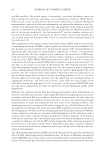
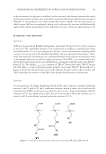
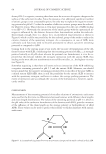
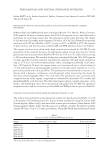
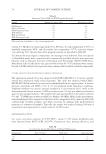
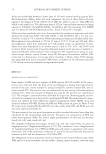
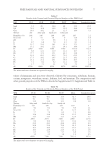
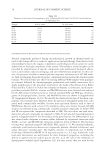
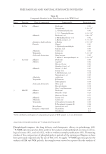
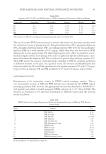
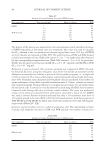
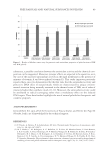
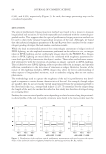
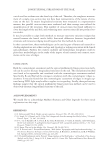
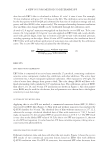
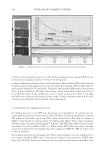
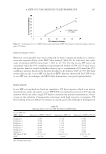
FREE RADICALS AND NATURAL SUBSTANCES IN PELOIDS 85 The use of cesium-EDTA was necessary to remove the metal ions that may interfere with the relaxation times of phospholipids. Phosphatidylcholine (PC), phosphatidylserine (PS), phosphatidylethanolamine (PE), and sphingomyelin (SM) were the main phospho- lipids in DM (in a total amount of 0.52 mg/g), while they were not detected in WM. Among the recent applications, PC shows hepatoprotective effect in oxidative-stress- mediated organic solvent liver damage (65), and it is applied in bipolar radiofrequency treat- ment of localized fat deposits (66). PS is involved in specifi c drug delivery systems (67). Table XIII reports the amount of phospholipids identifi ed in DM for sampling performed at different months in the year. As a general trend, the amount of phospholipids was relatively stable, the PC and PS being isolated in the highest amount (0.25 and 0.22 mg/g, respectively) in January, PE and SM in March (0.13 and 0.06 mg/g, respectively). ANTIOXIDANT ACTIVITY Determination of the antioxidant activity by DPPH radical scavenging analysis. The in vitro antioxidant activity of DM and WM peloids was evaluated by the DPPH radical scavenging analysis (68). In brief, the appropriate fraction was dissolved in EtOH (0.01– 100 mg/ml) and added to freshly prepared DPPH solution (6 × 10⁻⁵ M in EtOH). The decrease in absorbance (475 nm) was determined at different times until the reaction reached a plateau. Table XIII Amount of PC, PS, PE, and SM Identifi ed in DM for Sampling Performed at Different Months Compound Septembera November January March May PC 0.2 0.16 0.25 0.15 0.19 PS 0.16 0.16 0.22 0.18 0.2 PE 0.12 0.08 0.08 0.14 0.10 SM 0.04 0.04 0.03 0.06 0.03 a The amount is defi ned as milligram of phospholipid per gram of starting DM. Table XIV DPPH Radical Scavenging Properties of Polar and Nonpolar Fractions of DM and WM Peloids, Respectively Entry Sample IC50 1 DM-EtOAc 0.11 2 DM-Acetone 0.20 3 DM-MeOH 2.0 ×10⁻³ 4 DM-Heptane 95 5 DM-Cyclohexane 93 6 DM-Diisopropyl ether 90 7 WM-EtOAc 0.13 8 WM-Acetone 0.19 9 WM-MeOH 1× 10⁻³ 10 WM-Heptane 95 11 WM-Cyclohexane 93 12 WM-Diisopropyl ether 90 Each experiment was performed in triplicate.
Purchased for the exclusive use of nofirst nolast (unknown)
From: SCC Media Library & Resource Center (library.scconline.org)