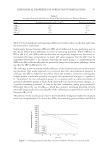
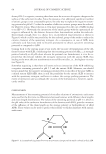
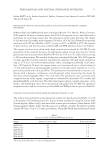
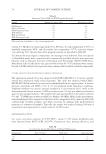
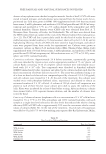
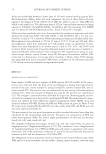
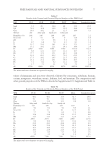
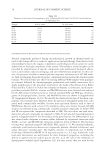
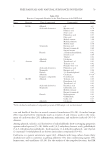
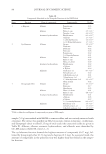
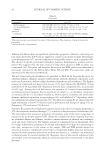
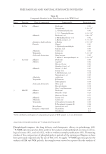
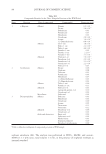
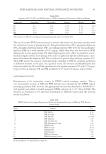
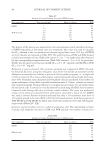
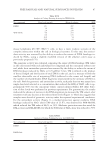
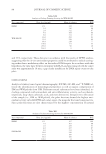
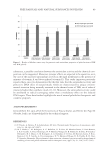
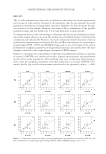
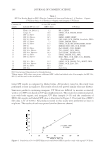
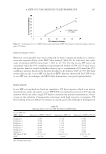
JOURNAL OF COSMETIC SCIENCE 88 Table XIX Analysis of Colony-Forming Activity for WM-MeOH Test compound Dose level (μg/ml) Mean of colonies RCE DMSO 1% 322 100 WM-MeOH 1.0 316 98 2.0 312 97 4.0 309 96 8.0 311 97 16.0 293 91 32.0 258 80 64.0 248 77 128.0 171 53 256.0 90 28 562.0 0 0 Table XX Analysis of Colony-Forming Activity for DM-MeOH Test compound Dose level (μg/ml) Mean of colonies RCE DMSO 1% 307 100 DM-MeOH 1.0 301 98 2.0 285 93 4.0 267 87 8.0 234 76 16.0 220 72 32.0 187 61 64.0 160 52 128.0 34 11 and 53%, respectively. These data are in accordance with the results of DPPH analysis, suggesting that the in vivo antioxidant properties could be attributed to radical scaveng- ing rather than a modulatory effect on the induced DNA repair. In accordance with this hypothesis, the time lapse between treatment with H2O2 and processing of cells for comet assay was approximately 10 min, a gap clearly insuffi cient for DNA repair events to take place. CONCLUSIONS Analytical studies (ionic liquid chromatography, ICP-MS, GC-MS, and 31 P-NMR) al- lowed the identifi cation of mineralogical properties as well as organic composition of DM and WM peloids from TSB. Different natural substances have been identifi ed, in- cluding compounds with antioxidant and anti-infl ammatory activity, such as phenols, terpenoids, long-chain carboxylic acids, and ester derivatives. Irrespective to the nature of the sample (i.e., DM vs. WM peloid), the polar fractions showed the highest anti- oxidant activity in both DPPH and comet assays, the nonpolar fractions being inactive. Since polar fractions are also characterized by the highest concentration of natural

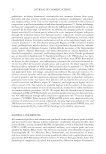
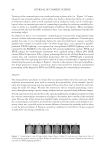
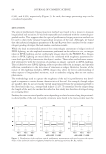
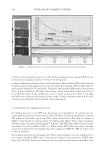
FREE RADICALS AND NATURAL SUBSTANCES IN PELOIDS 89 substances, a possible correlation between the antioxidant activity and the chemical com- position can be suggested. Moreover, synergic effects are expected to be operative, as in the case of the increased antioxidant activity in the lipid membrane in the presence of mixture of vitamin A and α-tocopherol (vitamin E). This study improves previously reported data, since we demonstrated for the fi rst time that the antioxidant activity and protective DNA effect of natural muds, which are characterized by unique environ- mental situation being naturally matured in the thermal water of TSB, are of order of intensity higher than synthetic muds (11,12). Moreover, the antioxidant activity could be attributed to radical scavenging rather than a modulatory effect on the induced DNA repair. These data further highlight the use of natural peloids for therapeutic and cosmetic purposes. ACKNOWLEDGMENTS GentoxChem Srl, spin-off of the University of Tuscia (Italy), and Terme dei Papi Srl (Viterbo, Italy), are acknowledged for the technical support. REFERENCES (1) F. Veniale, A. Bettero, P. G. Jobstraibizer, M. Setti, Thermal muds: Perspectives of innovations, Appl. Clay. Sci., 36, 141–147 (2007). (2) M. S. Muñoz, C. M. Rodríguez, A. G. Rudnikas, O. D. Rizo, M. Martínez-Santos, E. Ruiz-Romera, J. R. F. Castillo, A. Pérez-Gramatges, N. V. Martínez-Villegas, D. B. Padilla, R. H. Díaz, P. González- Hernández, M. S. Munoz, C. M. Rodriguez, A. G. Rudnikas, O. D. Rizo, M. Martinez-Santos, E. Ruiz- Romera, J. R. F. Castillo, A. Perez-Gramatges, N. V. Martinez-Villegas, D. B. Padilla, R. H. Diaz, P. Gonzalez-Hernandez, Physicochemical characterization, elemental speciation and hydrogeochemical modeling of river and peloid sediments used for therapeutic uses, Appl. Clay. Sci., 104, 36–47 (2015). Figure 1. Results of alkaline comet assay for genotoxic and antioxidant properties of polar fractions of DM and WM peloids.
Purchased for the exclusive use of nofirst nolast (unknown)
From: SCC Media Library & Resource Center (library.scconline.org)