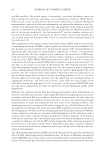
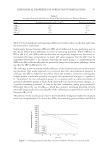
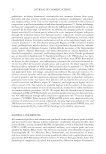
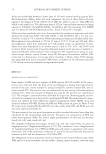
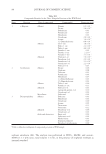
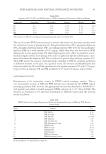
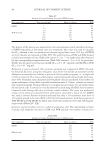
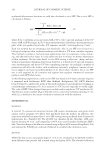
JOURNAL OF COSMETIC SCIENCE 102 erythemal effectiveness functions to yield the calculated in vitro SPF. The in vitro SPF is calculated as follows: λ λ λ λ λ λ λ λ 0 = 400 nm = 290 nm = 400 nm –A ( ) = 290 nm ( ) × SPF= ( ) × ( ) × × dλ E Idλ×)λ( E I10 (2) where E (λ) = erythema action spectrum (CIE-1987), I (λ) = spectral irradiance of the UV source (SSR or SPF testing), A0 (λ) = mean monochromatic absorbance measurements per plate of the test product layer before UV exposure, and dλ = wavelength step (1 nm). Each test method has its advantages and drawbacks. The in vivo SPF test is based on a biological endpoint (skin erythema/sunburn) and affords a UV dose cumulate response. This method is similar to real sunscreen applications, but it is expensive, time consum- ing, and affected by skin types. It is also subjective due to reliance on human observation of skin erythema. On the other hand, in vitro SPF testing is objective, cheap, and fast, with no requirement of human observation however, it is based on UV spectral transmit- tance measurements and has no UV dose cumulating response. Accordingly, a number of parameters will affect the results, such as substrate materials, roughness, amount of sun- screen applied, and sunscreen photostability (3,4). Given these variables, the in vivo SPF test is still required by all countries and regions that regulate commercial sunscreen products with SPF label claims. In the following experiments, a new in vitro SPF test based on UV dose cumulate response is examined with Gafchromic EBT3 fi lm (Ashland, Bridgewater, NJ). EBT3 fi lm has been developed to address the needs of the medical physicist and dosimetrist working in a radiotherapy environment (5). It is sensitive to UV, but not typically to visible light. The color of EBT3 fi lm changes from green to dark under cumulative UV irradiation (6). The effective atomic number (Zeff) of this fi lm is 6.8, a value close to human skin (Zeff = 7.4), while Zeff is defi ned as the nature of radiation interaction with the medium. EXPERIMENTAL MATERIALS A total of 15 commercial sunscreen lotions, BB creams, foundations, and sprays with organic and/or inorganic UV fi lters were purchased from the market. In addition, two sunscreen standards required for in vitro SPF testing were purchased from Cosmetech Laboratories Inc., Fairfi eld, NJ. The Q-SUN test chamber (Q-lab, Westlake, OH), irra- diation inten sity 41 w/m2, and temperature of 40oC were used to irradiate Gafchromic EBT3 fi lm. The color change of the fi lm was scanned using an Epson 4990 scanner (Long Beach, CA) and analyzed by FilmQA pro software (Ashland) to establish the calibration curve. METHODS EBT3 fi lm was cut to a rectangular shape (5.1 × 6.3 cm), irradiated in the Q-SUN chamber with different time periods and scanned using the Epson 4990. The absorbed radiation

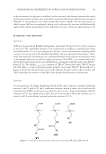
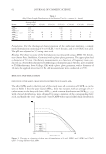
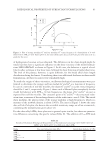
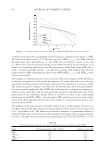
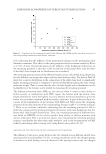
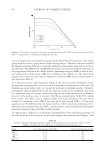
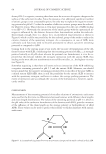
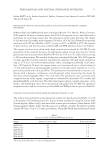
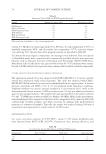
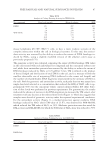
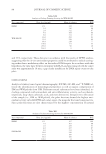
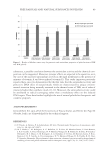
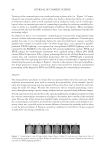
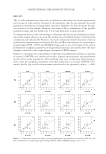
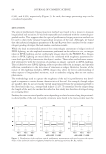
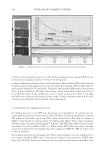
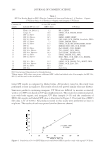
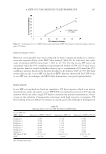
A NEW IN VITRO METHOD TO DETERMINE SPF 103 dose for each EBT3 fi lm is calculated as follows: 41 w/m2 × time × area. For example, 30 min irradiation will give 237.12 J dose on the fi lm. The calibration curve was obtained by the four points with FilmQA pro software [the function of irradiation energy and red, green, and blue (RGB) color, respectively]. The average relationship between irradiation dose and fi lm color change (RGB) can be established through the calibration curve. A total of 2.0 mg/cm2 sunscreen was applied on skin for the in vivo SPF test. To be con- sistent, 64.3 mg sample (2.0 mg/cm2) was also applied on EBT3 fi lm and evenly distrib- uted with gloved fi nger, from top to bottom and side-to-side with minimal pressure, avoiding spotting on the edges. After 30 min of UV irradiation, the irradiation dose of EBT3 fi lms with and without application of sunscreens was calculated by the calibration curve. The in vitro SPF value was calculated by the following: Dosage without sunscreen SPF= Dosage with sunscreen RECEIVED RECEIVED (3) RESULTS EBT3 FILM COLOR CALIBRATION EBT3 fi lm is composed of an active layer, nominally 27 μm thick, containing a radiation- sensitive active component, marker dye, stabilizers, and other additives. The active layer is between two, 120 μm transparent polyester substrates. After exposure to UV light, the color of active layer changes from green to dark. The color change (RGB) will have a de- fi ned relationship with cumulative UV irradiation dose. The calibration curves of EBT3 fi lm after 0, 10, 20, and 30 min UV irradiation are shown in Figure 1. All color param- eters, RGB, may be used for calculation, but red parameter was chosen due to the highest sensitivity in our data range. IN VITRO SPF TEST BY EBT3 FILM Applying this in vitro SPF test method, a commercial sunscreen lotion (SPF 30, PA++) was tested by EBT3 fi lm (Figure 2). Film with and without sunscreen was irradiated by Q-SUN chamber for 30 min. The absorbed dose of fi lm without sunscreen is 237.12 J, whereas the average calculated absorbed dose of fi lm with sunscreen is 7.96 J. Accord- ingly, in equation (3), the calculated SPF of sunscreen lotion is 29.8 ± 3.2. The SPF result is very close to the labeled SPF value of 30. Like the in vivo SPF test (equation 1), the new in vitro SPF test (equation 3) is also based on UV dose cumulate response, taking into ac- count sunscreen photostability. INFLUENCE FACTORS ON EBT3 FILM Different irradiation time and dose will affect the test results. Figure 3 shows the in vitro SPF results of two commercial sunscreen lotions based on EBT3 fi lm with different Q-SUN irradiation time. For SPF 20 sunscreen, the measured SPF value decreases from
Purchased for the exclusive use of nofirst nolast (unknown)
From: SCC Media Library & Resource Center (library.scconline.org)