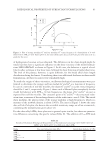
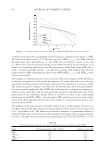
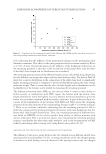
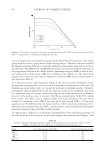
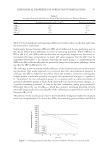
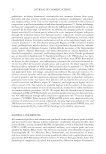
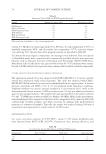
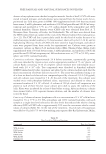
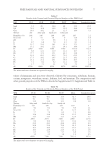
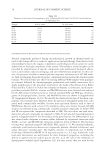
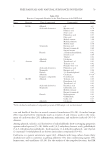
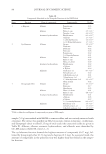
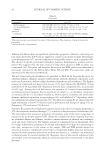
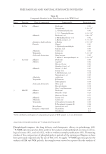
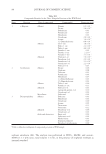
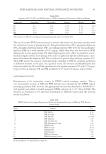
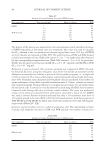
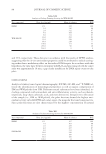
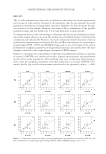
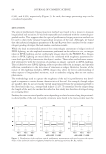
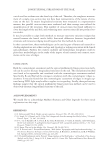
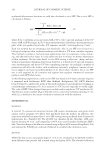
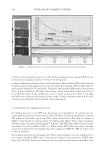
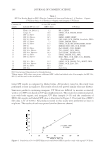
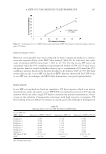
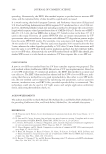
JOURNAL OF COSMETIC SCIENCE 104 Figure 1. Calibration curve to set up the function between irradiation dose and response. 35 after 10 min irradiation time to 11 after 40 min irradiation time, whereas SPF 30 sun- screen maintains approximately 25–30 over 40-min period. In theory, different irradiation time or dose should not affect the fi nal SPF results, but the exception exists if the sunscreens are not UV stable. For example, SPF 20 sunscreen de- grades under extended UV irradiation. Therefore, the measured SPF value is much lower after 40 min irradiation. The fi lm color change, with and without sunscreen, need to be within the range of the calibration curve to ensure accuracy. Too dark or too light will affect the accuracy of the results. In this study, 30 min irradiation time and 41 w/m2 intensity was utilized for the remainder of the experiments. IN VITRO SPF TEST ON COMMERCIAL PRODUCTS To validate the new in vitro SPF test, the process was repeated on 15 commercial sun- screen products purchased in the market. The UV fi lters included in the products, labeled SPF value on the bottle, and in vitro SPF values measured by EBT3 fi lm are shown in Table I. Some products contain organic UV fi lters only, while others contain inorganic UV fi lters only, or together with organic UV fi lters. The SPF values labeled on the bottles vary from 15 to 50+ and PA to PA++++. When inexact SPF values were given, an addi- tional 5 were added onto the labeled value. For example, for SPF 30+, SPF 35 will be used in the calculations. For commercial products with organic UV fi lters only (samples 1–8), the correlation of in vitro results and labeled SPF value is illustrated in Figure 4, the trend line of EBT3 fi lm data is R2 of 0.9266. In the best situation, the interception of the equation should be close

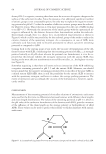
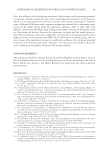
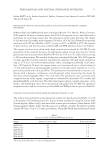
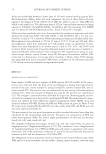
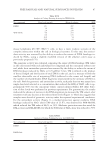
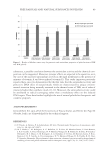
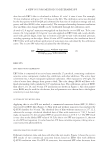
A NEW IN VITRO METHOD TO DETERMINE SPF 105 Figure 2. In vitro SPF test for commercial sunscreen lotion (SPF 30, PA++) by EBT3 fi lm method. Figure 3. In vitro SPF test results of different UV irradiation time based on EBT3 fi lm. to 0. As other in vitro SPF test methods, the EBT3 fi lm method could also be improved by optimizing test parameters, such as sunscreen amount, irradiation time, and EBT3 fi lm, as long as the reproducibility is good. Similar to the in vivo SPF test, the EBT3 fi lm method considers the photostability of sunscreens. If the sunscreen is degraded under UV light, the SPF value measured should be lower than that measured by UV spectrophotometer. For example, samples 1 and 6 (SPF 15) might have low photostability which results in
Purchased for the exclusive use of nofirst nolast (unknown)
From: SCC Media Library & Resource Center (library.scconline.org)