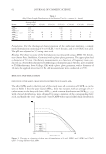
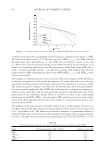
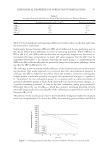
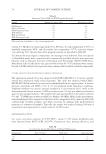
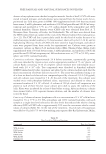
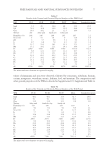
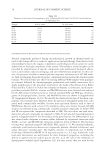
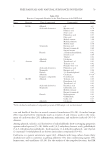
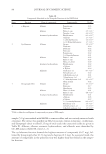
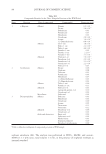
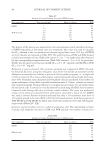
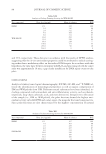
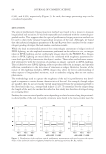
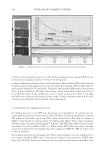
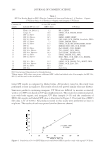
JOURNAL OF COSMETIC SCIENCE 64 Table III Streaming Potential and Isoelectric Point of Micellar Solutions of Different Alkyl APBs Name Streaming potential at pH 5.5 (mV) Isoelectric point (pH) APB12 129 6.57 APB12/14 400 6.78 APB8/10 + 12/18 62 6.08 APBcoco 232 6.25 to slower exchange kinetics and higher initial modulus as compared to the pure C12-APB. The fastest relaxation time of 0.72 Hz was found for APB8/10 + 12/18 , the APB with the broadest alkyl chain distribution, i.e., the APB with the highest content of C8- and C10-APB this is also the material leading to the lowest low-shear viscosity (Figure 2). It seems to be reasonable that this is caused by the presence of the short-chain APB, since a chain—as well as rod-like micelle—can only be as strong as the weakest link. Accord- ingly, both the APBs containing the short-chain APB (APB8/10 + 12/18 and APBcoco) have lower initial moduli. The changes in exchange kinetics, however, are not suffi cient to explain all the differences in rheological properties of the model formulations. To study their root cause, we mea- sured the streaming potential of micellar solutions of the betaines as a function of pH. The results are given in Figure 4 and Table III. All four betaines show the typical behav- ior of zwitterionic surfactants like CAPB the surfactants have a negative streaming po- tential at basic pH values and become positively charged at low pH values due to the protonation of the carboxylate group. There is, however, an effect of the chain length distribution on the IEPs: APB12/14 has the highest IEP, and the two betaines with a rather broad alkyl chain distribution have the lowest tendency to become protonated as indi- cated by the low IEPs. The infl uence of the chain length on the pKa of fatty acids is already known. Kanicky et al. (18) have reported that pKa increases as chain length increases, from 6.4 for octanoic acid to 8.7 for palmitic acid. The behavior for betaines, however, is signifi cantly shifted to lower pH values due to the presence of the quaternized nitrogen and its strong inductive (−I) effect. The pKa of the natural betaine trimethylglycine (CH3)3N+CH2COO− is 2.351 Figure 4. Streaming potential of micellar solutions of different alkyl APBs as a function of pH.

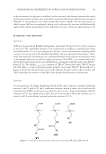
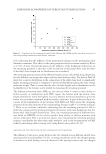
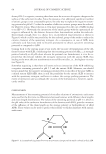
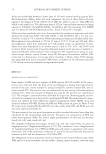
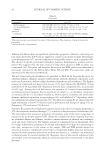
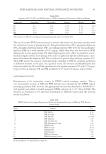
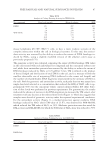
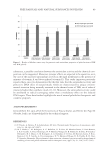
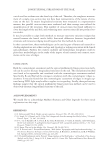
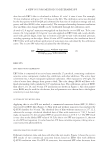
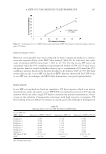
RHEOLOGICAL PROPERTIES OF SURFACTANT FORMULATIONS 65 Figure 5. Correlation of the streaming potential of the different alkyl APBs and the zero shear viscosities of the corresponding formulations with anionic surfactant. (19), indicating that the infl uence of the quaternized nitrogen on the protonation equi- librium is immense. This effect of the quat group has also been shown earlier by Weers et al. (20). A more detailed discussion on the infl uence of the headgroup architecture on the streaming potential is the topic of the second part of this paper here, only the effect of the alkyl chain length and its distribution are considered. The streaming potential values of the different betaines are not only shifted along the pH axis but also different concerning their slopes and thus their absolute values. The data in Table III show that a narrow distribution in the composition of the alkyl chain leads to signifi cantly higher streaming potentials as compared to the broad distribution having the same average molecular weight. Thus, it seems that the effect of chain length and its distribution on the hydrophilicity of the betaines can be probed by measuring the streaming potential. The differences between these APBs are also obvious when it comes to their ability to build viscosity in combination with SLES. Again, the betaine with the narrow chain length distribution yields the highest viscosity, whereas the broad distribution gives the lowest viscosity when combined with the anionic surfactant. A plot of the zero shear vis- cosities of the formulations of the betaines with SLES and NaCl versus the streaming potential of micellar solutions of the corresponding betaines at pH 5.5 is shown in Figure 5. There is an excellent correlation, indicating that the streaming potential is able to probe the average polarity/packing parameter of betaines with same headgroups but dif- ferent alkyl chain length distributions. Thus, the streaming potential of different beta- ines based on DMAPA can be used to predict their ability to thicken mixtures with anionic surfactants. This is an attractive option, since measuring the streaming potential requires considerably less effort than other methods, such as the determination of CMC either by measuring surface tension or by using fl uorescence probes (21,22). INFLUENCE OF THE STRUCTURE OF THE HEADGROUP OF THE BETAINES The infl uence of the spacer group between the two charged sites in ABs has already been investigated by several authors (23–25). A strong interaction of the two charged groups in betaines via back folding was only observed if the spacing between the two charged
Purchased for the exclusive use of nofirst nolast (unknown)
From: SCC Media Library & Resource Center (library.scconline.org)