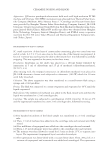
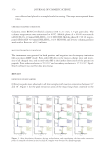
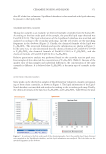
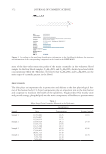
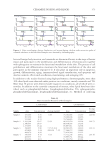
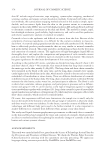
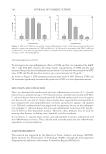
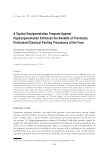
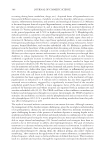
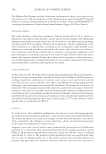
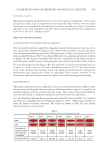
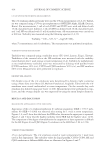
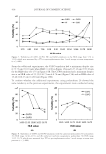
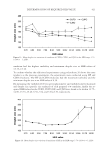
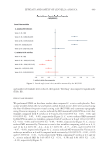
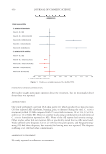
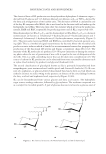
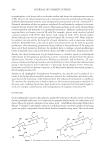
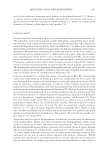
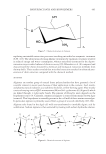
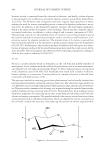
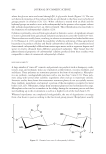
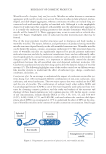
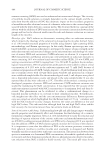
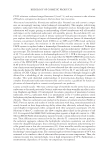
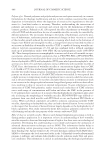
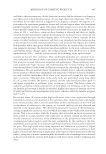
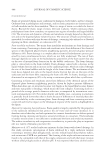
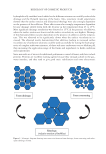
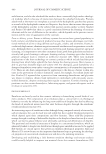
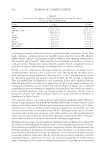
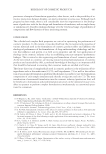
BIOSURFACTANTS AND BIOPOLYMERS 461 obtained undergoes a comparative bacterial taxonomy and identifi cation method known as 16S ribosomal deoxyribonu- cleic acid sequence analysis and fatty acid methyl ester profi le analysis to determine the fatty acid methyl ester groups. The bac- terium is then added to the glycerol medium. The surfactin pro- duced is extracted from the foam produced in the fermentation process and purifi ed before undergoing infrared analysis and nu- clear magnetic resonance tests. The highest yield of the surfactin is obtained between 24 and 48 h into the fermentation process. This study concluded that renewable carbon sources could be used for surfactin production (55). Another study showed that only molasses, glucose, and malt extracts were enough as a carbon source for surfactin produc- tion, which are also industrial by-products (56). Some studies added that the yield is dependent on the bioreactor’s design, nitrogen origin, and, most importantly, the presence of inor- ganic salts or minerals (57). FATTY A CIDS, PHOSPHOLIPIDS, AND NEUTRAL LIPIDS Fatty a cids, phospholipids, and neutral lipids that are microbially synthesized from hy- drocarbons like alkanes classify as biosurfactants. The production of these biosurfactants occurs due to the growth of bacteria or fungi on these hydrocarbon surfaces which act as the carbon source. The bacteria can be of the Acinetobacter species and fungi of the Aspergillus species. These species also give rise to complex acids made of hydroxyl groups and alkyl branches like corino mycolic acids (58). According to the Chemical Entities of Biological Interest database, the complex is a 32-membered mycolic acid and a 3-hydroxy fatty acid. Acinetobacter species, when grown on hexadecane, produce phospholipids. Phospholipids have also been generated with the help of Thiobacillus thiooxidans. In yeast, neutral lipids are synthesized by the act of sequestration from intracellular fl uid. These lipids have no charged molecules and are mostly simple lipids formed by fatty acids or triglycerides and a steryl ester (59). POLYMER IC Some co mmon examples of this classifi ca- tion are emulsan, liposan, lipomannan, mannoprotein, and polysaccharide–pro- tein complexes. Emulsan is composed of N-acetyl-D- galactosamine, N-acetylgalactosamine uronic acid, and an amino sugar (Figure 6). It is linked via covalent molecular bond- ing to α and β hydroxydodecanoic chains through ester bonds (60). Emulsan is produced by the strain Acinetobacter Figure 4. Trehalose lipid chemical structure. Figure 5 . Chemical structure of surfactin.

JOURNAL OF COSMETIC SCIENCE 462 calcoaceticus recombination-activating gene 1. They are produced with the aid of hydrocar- bon 14 or ethanol 18 substrates (61). Emulsan culture production can be enhanced with varying ethanol or phosphate concentrations. Phosphate aids in the generation of emulsan by effects on cell metabolism. The hydrocarbon such as ethanol acts as the energy pool. The culture used is primarily batch fermentation followed by fed-batch fermentation so as to vary the carbon and phosphate feeding from controlled to continuous. An appropri- ate kinetic model has to be modeled around the emulsan culture process (62). Liposan is obtained from Candida lipolytica. It comprises 83% carbohydrate and 17% protein (63). The carbohydrate is a heteroglycan that consists of glucose, galactose, galac- tosamine, and galacturonic acid, whereas the protein is most likely a glycoprotein (64). One study cultivated the yeast in soybean oil refi nery residues and glutamic acid. The maxi- mum yeast excreted the biosurfactant into the substrate, which is a hydrocarbon largely during the stationary fermentation phase (65). The Candida species can also be synthe- sized in selected food-grade waste such as canola oil and glucose substrate (66,67). Simi- lar production of biosurfactant can be achieved through the culture of Yarrowia lipolytica in the presence of crude oils and hydrocarbon lipid substrates (68). Mannoproteins are derived from the yeast Saccharomyces cerevisiae. It is the most common fermentation microorganism that can be obtained from fruit fermentation processes in the industry. Mannoproteins are glycoproteins that contain 15–90% mannose (69). However, according to Cameron et al. (70), there exists a second class of mannoproteins with 50–70% mannose and 30–50% protein. The National Center for Biotechnology Information states that the compound mannose is a sugar of the aldohexose carbohydrate. Mannoproteins are commonly extracted for the role of bioemulsifi ers. These emulsifi ers can be extracted via two methods, namely, autoclaving in a neutral buffer and the treatment of bakers’ yeast with Zymolyase enzyme. The fi nal fi ltered emulsifi er obtained from the fi rst method contains approximately 44% carbohydrate and 17% protein (70). Lipomannan is a glycolipid that makes up the cell wall of Mycobacterium that contains a long mannose polymer. It carries an α-linked sugar mannose polysaccharide which Figure 6. C h emical structure of emulsan.
Purchased for the exclusive use of nofirst nolast (unknown)
From: SCC Media Library & Resource Center (library.scconline.org)