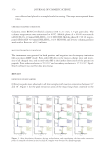
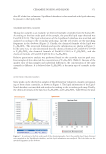
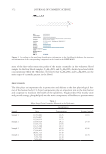
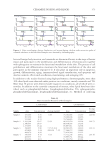
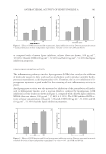
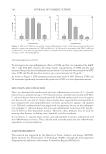
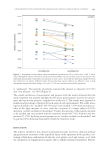
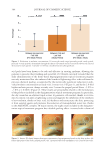
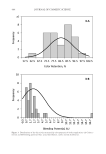
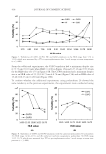
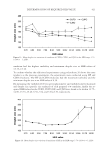
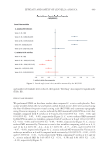
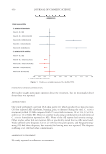
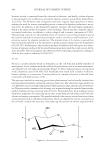
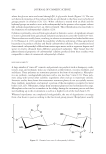
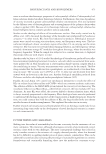
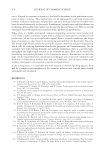
JOURNAL OF COSMETIC SCIENCE 422 ACKNOWLEDGMENTS This research w as fi nancially supported by the Ministry of Trade, Industry and Energy and the Korea Institute for Advancement of Technology through the National Innovation Cluster R&D program (P0006705_Development of Customized Cosmetic Materials and Formulations). Figure 16. Mean droplet size variations of HF and CJSO emulsions in the HLB range 3.70–16.70 (sorbitan sesquioleate: polysorbate 20) after 1 week storage at room temperature (n = 3 ±SD). Figure 15. Droplet sizes of CUFO and CUPO emulsions with (A) surfactant (polysorbate 60: polysor- bate 20) HLB range 14.90–16.70, and (B) surfactant (sorbitan sesquioleate: polysorbate 20) HLB range 13.45–16.70, which were measured by particle size analyzer after 1 week storage at room temperature (n = 3 ±SD).

DETERMINATION OF REQUIRED HLB VALUE 423 REFERENCES (1) L. O. Orafi diya and F. A. Oladimeji, Determination of the required HLB values of some essential oils, Int. J. Pharm., 237, 241–249 (2002). (2) N. A. Nicz i nger, N. Kállai-Szabó, J. Dredán, L. Budai, M. Hajdú, and I. Antal, Application of droplet size analysis for the determination of the required HLB of lemon oil in O/W emulsion, Curr. Pharmaceut. Anal., 11, 11–15 (2015). (3) S. RodrÍguez-R o jo, S. Varona, M. Núñez, and M. J. Cocero, Characterization of rosemary essential oil for biodegradable emulsions, Ind. Crop. Prod., 37, 137–140 (2012). (4) C. P. Fernandes, M . P. Mascarenhas, F. M. Zibetti, B. G. Lima, R. P. R. F. Oliveira, L. Rocha, and D. Q. Falcão, HLB value, an important parameter for the development of essential oil phytopharmaceuticals, Braz. J. Pharmacog., 23, 108–114 (2013). (5) F. Goodarzi and S. Zendehboudi, A comprehensive review on emulsions and emulsion stability in chem- ical and energy industries, Can. J. Chem. Eng., 97, 281–309 (2019). (6) M. J. Martin, L. A . Trujillo, M. C. Garcia, M. C. Alfaro, and J. Muñoz, Effect of emulsifi er HLB and stabilizer addition on the physical stability of thyme essential oil emulsions, J. Dispers. Sci. Technol., 39, 1627–1634 (2018). (7) Y. Yamashita, R. Mi y ahara, and K. Sakamoto, Emulsion and Emulsifi cation Technology, Cosmetic Science and Technology: Theoretical Principles and Applications (Elsevier Inc., 2017), pp. 489–506, Chapter 28. (8) N. P. Nirmal, R. Mer eddy, L. Li, and Y. Sultanbawa, Formulation, characterization and antibacterial activity of lemon myrtle and anise myrtle essential oil in water nanoemulsion, Food Chem., 254, 1–7 (2018). (9) M. Frenkel, R. Shwa r ts, and N. Garti, Turbidity measurements as a technique for evaluation of water- in-oil emulsion stability, J. Dispers. Sci. Technol., 3, 195–207 (1982). (10) A. Takamura, T. Mi n owa, S. Noro, and T. Kudo, Effects of Tween and Span group emulsifi ers on the stability of O/W emulsions, Chem. Pharm. Bull., 27, 2921–2926 (1979). (11) A. Yaghmur, A. Ase r in, Y. Mizrahi, A. Nerd, and N. Garti, Argan oil-in-water emulsions: preparation and stabilization, J. Am. Oil Chem. Soc., 76, 15–18 (1999). (12) J. Boyd, C. Parkin s on, and P. Sherman, Factors affecting emulsion stability, and the HLB concept, J. Colloid Interf. Sci., 41, 359–370 (1972). (13) K. Koga, Y. Ishito b i, M. Iwata, M. Murakami, and S. Kawashima, A simple method for the selection of a suitable emulsifi er based on color difference, Biol. Pharm. Bull., 25, 1642–1644 (2002). (14) W. C. Griffi n, Cla s sifi cation of surface-active agents by HLB, J. Soc. Cosmet. Chem., 1, 311–326 (1949). (15) T.-T. Liu and T.-S . Yang, Optimization of emulsifi cation and microencapsulation of evening primrose oil and its oxidative stability during storage by response surface methodology, J. Food Qual., 34, 64–73 (2010). (16) J. Y. Yeon, B. R. S in, T. G. Kim, J. M. Seo, C. H. Lee, S. G. Lee, and H. B. Pyo, A study on emulsion stability of O/W and W/S emulsion according to HLB of emulsifi er, J. Soc. Cosmet. Sci. Korea, 40, 227– 236 (2014). (17) M. Shahin, S. A. H a dy, M. Hammad, and N. Mortada, Development of stable O/W emulsions of three different oils, Int. J. Pharm. Stud. Res., 2, 45–51 (2011). (18) V. R. Kaufman and N . Garti, Spectral absorption measurements for determination of ease of formation and stability of oil in water emulsions, J. Dispers. Sci. Technol., 2, 475–490 (1981). (19) R. C. Pasquali, M. P. Taurozzi, and C. Bregni, Some considerations about the hydrophilic-lipophilic balance system, Int. J. Pharm., 356, 44–51 (2008). (20) L. K. Hong, S. I. K im, and S. B. Lee, Effects of HLB value on oil-in-water emulsion: droplet size rheo- logical behavior, zeta-potential, and creaming index, J. Ind. Eng. Chem., 67, 123–131 (2018). (21) A. R. Lee and E. Y i , Bioactive properties of Citrus unshiu’s essential oil for its application to textiles, Fibers Polym., 14, 1295–1300 (2013). (22) X. N. Yang and S. C . Kang, Chemical composition, antioxidant and antibacterial activities of essential oil from Korean Citrus unshiu peel, J. Agric. Chem. Environ., 2, 42–49 (2013). (23) E. Jung, J. Lee, J . Baek, J. Jung, J. Lee, S. Huh, S. Kim, J. Koh, and D. Park, Effect of Camellia japonica oil on human type I procollagen production and skin barrier function, J. Ethnopharmacol., 112, 127–131 (2007). (24) T. Satou, N. Sato, H. Kato, M. Kawamura, S. Watanabe, and K. Koike, The effect of Camellia seed oil intake on lipid metabolism in mice, Nat. Prod. Commun., 11, 511–513 (2016). (25) Y. S. Lee, J.-H. Y o on, B.-A. Kim, C. I. Park, W. K. Yoo, J. W. Cho, and M. R. Kim, Effects of horse oil on the DNCB-induced contact hypersensitivity, Korea J. Herbo., 28, 77–81 (2013).
Purchased for the exclusive use of nofirst nolast (unknown)
From: SCC Media Library & Resource Center (library.scconline.org)