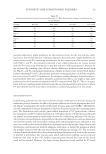
JOURNAL OF COSMETIC SCIENCE 96 also reconfi rming the higher toxicity potential of longer alkyl chains as observed in acti- vated sludge experiments (16). EC50 in D. magna also followed a similar pattern, sug- gesting nonspecifi c toxicity profi le of APGs. Similar observations were reported by Garcia et al. (19) for D. magna. In luminescent bacteria (Photobacterium phosphoreum), toxicity decreased rapidly, and no toxic effects were detected after the third day correlating with the surfactant biodegradation rate. This study also showed that the toxic effects were mainly due to the parent molecule, and its elimination resulted in toxicity reduction. In a separate experiment, caprylyl and decyl glucoside (C8 and C10), lauryl glucoside (C12), and coco glucoside (C8–16), and toxicity in Gram-negative bacteria (Vibrio fi scheri) were found to be dependent on the initial concentration, chain length, and Hydrophilic- Lipophilic Balance (HLB). Shorter carbon chain and higher HLB in C6 and C10 glucosides led to lower toxicity with EC50 (effective concentration at which 50% of test organisms show a response) of 29.05 (27.04–29.07) mg/L versus 13.81 (13.78–13.82) mg/L for C8–10 in 15-min exposure (20). Biod egradation of APG has shown to reduce dissolved oxygen levels in closed sys- tems, suggesting that the process may impact water quality. In a fi rst of its kind of a study, Sutton and Cohen evaluated the impact of APG at 0.1% and 1% concentration in low dissolved oxygen conditions using water columns in a blackwater pond in Georgia, USA. Concentration of dissolved oxygen was signifi cantly reduced, and con- ductivity was higher than controls at both treatment levels. An overall decrease in all taxa was noted for the treatment, with predominant reduction in dominant species, Chironomidae and Oligochaeta in 14-d test period. Because APGs have shown 80% degradation in 21 d, it is possible that some undegraded surfactant might be present in the mesocosm. Whether the invertebrate species revived after the supposed APG degradation period or not was not captured as part of this study (21). In the second study, the research group has studied APG concentrations from 0.01 to 10 mg/L on plankton abundance and dissolved oxygen levels. APG concentrations of 2.5 and 5 mg/L showed 75% reduction in zooplanktons, especially copepods. No evidence of recovery was seen throughout the 1-mo study period. Dissolved oxygen levels were reduced in the fi rst week but were seen to normalize by second and third weeks, except for 10 mg/L APG treatment where dissolved oxygen levels remained low throughout the study period. This change in the plankton community profi le and overall distribution could have potential impact on the food cycle (22). In a laboratory study, Duff et al. (23) have shown the effect of APG treatment on alga, Chlorella, in the presence of nitrogen and phosphorus as nutrients. The cell density was seen to decrease in the presence of APG alone. The presence of nutrients could not only reverse the impact of the surfactant higher chlorophyll-a levels were noted in the APG + N treatment group, suggesting that the metabolites, glucose, and fatty alcohols were nontoxic as well as the increased algal biomass was a result of stress response to APG. Alth ough toxicity studies reported are limited and isolated, they do suggest that high con- centrations of APGs may affect certain species in the food cycle. Usually, the chemical concentration is 10–100 times less in the discharge as compared with the infl uent, and the overall increase in the initial concentration can cause high levels in wastewater treatment plants (5,21). Linear alkylbenzene sulfonates, an example of the conventional surfactants used in the detergent industry, have been found up to 30.2 g/kg dry weight in treatment sludges, 1.09 mg/L in wastewater effl uents, and 0.42 mg/L in discharge bodies (24–26).

FATE OF ALKYL POLYGLUCOSIDES IN THE ENVIRONMENT 97 CONC LUSION As s urfactants from renewable sources move to the forefront to cater to consumer demands for sustainable products, there is a parallel requirement of determining their impact on the aquatic environment. Biodegradability is of prime importance laboratory experi- ments are suggestive and can forecast the degradation behavior of a compound in the environment. Our report shows that the actual scenario is much infl uenced by the start- ing concentration and chemistry of the molecule in question along with microbiome distribution and factors affecting their growth such as temperature, pH, and availability of organic matter. Although more nature-friendly than counterparts, these surfactants may not be eliminated in wastewater treatment plants, and their discharge in water bod- ies can lead to eventual changes in the food cycle over generations. Further research should include controlled actual test conditions along with simulated laboratory experiments. REFE R ENCES (1) D. Balzer and H. Lüders, Nonionic Surfactants: Alkyl Polyglucosides (Marcel Dekker, New York, NY, 2000), pp. 7–18. (2) K . Hill, W. von Rybinski, and G. Stoll, Alkyl Polyglycosides: Technology, Properties, and Applications (VCH Publishers Inc., New York, NY, 1997), pp. 1–8. (3) D . Geetha and R. Tyagi, Alkyl poly glucosides (APGs) surfactants and their properties: a review, Tenside Surfactants Deterg., 49, 417–427 (2012). (4) C OSMOS Standard, Raw Materials for COSMOS-Standard Cosmetics (2020), accessed April 5, 2020, http://www.cosmos-standard-rm.org/verifmp.ph. (5) G .-G. Ying, Fate, behavior and effects of surfactants and their degradation products in the environment, Environ. Int., 32, 417–431 (2006). (6) J . L. Berna, G. Cassani, C.-D. Hager, N. Rehman, I. Lopez, D. Schowanek, J. Steber, K. Taeger, and T. Wind, Anaerobic biodegradation of surfactants – scientifi c review, Tenside Surfactants Deterg., 44, 312–347 (2007). (7) I . Effendi, S. Nedi, Ellizal, Nursyirwani, Feliatra, Fikar, Tanjung, R. Pakpahan, and Pratama, Detergent disposal into our environment and its impact on marine microbes. IOP Conf. Ser. Earth Environ. Sci., 97, 012030 (2017). (8) U . Merrettig-Bruns and E. Jelen, Anaerobic biodegradation of detergent surfactants, Materials, 2, 181–206 (2009). (9) O ECD, OECD Guidelines for the Testing of Chemicals (2006), accessed April 3, 2020. Revised Intro- duction to the OECD Guidelines for Testing of Chemicals, Section 3 Part 1: principles and Strategies Related to the Testing of Degradation of Organic Chemicals, Organisation for Economic Co-operation and Development (OECD), Paris, France. (10) A. Zgola-Grześkowiak, T. Grześkowiak, M. Frańska, A. Rzasa, and Z. Lukaszewski, Investigations on the biodegradation of alkylpolyglucosides by means of liquid chromatography–electrospray mass spec- trometry, Biodegradation, 19, 635–642 (2008). (11) P. Eic h horn and T. P. Knepper, Investigations on the metabolism of alkyl polyglucosides and their determination in waste water by means of liquid chromatography–electrospray mass spectrometry, J. Chromatogr. A, 854, 221–232 (1999). (12) Y. Qin , G. Zhang, J. Zhang, Y. Zhao, and J. Zhao, Primary aerobic biodegradation of linear and oxo alcohol alkylpolyglucosides (APG), J. Surfactants Deterg., 9, 227–230 (2006). (13) E. Jur a do, M. Fernández-Serrano, J. Núñez-Olea, M. Lechuga, J. L. Jimenez, and F. Rios, Effect of con- centration on the primary and ultimate biodegradation of alkylpolyglucosides in aerobic biodegradation tests, Water Environ. Res., 83, 154–161 (2011). (14) J. Zhang, K. Xie, X. Dai, and G. Zhang, Differences between alkyl polyglucosides of natural alcohol and oxo-alcohol, J. Surfactants Deterg. 6, 253–257 (2003). (15) T. Madsen, G. Petersen, C. Seiero, and J. Torslov, Biodegradability and aquatic toxicity of glycoside surfactants and a nonionic alcohol ethoxylate, J. Am. Oil Chem. Soc., 73, 929–933 (1996). (16) T. Madsen, H. B. Rasmussen, and L. Nilsson, Anaerobic biodegradation potentials in digested sludge, a freshwater swamp and a marine sediment, Chemosphere, 31, 4243–4258 (1995).
Purchased for the exclusive use of nofirst nolast (unknown)
From: SCC Media Library & Resource Center (library.scconline.org)