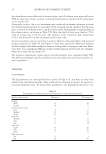
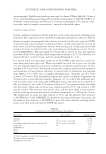
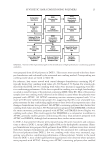
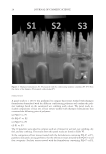
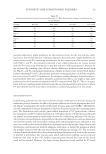
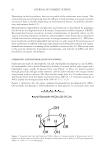
JOURNAL OF COSMETIC SCIENCE 100 rollers from contacting the scalp. The later development of the so-called machineless waving primarily involved the elimination of electric heaters and the subsequent use of reagents that induced exothermic chemical reactions to provide thermal stimulus (1). It can there- fore be seen why the next advancement in the area (and indeed the technology that still exists today) became known as a cold wave. It perhaps should go without saying that permanently changing the shape of hair requires a signifi cant rearrangement of its internal assembly. Hair predominantly comprises kera- tin protein, and long-lasting reshaping necessitates the use of chemical reagents that can deconstruct and subsequently reform this structure. Specifi cally, it is cross-linking cys- tine disulfi de moieties within protein chains that are targeted during this process. The reason for the two-step nature of the current technology becomes evident. First, these structure-supporting bonds are attacked while the hair is anchored in a desired conforma- tion. A subsequent second step then reforms these bonds to lock in the new shape. This review shows that the perm process involves rather straightforward textbook chemistry, but a sizable complicating factor involves the ability for reactants to come together. Equations in textbooks generally involve homogeneous gaseous- or liquid-state reactions where molecules readily collide and react. However, here, an extra level of complexity occurs as the aqueous perm active must fi rst diffuse into the hair and encounter appropriate chemical bonds in pertinent structural regions. This critical fi rst step is often glossed over when discussing the chemistry of the perm process. Perhaps, this arises because of the ease by which liquid water penetrates into hair, and it may therefore be presumed that dis- solved species do likewise. Yet, as will be outlined, this seems to be an oversimplifi cation. To illustrate this point, it is well-recognized within the industry that chemical treat- ments can produce a markedly different performance when used on hair from the heads of different individuals. In many instances, a given perm treatment will effectively produce the desired transformation, but in others, a considerably less successful outcome is attained. To an extent, this represents the “art” of the perming process as stylists attempt to judge and adjust application conditions to provide their client with the desired outcome. This occurrence is frustrating for all involved, but it also highlights a more fundamental issue, namely, there is nothing in our current understanding of the hair structure to explain this behavior. One hypothesis may involve some difference in the chemical composition of hair dictating variance in reactivity. This suggestion is not totally ruled out, but the cur- rent mindset within the industry is generally that the chemical makeup of hair of all shapes, sizes, and ethnicity is relatively constant (2). A resistance to chemical bleaching can also be encountered in certain individuals, and so emphasis seems to shift from any specifi c reaction chemistry to hair itself. This introduces a second postulate, wherein it is theorized that variability occurs because of a differing ability for materials to diffuse into and through the hair. This topic will be given particular attention over the cause of this study. Specifi cally, it will be demonstrated that distinctly different kinetic behaviors are encountered when applying a given perm formulation to hair procured from a selection of individuals. The most widely used active ingredient in today’s perms continues to be salts of thiogly- colic acid, whose usage dates back in origin to the early 1940s. Alternative actives also tend to fall within the general thiol classifi cation, as characterized by the presence of a sulfhydryl functional group. Figure 1 shows the chemical structure of a selection of thiols that have been used commercially in the perm industry. The scientifi c literature describes investigations involving a considerably wider range of such molecules, yet very few have

PERMANENT WAVING AND PERM CHEMISTRY 101 demonstrated commercially viability. This presumably has some relationship to the high cost associated with addressing toxicological issues. The main exception to the thiol cat- egory of actives involves the use of sodium sulfi te and bisulfi te, which can be found in weaker, so-called body waves or demi-perms. Although considerable effort has been dedicated to studying the cleavage of cystine disul- fi de bonds, relatively little has been published on their restoration. It is possible that this second step in the transformation is seen as somewhat trivial because bonds can be re- formed by air oxidation. Nonetheless, there is an obvious desire to properly perform this important function, and consequently, treatment with a “neutralizing agent” is prudent. With this said, it is generally not possible to completely rebuild all disulfi de bonds, and consequently, the hair is somewhat depleted in cystine content and therefore left in a compromised state. The variety of shapes and styles that can be created by this process is predominantly related to the accessories used to support the hair during this chemical process. It will be shown that a variety of formulation parameters are available for controlling the strength of these treatments, but tight curls are generally produced by wrapping the hair around rollers with a small diameter, whereas softer, looser curls are formed using larger curling rods. At the time of writing, the permanent wave market has been soft for many years because straight hair styles remain popular, yet this exact same chemistry is commonly used to fl atten curly hair. A survey of the beauty aisle will show several relaxer-type products that use conventional “perm chemistry.” These treatments can be effective on most hair types, although they are generally not strong enough to adequately straighten highly curly African hair. Before the advent of “Brazilian straightening,” the market was already familiar with “Japanese straightening,” which comprises traditional perm chemistry in combination with heat (presumably to drive kinetics). The hullabaloo created by Brazilian straighten- ing products has led to renewed interest in the development of new and improved ap- proaches to straighten hair. This has resulted in some novel product forms reaching the shelves, for example, smoothing creams incorporate conventional perm chemistry into a white opaque, conditioner-like base. In short, there is still considerable interest in this chemistry, even if it does not specifi cally relate to traditional perm products. To this end, it is further recognized that depilatory products often use this exact same chemistry, but in this instance, the intent is to produce more aggressive conditions that completely dis- integrate the hair structure. As with many fundamental aspects of hair structure and chemistry, it is evident that con- siderable learning comes from the related wool industry. Hair and wool possess very similar structures and chemistry, and much can be learned from the literature pertaining to this commercially important relation. Therefore, in certain instances, references from this related fi eld will be used to illustrate points. Figure 1. Structure of some common perm ingredients.
Purchased for the exclusive use of nofirst nolast (unknown)
From: SCC Media Library & Resource Center (library.scconline.org)