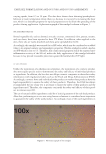
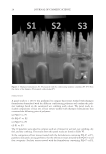
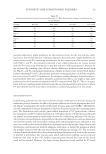
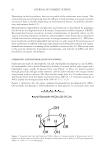
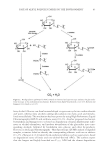
JOURNAL OF COSMETIC SCIENCE 102 AN OVERVIEW OF THE STRUCTURE OF HAIR RELATING TO THE PERM PROCESS A comprehensive review of the complex structure of hair is outside the scope of this article, and accordingly, the reader is referred to excellent texts in this area (3,4). Nonetheless, it is impossible to discuss the chemistry of the perming process without a brief overview. The tensile strength of a hair fi ber is widely believed to be dictated by the inner cortex structure, with no appreciable contribution from the outer protective cuticle. More specifi cally, it is the crystalline, alpha helical keratin protein contained within the inter- mediate fi laments (sometimes called microfi brils) that support the permanent mechanical integrity. Therefore, this region of the hair structure becomes the target for reagents in terms of both diffusion and reaction. More specifi cally, it is the disulfi de cross-links associ- ated with the amino acid cystine within the keratin protein that needs to be broken down and subsequently reformed. To his point, the fi rst part of the process involves incursion through the hair’s outer protective layer, the cuticle. This cumulative structure consists of overlapping tile-like scales which have further substructures as shown in Figure 2. This laminate structure consists of (from bottom to top) an endocuticle, exocuticle, A-layer, and epicuticle, with the degree of cross-linking increasing in this same order. Furthermore, the very outer layer of healthy hair consists of a lipid assembly (the f-layer) that provides an additional hydrophobic outer barrier. In short, water is unlikely to penetrate through the cuticle face in a top-to-bottom manner, except for when occasional advantageous cracks are present. The nature of this penetration pathway represents a topic of debate. Brady (5) advocated a “cell membrane complex diffusion” model where infi ltration occurs through the cell membrane complex “gaps” between the cuticle cells. This same idea has also been promoted by Leeder (6). However, Wortmann et al. (7) question this being the primary pathway because of the low level of this “ex- tracellular” material in the hair. Accordingly, an alternative theory was promoted which involved diffusion through all nonkeratinous components of the fi ber—most pre- dominantly, the endocuticle. This same idea has also been advocated by Swift (8), al- though Gummer (9) suggests that all structures within hair should be considered as penetration routes for the delivery of materials. With all this said, liquid water rapidly penetrates into the hair’s inner structure, and it may therefore be presumed that dissolved species would similarly diffuse readily. How- ever, it is becoming evident that water-soluble materials do take some time to permeate the structure. An analogy is drawn to the principles associated with liquid chromatogra- phy, whereby the mobile phase readily traverses the stationary phase and dissolved species progress at different rates depending on their size and interaction with the column. The reason for belaboring this point relates to the well-known occurrence that hair from Figure 2. Schematic of cuticle substructure.

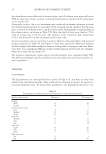
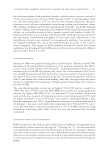
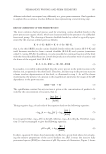
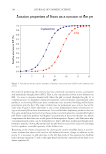
PERMANENT WAVING AND PERM CHEMISTRY 103 different individuals can respond very differently to a given perm treatment. One hypothesis to explain this occurrence involves diffusion rates representing a rate-limiting step. REDOX CHEMISTRY OF THE PERM PROCESS The most common chemical species used for attacking cystine disulfi de bonds in the perm process are organic thiols, which are characterized by the presence of a sulfhydryl functional group. The cleaving of keratin disulfi de bonds by a thiol is typically repre- sented by the reaction scheme given as follows : j K -S-S- K+RSH K -S-S-R+HS- K, ( 1) that is, the thiol (RSH) attacks cystine disulfi de bonds within the keratin (K-S-S-K) and itself becomes attached to form a mixed disulfi de (K-S-S-R) and cysteine (sometimes called ½ cystine, HS-K). In addition, it is also possible for continued reaction of the thiol with the mixed disulfi de (Reaction 2) with the production of another mole of cysteine and the dimer of the original thiol (R-S-S-R). j K -S-S-R+RSH 2K - SH+RSSR (2) In actuality, it is widely acknowledged that the active species in the perm reaction is the thiolate ion, as opposed to the thiol itself. Therefore, the fi rst step in the previous reaction scheme involves deprotonation of the thiol, as illustrated in step 3. As will be shown momentarily, the presence of a proton in this equilibrium represents the origin of the pH dependence in the perm reaction. j RSH RS H ( 3) The equilibrium constant for any reaction is given as the concentration of products di- vided by the concentration of reactants, that is: ¯ ¯ ¡ ¡ ± ± RS K RSH (4 ) T aki ng negative log10 of each side of the equation leads to the following equation: ¯ ¡ ± ¯ ¡ ± 10 10 10 RS log K log H log RSH (5) It is recognized that -log10 [H+] is the pH, whereas -log10 K is the pKa. Therefore, equa- tion (5) can be rearranged to give the following equation: ¯ ¡ ± 10 RS pH pK log RSH a (6) In sh ort , equation (6) shows how knowledge of pKa for a given thiol allows for calculat- ing the relative proportions of the active thiolate ion, [RS-] versus the inactive fully protonated species [RSH] as a function of pH. By means of illustration, Figure 3 shows
Purchased for the exclusive use of nofirst nolast (unknown)
From: SCC Media Library & Resource Center (library.scconline.org)