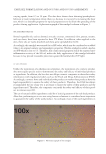
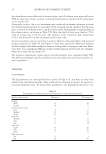
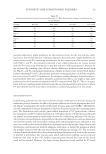
JOURNAL OF COSMETIC SCIENCE 4 E VALUATION OF EMULGEL FORMULATIONS I n vitro assessment. The prepared emulgel formulation was evaluated for its stability and quality using in vitro tests. p H measurement. T he pH of emulgel formulations was determined by using a pH meter at room temperature (25°C ± 1°C). Samples were prepared by dilution of 1 g of emulgel to 10 mL with purifi ed water. The measurement of pH of each formulation was carried out in triplicate, and average values were calculated. Cent rifuge test. Cent rifugation of emulgel was performed at 3,000 rpm in Eppendorf tubes at room temperature. The inspection was carried out for possible phase separation after 15, 30, and 60 min. Dye and microscopic analysis test. Micr oscopic examination was performed using an optical microscope (Olympus, Cx22led, Tokyo, Japan) with ×40 magnifi cation. Samples were diluted with an amaranth solution (water-soluble dye). Visco sity test. The v iscosity of the emulgel was assessed using a Brookfi eld viscometer (spindle No. 6). The viscosity of samples was determined at room temperature using dif- ferent rotational speeds for 1 min each. Stabi lity test. For s tability studies of cosmetic preparations, the selected formulation was subjected to freeze–thaw (F/T) cycling. In the fi rst cycle, the formulation was kept at +4°C for 24 h in a refrigerator and then thawed at room temperature (25°C) for 24 h. In the second cycle, samples were kept at 4°C for another 24 h, and then they were thawed at 40°C in the oven for 1.5 h. Afterward, samples were incubated at room temperature for 1 h before pH measurements and microscopic analysis. Spreadabi lity test. Spreadabi lity is a term expressed to denote the extent of the area to which the emulgel readily spreads on application to the skin or affected parts (21). It was expressed in terms of time in seconds taken by two slides to slip off from the emulgel which was placed in between the slides, under a certain load. Lesser the time taken for separation of the two slides, better is the spreadability. Two sets of glass slides of standard dimensions were taken. The herbal emulgel formulation was placed over one of the slides. The other slide was placed on the top of the emulgel, such that the emulgel was sand- wiched between the two slides in an area occupied by a distance of 30.6 cm along with the slide. The two slides in position were fi xed to a stand without slightest disturbance in such a way that only the upper slide to slip off freely by the force of weight tied to it. A 150-g weight was tied to the upper slide carefully. The time taken for the upper slide to Table II Quantities for 1% w/w LG Emulgel Ingredient Quantity (g) Primary emulsion phase Olive oil 8.98 LG oil 1.02 Acacia gum 3 Water 6 Gel phase Carbopol 934 2 TEA 2 Glycerin 4 Water 94

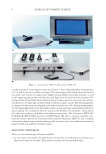
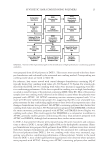
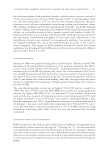
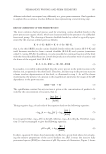
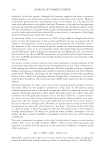
EMULGEL FORMULATION AND IN VITRO AND IN VIVO ASSESSMENT 5 travel the distance of 30.6 cm and to separate away from the lower slide under the infl u- ence of the weight was calculated (22). Spreadabi lity was calculated by using the following formula: S , l Mq t where S is the spreadability, m weight tied to the upper slide (150 g), l length of the glass (30.6 cm), t time in seconds. In addition, the viscosity of the emulgel was measured at varying speeds, from 0.5 to 50 rpm. Assessment of the Sun Protection Factor (SPF). Sunscreen is used to minimize the effect of ultraviolet radiation on the skin because the ultraviolet light is one of the major causes of skin cancer (23). Sunscreens are classifi ed according to their SPF value. The SPF value of our formulation was assessed according to the Mansur method as reported in the following text. Stock solu tion preparation. A stock so lution of 50 μg/mL concentration was prepared by weighing 5 mg of LG emulgel in an elementary fl ask, and then ethanol (99.9%) was added to LG emulgel until the volume reached 100 mL. Absorbance determination. A spectroph otometer (Jenway, UK) was used to measure the absorbance of different samples between 290 and 320 nm (Table III). The SPF could be calculated using the Mansur equation (24). Ȝ Ȝ Ȝ q q qabs EF 320 290 SPF Spectrophotometric CF , I where CF i s the correction factor, and it is equal to 10 EE (λ) denotes erythemal effect spectrum I (λ) is the solar intensity spectrum and Abs is the absorbance of a sunscreen product. The values of EE (λ) × I (λ) are constants. It is determined by (25). Cutometer. T he Cutomet er® skin elasticity meter (SEM) 575 (COURAGE+KHAZAKA electronic GmbH, Köln, Germany) (Figure 1A), which is the successor of the Cutometer SEM 474, is an independent device that includes two basic parts. The main unit is a metal housing containing a vacuum pump with a pressure sensor and microelectronics. The load of the vac- uum (negative air pressure), the rate of its increase or decrease, the duration of suction (on time) and relaxation (off time), and the number of measuring cycles during one measurement can be defi ned through Cutometer software. The resolution of applied pressure is equal to 1 mbar. The measuring probe is a handheld probe containing the suction head, optical measur- ing system, and microelectronics. The suction head is centered in the probe and has a standard Table III Normalized Product Function Used in the Calculation of SPF Wavelength (λ nm) EF (λ) × I (λ) 290 0.0150 295 0.0817 300 0.2874 305 0.3278 310 0.1864 315 0.0839 320 0.0180 Total 1
Purchased for the exclusive use of nofirst nolast (unknown)
From: SCC Media Library & Resource Center (library.scconline.org)