JOURNAL OF COSMETIC SCIENCE 2 a gel base. The obtained formulation shows better properties than emulsion or gel alone. In fact, the presence of gel decreases the greasy feel of the product which may result in better consumer compliance (3). In addition, it exhibits many other properties that makes it favorable for dermatological use, including being thixotropic, emollient, nonstaining, easily removed, easily spreadable, and pleasing appearance (4). Accordingly, emulgel has emerged as one of the fabulous cosmetic and topical drug delivery systems because it delivers hydrophobic materials and has a dual release system (5–7). Several fi xed oils are light, low in viscosity, and less occlusive than mineral oils. Their carrying and penetrating properties, as well as their natural content of tocopherols, carot- enoids, and essential fatty acids, render them valuable in nutritional, pharmaceutical, and cosmetic fi elds. Volatile oils are rich in fl avors and odorous compounds, which are used as fragrances, especially in the cosmetic industries. These oils act in different ways: psycho- logical (e.g., aromatherapy), physiological (e.g., anti-infl ammatory effects), and cosmetic (e.g., preservative effects because of antibacterial or antioxidant properties). They are used in the cosmetic and perfume industries as fragrances and in skincare products to promote hormonal balance to combat the buildup of toxins and for emollience of skin (8). Accordingly, preparing natural emulgel containing functional fi xed and essential oils would be of great interest and benefi t as a skin moisturizer. Cymbopogon citratus (DC.) Stapf (family: Poaceae) as lemongrass (LG), belongs to the grass family which is culti- vated in almost all tropical and subtropical countries (9). Its essential oil content is ap- proximately 1–2% calculated on a dry basis of the grass (10). The essential oil is characterized by a very high citral level (11). (12) Moreover, LG is an edible herb that is widely used in cooking, as a herbal tea, and in traditional medicine for the treatment of hypertension and diabetes (13). In addition, it showed broad-spectrum antimicrobial activity (14). In Brazilian folk medicine, LG herbs are used as a home remedy because of its anxiolytic, hypnotic, and anticonvulsant properties (15,16). The histological analysis confi rmed that LG essential oil inhibits the skin infl ammatory response in animal models (17,18). Another study showed that LG has an important insect-repellant activity which makes it a valuable preparation for this regard (19). This study aimed to formulate and evaluate the in vitro and in vivo characteristics of natural emulgel based on LG essential oils obtained from Palestine. Accordingly, the best source of LG oil was assessed based on growing conditions (wild or cultivated) and the harvesting time. MATERIALS AND METHODS MATERIAL Olive oil and LG oil were extracted from natural local sources (West Bank/Palestine). Carbopol 934 was purchased from Sunpharm (Nablus, Palestine), and glycerin and triethanolamine (TEA) were provided by Al-Zahra’a (Nablus, Palestine). Acacia was obtained from Sigma G-9752, and amaranth was provided by Sigma-Aldrich (Darmstadt, Germany) 12056-1. PLANT MATERIAL AND EXTRACT PREPARATION Two types (cultivated and wild) of C. citratus plant leaves were collected from the north West Bank of Palestine. The leaves were harvested from March to May. A voucher specimen

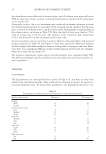
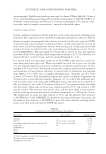
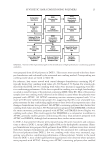
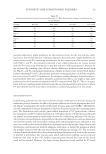
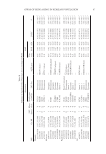
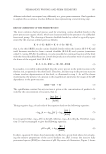
EMULGEL FORMULATION AND IN VITRO AND IN VIVO ASSESSMENT 3 (voucher # Pharm-Pharmaceutical Chemistry and Technology-2084-5) was deposited at our laboratory herbarium. For the extraction of LG oil, the leaves were separated with meticulous care, washed twice with distilled water, and dried for 7–10 days in the shade at room temperature to avoid extra damage and to minimize cross-contamination, and then the dried leaves were grounded. In this work, a microwave-accelerated distillation method was used for volatile oil extraction. The power of the oven was set up at 700 W (70% power) and 100°C temperature. About 250 g of C. citratus powdered leaves were mixed with 500 mL deionized water and placed in a 1,000-mL round bottom microwave fl ask. The distillate was collected in a beaker, and CaCl2 was added to dry the obtained oil. Finally, the distillate was weighed and placed in well-closed amber-colored bottles. The % yield was calculated using the following equation: q100, % yield Bm M where M is the mass of the extracted oil (g) and Bm is the initial plant biomass (g). P REPARATION OF EMULGEL T he emulgel was prepared using the levigation technique. In this step, a previously pre- pared primary emulsion and gel were accurately levigated together. The components of the formulation are reported in Table II. P reparation of primary emulsion. The preparation of the primary emulsion was adopted us- ing a standard method as summarized in Table I (20). The amount of water and acacia was calculated separately for olive oil (fi xed oil) and LG (essential oil). Olive oil and LG were accurately measured and placed in a dry mortar (oily phase), and then acacia was added to the oil phase and mixed gently to disperse the gum lumps, and fi nally, the aqueous phase was immediately added while stirring continuously until the mixture became thick. P reparation of gel. The compounds and amounts of the emulgel formulation are reported in Table II. To prepare the gel phase, Carbopol 934 and glycerin were dispersed deion- ized water was added under constant and gentle stirring using a homogenizer. The hydro- gel pH was adjusted around 6.5 using TEA, and it was continuously stirred until the gel is formed. F inal steps of emulgel formulation. The obtained primary emulsion was incorporated with the calculated amount of hydrogel through hand levigation, by using tile and fl at spatulas until achieving the desired fi nal emulgel. The formed emulgel was placed in a suitable tightly closed plastic jar and stored in a cool dry place for stability and clinical evaluation. Table I Quantities of the Primary Emulsion Type of oil Example Quantities for primary emulsion (parts) Oil (mL) Water (mL) Gum (g) Fixed Olive oil 4 2 1 Volatile LG oil 2 2 1
Purchased for the exclusive use of nofirst nolast (unknown)
From: SCC Media Library & Resource Center (library.scconline.org)