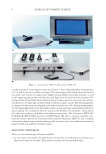
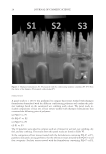
JOURNAL OF COSMETIC SCIENCE 20 POLYMER SYNTHESIS All poly mers in this study were synthesized using a semi-continuous parallel pressure reac- tor (ScPPR FreeSlate, Sunnyvale, CA). This reactor consists of three metal blocks (A, B, and C), each containing eight cells (A1–A8 in block A, B1–B8 in block B, and C1–C8 in block C), enabling 24 parallel polymer syntheses. A glass insert with 10 mL total volume (6 mL working volume) was placed into each cell. Each cell was supplied with eight feed lines, and therefore, up to eight liquid components (monomers, initiators, and solvents) could be de- livered to each of the 24 inserts through the feed lines. A set of computer-controlled pumps and valves controlled the addition of these components and enabled delivery of different volumes into each insert. Reaction mixtures were mechanically stirred using plastic impel- lers, and the reactor blocks were heated to the desired temperature. In a typ ical polymerization, aqueous solutions of APTAC (1.17 g APTAC), DMAEMA (0.43 g DMAEMA), and AAm (0.11 g AAm) were used, as well as a 15-wt% dioxane solution of BA (0.09 g BA). The total amount of monomers in a run was 1.80 g. TBHP and SFS were used as an initiator redox pair they were added in amounts of 0.60 wt% and 0.30 wt%, respectively, relative to the total amount of monomers. The fi nal volume of the reaction mixture (including water) was 6.0 mL at 30% (wt/v) solids. Batch and semi- batch protocols for monomer addition were used in this work. In a typical batch process, all monomers were loaded into the inserts at the beginning of the run. The mixture was heated to 55°C with stirring, and the initiator (TBHP/SFS) was added over 4 h at 55°C, followed by heating at 55°C and stirring for an additional hour. In a typical semi-batch process, 30% of the monomers were added at the beginning of the run, and the mixture was heated to 55°C while stirring at 400 rpm (revolutions per minute). The remaining 70% of the monomers were added over 4 h at 55°C with stirring, with the initiator (TBHP/SFS) being added over that same 4-h period. The reaction mixture was then stirred at 55°C for an additional hour. Polymers were dried in vacuo. MONOMER CONVER SION The amounts of residual monomers in the polymerization mixtures were determined by high pressure liquid chromatography using a Luna C18 4.6 mm × 150 mm, 3 μm column, and a Luna C18 3 mm × 4 mm guard column (Phenomenex, Torrance, CA). Water and acetonitrile containing 0.08% trifl uoroacetic acid were used as a mobile phase, with the following gradient at 1.0 mL/min with UV detection (at 195, 205, or 215 nm). Monomer convers ions were 93% in all cases. POLYMER MOLECULAR W EIGHT The weight average molecular weight, Mw, and polydispersity (PDI) of the polymers were deter- mined relative to narrow poly(ethylene oxide) standards in aqueous solution using size exclusion

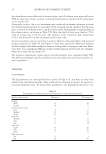
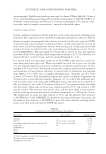
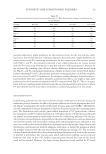
SYNTHETIC HAIR CONDITIONING POLYMERS 21 chromatography. The following conditions were used: (i) column: TSKgel Alpha-M (7.8 mm × 30 cm, 13μ) (Tosoh Biosciences, King of Prussia, PA), ii) mobile phase: 0.5 M CH3COOH + 0.1 M NaNO3 in deionized water, (iii) fl ow rate: 0.55 mL/min temperature: 25°C detector: refrac- tive index, and (iv) sample concen tration: 1 mg/mL in the mobile phase. SHAMPOO FORMULATIONS C ationic polymers synth esized in this work were used in the preparation of shampoo for- mulations. The composition of the standard test shampoo formulation is shown in Table II. Shampoo samples were pr epared both on bench scale and on 6 mL scale using the ScPPR. A typical bench scale procedure is outlined as follows: (i) add surfactant base to tared jar with stirrer (ii) slowly add polymer solution with stirring stir at high speed until well mixed (~30 min) (iii) add 10 wt% citri c acid solution to formulation, stir for 10 min (iv) add DMDMH 55. Mix thoroughly for 10 min and (v) stir for 45 min , fi rst applying heat (water bath, 60°C), and then allow temperature to decline to 23°C (vi) add water to a total of 100 wt%, stir for 15 min and (vii) check pH (shou ld be ~5.5). In a typical 6-mL scale procedure conducted on the ScPPR, eight dried (in vacuo) poly- mers were placed into eight vials. Water was added into each vial to give a set of eight 2.0 wt% polymer dispersions that were stirred fi rst at ambient temperature for 30 min, and then at 65°C for 30 min. The desired outcome was complete dissolution of the polymers and formation of clear polymer solutions. A master batch of surfactants was prepared from SLES-2 (73.7 wt%) and cocoamphocarboxyglycinate, disodium salt (8.4 wt%) in water (17.9 wt%). This masterbatch mixture was stirred at ambient temperature for 30 min to give a clear surfactant solution. Aliquots (4.13 g each) of this surfactant solu- tion were placed into each of the eight ScPPR glass inserts, and either water control (0.75 mL no polymer) or one of the 2% polymer solutions (0.75 g) prepared earlier was added into the inserts. These eight mixtures were capped, heated to 65°C, and stirred at 1,400 rpm for 20 min. The mixtures were cooled, citric acid was then added to each solution, and the resulting mixtures were stirred at ambient temperature at 1,400 rpm for 10 min. The temperature set point was then reduced to 15°C, and the mixtures were stirred at 1,400 RPM for 15 min. DMDMH 55 preservative was then added into each insert, and the mixtures were stirred at 1,400 RPM for 2 min. The inserts with the resulting formu- lations were then removed from the ScPPR and sealed. Table II Composition of a Standard Shampoo Formulation Ingredient Active (wt%) Amount (wt%) Polymer 2 15.00a SLES-2b 25.7% active, as received 60.78 Cocoamphocarboxyglycinate, disodium saltc 38.5% active, as received 6.92 Citric acid 10 2.2 DMDMH 55 – 0.4 Water – 14.7 Total 100 a 0.30 wt% polymer solids in fi nal formulation. b Primary anionic surfactant. c Amphoteric surfactant.
Purchased for the exclusive use of nofirst nolast (unknown)
From: SCC Media Library & Resource Center (library.scconline.org)