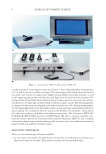
JOURNAL OF COSMETIC SCIENCE 22 WET COMBING WORK The objecti ve wet combabilit y was measured by pulling a small comb through a wet hair tress and using a tensile tester to measure total combing work done (force exerted vs. displacement) (34,35). Hair tresses (mass ~5 g) were prewashed fi rst to remove any contamination and ensure tress uniformity, then washed with a shampoo base (0.5 g) without conditioning polymer, and rinsed at constant temperature followed by measurement of wet combing work (control). The same tress was subsequently washed again with the shampoo containing the conditioning polymer candidate, rinsed, and the wet combing work measured again. The wet hair tresses were attached to a multichannel parallel tensile tester, referred to here as the automated tensile tester. A small plastic comb was pulled through each hair tress at a pull- ing speed of 40 mm/min over a path length of 160 mm, and the force required to comb the hair was reported versus comb displacement. Conditioning effi cacy is expressed as the work (N-mm) required to comb the hair tress as determined by the area below the force (mea- sured in N) versus displacement curve and reported as the automated wet combing work. SUBJECTIVE WET FEEL A subjec tive and comparative rating of the wet feel of the tresses after shampooing was used in the evaluation of many polymer libraries. Hair tresses were rated on a scale of 0 through 5, with 0 being the best feel and fi ve being the worst. SILICONE DEPOSITION Silicone -containing shampoo formulations were prepared using the same procedure as described for shampoo formulations without silicone, except that the polymer level was reduced to 0.25 wt%, and two additional components were included in the formulation: ethylene glycol distearate and silicone emulsion DC 1664 (50% active), each at 2.0 wt% in the formulation. The amount of silicone deposited on the hair after treatment with silicone-containing shampoo formulations was then determined (3) the hair tress (~5 g) was washed with a silicone-containing shampoo formulation (0.5 g) and rinsed at con- stant temperature. The hair was then extracted with a 1:1 (v/v) mixture of methyl butyl ketone and toluene. Atomic absorption spectroscopy was used to measure the silicone content, which is reported as the mass of silicone (μg) / mass of hair (g). RESULTS AND DISCUSSION METHOD VALIDATION Before scre ening candidate po lymers, it was necessary to validate the automated tensile tester method for determining wet combing work for each conditioning polymer candi- date and to determine whether this method gives results comparable to standard bench- top methods, including a correct ranking of conditioning performances for known conditioning polymers. The following set of commercial polymers, with the following previously determined ranking of conditioning effi ciencies from highest to lowest (based on least to most work on combing as well as extensive historical panel testing), was used:

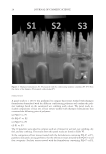
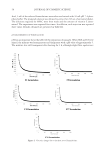
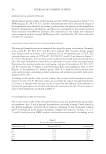
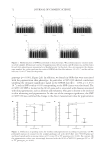
SYNTHETIC HAIR CONDITIONING POLYMERS 23 No polymer CELLOSIZE™ QP 10 0MH UCARE™ JR-400 (PQ-10) UCARE™ LR-30M (PQ-10) UCARE™ JR-30M (PQ-10) SOFTCAT™ SL-5 (PQ-67). Five shampoo formulations were pre pared with these fi ve commercial polymers, whereas a reference shampoo formulation was prepared without any conditioning polymer. Hair tresses were treated with these formulations and evaluated for wet combing via the auto- mated tensile tester. Example wet-combing curves for shampoos containing PQ-67 and no polymer are shown in Figure 2A. The areas under the curves for all samples were integrated using the “trapezoid rule,” and the resulting values, representing wet combing work in N-mm, are shown in Figure 2B. The ranking of commercial polymers via the automated wet combing method showed reasonable correlation (within experimental error) to the known ranking aforementioned. It was concluded that this method could also yield a valid ranking for the synthetic poly- mers. Thus, several hundred cationic polymers were synthesized from a variety of vinyl monomers and screened for performance, with the objective of identifying synthetic vinyl monomer-based polymers that exhibit conditioning performance greater than that of the current commercially available semi-synthetic conditioning polymers. Figure 2. (A) Example wet-combing curves for hair tresses treated with shampoos formulated with conditioning polymer PQ-67 (two samples “with PQ-67,” or SL-5), and without any conditioning polymer (two samples “no polymer”). (B) Automated wet-combing work for hair tresses treated with shampoos containing commercial conditioning polymers. Four or more replicates were used unless otherwise noted. Dark bars are error bars.
Purchased for the exclusive use of nofirst nolast (unknown)
From: SCC Media Library & Resource Center (library.scconline.org)