JOURNAL OF COSMETIC SCIENCE 48 physiological/biological activities. Its major biologic activity is related to the maintenance of the organism oxidation–reduction potential (1–3). In addition, vitamin C helps to regen- erate the oxidized forms of α-tocopherol. These properties of vitamin C are the basis for the antiaging claims made by the skincare industry (4–7). However, conventional vitamin C formulations have diffi culty in penetration to the skin in stabilization and topical applica- tion. It can be easily degraded in the presence of oxygen, humidity, and high temperature during processing and storage. Therefore, to overcome the instability of vitamin C, different approaches have been explored. Among them, one can cite encapsulation of vitamin C by liquid crystals, microemulsions, nanocapsulation, and liposomes (8–11). Nanoparticle delivery s ystems have been shown to be very effective in stabilizing drugs to overcome biological barriers and to control the release rate and duration of drugs. Moreover, the nanoscale particles are collected under high–vascular permeability sites, and nanoparticles can be made cell-specifi c by targeting to the surface of the ligands (12). Nanogels are nanoscale particles capable of swelling by physically, chemically cross-linking hydrophilic, or amphiphilic polymer chains, which may be ionic or nonionic. Nanogels act as carriers for drug delivery by absorbing the biologically active molecule through salt bonds, hydrogen bonds, or hydrophobic interactions. Nanogels are very promising as drug delivery carriers because of their high stability, high drug loading capacity, and hypersensi- tive reactions to factors such as ionic strength, pH, and temperature for commonly used nanocarriers (13). In this study, chitosan (CS) [low–, medium–, and high–molecular weight deacetylated chitin, poly(D-glucosamine)] was chosen as polymer for preparation of nanogel formulations because of its cationic, nontoxic, biocompatible, and biodegradable properties (14). Bovine serum albumin (BSA) was used as protein because of its medical importance, abundance, low cost, ease of purifi cation, unusual ligand-binding properties, and wide ac- ceptance in the pharmaceutical industry (15). Nanogels based on CS and BSA were fabri- cated by the self-assembly technique, which is a simple, green, and low-cost process (15). The aim of this study w as to prepare a more effective formulation by eliminating the stability and absorption problems of topical application of conventional preparations of vitamin C. For this purpose, it was aimed to prepare a high-stability dosage form with the potential to eliminate the absorption problem of the active ingredient vitamin C, which supports the production of the anti-infl ammatory agents, antioxidants, and colla- gen, to carry out quality control studies and to test the antioxidant effectiveness of this dosage form in vitro. Nanogel formulations were prepared using different ratios of CS and BSA. To determine the physicochemical properties of the formulations, characterization studies such as particle size, polydispersity index (PI), zeta potential, viscosity, pH, rheo- logical analyzes, and imaging studies were performed, and formulations were evaluated according to the results obtained. In addition, stability studies were carried out to exam- ine the physical stability of nanogel formulations, and the cell culture studies and anti- oxidant activities of these vitamin C–loaded nanogel formulations were also examined. MATERIALS AND METHODS M ATERIALS Vitamin C, 2, 2-difenil- 1-pikrilhidrazil, acetic acid, BSA, CS (high, medium, and low molecular weight), and methanol were purchased from Sigma-Aldrich, Germany. N-octanol

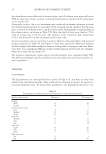
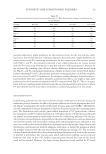
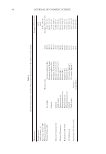
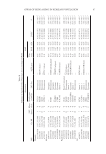
PHARMACEUTICALLY OPTIMIZED TOPICAL NANOGEL FORMULATION 49 was purchased from Merck KGaA (Darmstadt, Germany) and all other chemicals used were of analytical grade. PREPARATION OF NANOGEL FORMULATIONS To prepare nanogel form ulations, low–, medium–, and high–molecular weight CS dif- ferent concentrations of acetic acid solution and BSA were used. Based on the different rates determined as a result of the literature studies (1:4), (1:5), (1:6) and (13:10) determined with different rates of CS/BSA, 39 formulations were pre- pared (15). CS was dissolved in 0.75% or 1% acetic acid solution at concentrations of 1%, 0.75%, or 0.5% and allowed to swell overnight. The CS/BSA weight ratio was calculated, and BSA solutions were prepared at 0.02–0.5%. BSA solution was added dropwise to the prepared CS solution and stirred for 1 h at 300 rpm at room temperature. Formulations were prepared using two methods in which pH adjustments of the formulations were carried out at different stages. Method A. The mixture w as then he ld with high-speed stirring in a water bath set at 80°C for 1 h. It was then cooled to room temperature. It was then adjusted to the desired pH with 0.1 M NaOH solution. Then, 10 mL of each formulation was taken, and 0.1 g of ascorbic acid was added. The formulations were then allowed to stir for a further 3 h. Method B. The pH of the formulatio ns was adjusted with 0.1 M NaOH solution. The mixture was then held with high-speed stirring in a water bath set at 80°C for 1 h. It was then cooled to room temperature. Prepared nanogel formulations are shown in Table I. ADDITION OF ACTIVE INGRED IENT TO SELECTED FORMULATIONS As a result of the charac terization studies, 10 mg/mL concentration of vitamin C was added to the optimum formulations. After blank nanogel formulations were prepared, vitamin C was added to the formulations and then stirred for 3 h at 300 rpm for loading. CONTENT QUANTITY DETERMIN ATION One milliliter of the sel ected formulation was taken and mixed with 10 mL pH 7.4 phosphate buffer. The prepared solution was allowed to extract for 24 h on a horizontal shaker. The dilu- tions required for HPLC (Accela, Thermo Fisher Scientifi c, Waltham, MA) were then made, and the amount of vitamin C determined. The experiment was repeated fi ve times. The amount of vitamin C i n samples was analyzed by HPLC using a C18 column (5 μm, 4.6 × 250 mm), a DAD detector set at 245 nm, and methanol/0.05% H3PO4 solution (15:85, volume/volume) as mobile phase with a fl ow rate of 1.0 mL/min. PHYSICAL APPEARANCE OF FORMUL ATIONS The physical appearance of na nogel formulations containing vitamin C at room tempera- ture (25 ± 2°C) was evaluated.
Purchased for the exclusive use of nofirst nolast (unknown)
From: SCC Media Library & Resource Center (library.scconline.org)