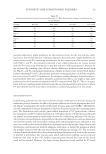
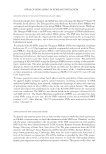
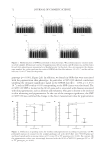
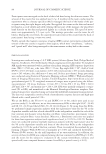
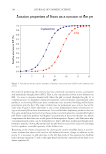
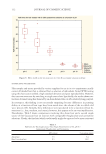
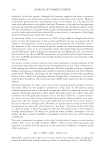
JOURNAL OF COSMETIC SCIENCE 60 terms of antioxidant activity. The antioxidant activity of F27 nanogel was found to be low compared with both vitamin C (10 μg/mL) and other vitamin C–loaded nanogels. STABILITY S TUDIES OF FORMULATIONS The formula tions selected optimally for stability studies were placed in two different conditions in the stability chamber containing 60% relative humidity at room tempera- ture at 25°C and 75% relative humidity at 40°C at certain time intervals (15 d, 1, 2, 3, and 6 mo). Selected formulations were stable, and there was no serious change in physical properties during 6 mo (data not shown). CONCLUSION Be cause nanog el-based materials have high drug loading capacity, biocompatibility, stabil- ity, and biodegradability, which are the key points to design a topical drug delivery system, in our study, nanogels were used to develop a formulation, which overcame the stability and absorption problems of vitamin C. And nanogels were successfully prepared by physical self-formation with the polymers, BSA, and CS by a simple green self-assembly technique. The results of in vitro characterization and the antioxidant activity studies were proved that vitamin C–loaded nanogels including CS:BSA with a 1:4 ratio (F19 formulation) presented optimum properties in terms of entrapping vitamin C, formulation homogeneity, pH, viscosity, rheological properties, zeta potential, PI, particle size, in vitro dissolution, and cell culture studies. In light of this study, a stable and an applicable topical nanogel of vitamin C was prepared, and it is promising for clinical studies for antiaging purposes. Figure 5. In vitro antioxidant activity of nanogels. ap 0.05 versus 1 mg vitamin C, F1, F9, F19, F27, and F31, bp 0.05 versus other groups, cp 0.05 versus 10 μg vitamin C, 1 mg vitamin C, F1, F9 F27, and F31, dp 0.05 versus 10 μg vitamin C, 1 mg vitamin C, F1, F9, F19, and F31.

PHARMACEUTICALLY OPTIMIZED TOPICAL NANOGEL FORMULATION 61 ACKNOWLEDGMEN TS This study wa s supported by a research grant from Ege University (15-ECZ-005). We would like to acknowledge E.U. Pharmaceutical Sciences Research Center (FABAL) for enabling us to use its laboratory instruments. REFERENCES ( 1) M. P. Lu p o, Antioxidants and vitamins in cosmetics, Clin. Dermatol., 19(4), 467–473 (2001). (2) P. Ratta n awiwatpong, R. Wanitphakdeedecha, A. Bumrungpert, and M. Maiprasert, Anti-aging and brightening effects of a topical treatment containing vitamin C, vitamin E, and raspberry leaf cell cul- ture extract: a split-face, randomized controlled trial, J. Cosmet. Dermatol., 19, 671–676 (2020). (3) A. M. Ma i a, A. R. Babya, W. J. Yasaka, E. Suenaga, T. M. Kaneko, and M. V. R. Velasco, Validation of HPLC stability-indicating method for vitamin C in semisolid pharmaceutical/cosmetic preparations with glutathione and sodium metabisulfi te, as antioxidants, Talanta, 71, 639–643 (2007). (4) A. Chiu a nd A. B. Kimball, Topical vitamins, minerals and botanical ingredient as modulators of envi- ronmental and chronological skin damage, Br. J. Dermatol., 149, 681–691 (2003). (5) C. L. Ph i llips, S. Tajima, and S. R. Pinnel, Ascorbic acid and transforming growth factor-ß1 increase collagen biosynthesis via different mechanisms: coordinate regulation of pro-alpha 1(I) and pro-alpha 1(III) collagens, Arch. Biochem. Biophys., 295, 397–403 (1992). (6) J. C. Gee s in, D. Darr, R. Kaufman, S. Murad, and S. R. Pinnell, Ascorbic acid specifi cally increases type I and type III procollagen messenger RNA levels in human skin fi broblast, J. Invest. Dermatol., 90, 420–424 (1988). (7) J. M. Pul l ar, A. C. Carr, and M. C. M. Vissers, The roles of vitamin C in skin health, Nutrients, 9, 866 (2017). (8) P. K. Vem u la, U. Aslam, V. Ajay Mallia, and G. John, In situ synthesis of gold nanoparticles using mo- lecular gels and liquid crystals from vitamin-C amphiphiles, Chem. Mater., 19(2), 138–140 (2007). (9) B. Rozman , A. Zvonar, F. Falson, and M. Gasperlin, Temperature-sensitive microemulsion gel: an effec- tive topical delivery system for simultaneous delivery of vitamins C and E, AAPS PharmSciTech, 10(1), 54–61 (2009). (10) J. H. Ya n g, S. Y. Lee, Y. S. Han, K. C. Park, and J. H. Choy, Effi cient transdermal penetration and im- proved stability of L-ascorbic acid encapsulated in an inorganic nanocapsule, Bull. Korean Chem. Soc., 24(4), 499–503 (2003). (11) Z. Jiao, X. Wang, Y. Yin, and J. Xia, Preparation and evaluation of vitamin C and folic acid-coloaded antioxidant liposomes, Part. Sci. Technol., 37(4), 453–459 (2019). (12) D. Li, C . F. van Nostrum, E. Mastrobattista, T. Vermonden, and W. E. Hennink, Nanogels for intracel- lular delivery of biotherapeutics, J. Contr. Release 259, 16–28 (2017). (13) A. V. Kab a nov and S. V. Vinogradov, Nanogels as pharmaceuticals carriers: fi nite networks of infi nite capabilities. Angew. Chem. Int. Ed. Engl. 48(30), 5418–5429 (2009). (14.) S. Rençbe r , S. Y. Karavana, F. F. Yılmaz, B. Eraç, M. Nenni, S. Özbal, Ç. Pekçetin, H. Gurer Orhan, M. Hoşgör Limoncu, P. Güneri, and G. Ertan. Development, characterization and In Vivo assessment of mucoadhesive nanoparticles containing fl uconazole for the local treatment of oral candidiasis, Int. J. Nanomed., 11, 2641–2653 (2016). (15) Y. Wanga, S. Xuc, W . Xionga, Y. Pei, B. Li, and Y. Chen, Nanogels fabricated from bovine serum albu- min and chitosan via self-assembly for delivery of anticancer drug, Colloids Surf. B: Biointerfaces, 146, 107–113 (2016). (16) G. Sandri, S. Rossi , F. Ferrari, M. C. Bonferonia, C. Muzzarelli, and C. Caramella, Assessment of chitosan derivatives as buccal and vaginal penetration enhancers. Eur. J. Pharmaceut. Sci., 21, 351– 359 (2004). (17) J. Y. Chang, Y. K. O h, H. S. Kong, E. J. Kim, D. D. Jang, K. T. Nam, and C. K. Kim, Prolonged an- tifungal effects of clotrimazole-containing mucoadhesive thermosensitive gels on vaginitis, J. Contr. Release, 82(1), 39–50 (2002). (18) M. Mathew and S. Su b ramanian, In vitro screening for anti-cholinesterase and antioxidant activity of methanolic extracts of ayurvedic medicinal plants used for cognitive disorders, PLoS One, 9(1), e86804 (2014). (19) T. Şenyiğit, F. Son v ico, S. Barbieri, Ö. Özer, P. Santi, and P. Colombo, Lecithin/chitosan nanoparticles of clobetazol-17-propionate capable of accumulation in pig skin, J. Contr. Release, 142(3), 368–373 (2010).
Purchased for the exclusive use of nofirst nolast (unknown)
From: SCC Media Library & Resource Center (library.scconline.org)