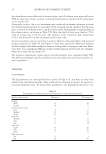
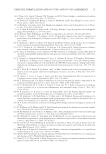
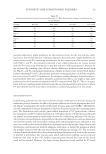
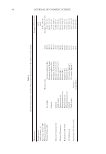
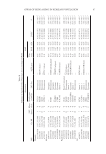
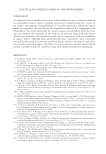
SNP Chr:BP SNP clusterallele a Minor Annotation eQTL gene MAF β (SE) b P Nearby gene (500 kb) SNP Pos. This study KOR ASN SNP Chr. pos SNP cluster a Minor allele Annotation eQTL gene MAF OR (95% CI) c P Nearby gene (500 kb) SNP Pos This study KOR ASN Sensitivity rs7334780 13:106,182,099 2 T Intergenic — 0.32 0.33 0.33 0.635 (0.525–0.768)2.82 × 10⁻⁶ rs41308 7:28,636,081 5 C CREB5 Intron 4 — 0.36 0.36 0.35 1.564 (1.295–1.890)3.57 × 10⁻⁶ Chr: chromosome BP: base pair Pos: position KOR: Korean ASN: Asian SE: standard error. The reference MAF was obtained from the KRGDB (http://coda.nih. go.kr/coda/KRGDB/index.jsp) and Ensembl DB (https://asia.ensembl.org). a SNP cluster is the number of SNPs that satisfy p 0.05 at ±100 kb around the top signal SNP indicated in GWAS. b Calculated β and SE by linear regression. c We analyzed OR using logistics regression. The SNPs with the top signals based on GWAS satisfying the cutoff value of p 5.0 × 10⁻⁸are underlined. Table II Continued JOURNAL OF COSMETIC SCIENCE 68

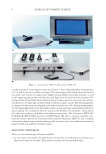
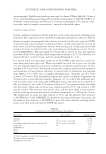
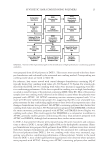
GWAS OF SKIN AGING IN KOREAN POPULATION 69 IDENTIFICATION O F SNP GENOTYPE BASED ON SNP ARRAY Oral swab sample s were obtained, and DNA was extracted using the Exgene™ Tissue SV (GeneAll, Seoul, Korea). The Theragen Precision Medicine Research Array (PMRA) was customized and designed based on the Asian PMRA (Thermo Fisher Scientifi c, Waltham, MA) to obtain genetic variant information for 820,000 SNPs in the entire human genome. The Theragen PMRA array is an SNP array, which is the convergence of DNA hybridization, fl uorescence microscopy, and solid-surface DNA capture. The SNP array has three major components: an allele-specifi c oligonucleotide probe, fragmented nucleic acid sequences labeled with fl uorescent dyes, and a detection system that records and interprets the hybridization signal. To identify 820, 000 SNPs using the Theragen PMRAs, DNA was amplifi ed, randomly broken into 25- to 125-bp fragments, purifi ed, resuspended, and reacted with the Thera- gen PMRA to bind human genomic DNA to the fl uorescently labeled allele-specifi c oli- gonucleotide probe. DNA that bound to the probe was hybridized to prepare for detection. Following hybridization, the bound targets were washed to remove unbound DNA frag- ments to minimize noise that results from nonspecifi c ligation events. We performed genotyping of 820,000 SNPs using the Theragen PMRA array according to the manufac- turer’s instructions. The array provides genome-wide coverage in fi ve major populations (European, American, South Asian, East Asian, and African). In addition, the genotyping results, obtained with the array, confi rmed that the accuracy of the 7.4 million markers in an Asian population, with minor allele frequencies (MAFs) 1% and 5% were 0.90 and 0.94, respectively. To reduce potent ial concern about batch effects and the possibility of false associations, we applied highly stringent quality control measures, including assessment of DNA quality and probe binding, noise removal, confi rmation of genotype accuracy, and correction of genotyping errors to select SNPs to use in the case and control datasets. The quality control procedures were performed for each of the 820,000 SNPs before the association tests were conducted. The SNP set was fi ltered based on the genotype call rates (t0.95) and MAF (t0.10). The Hardy–Weinberg equilibrium (HWE) was calculated for indi- vidual SNPs using an exact test. All the SNPs reported in this article exhibited HWE p-values 0.01. After fi ltering, 560,795 polymorphic SNPs were analyzed on chromo- somes 1 through 22. ANNOTATION OF SNP-A SSOCIATED GENES To identify and ann otate genes that are functionally related to SNPs that show signifi cance in GWASs, it was necessary to check the information of the SNP locus. Therefore, to iden- tify the genes corresponding to the top p-value of the SNP associations in each analysis, SNP locus data were obtained from the UCSC Genome Browser (Genome Bioinformatics Group, University of Santa Cruz, Santa Cruz, CA). The gene annotations from the UCSC database and Genotype-Tissue Expression (GTEx) database (GTEx Analysis Release v. 8, http://www.gtexportal.org/, Cambridge, MA) were also used to predict the functional ef- fects of the variants on transcripts. The GTEx database is provided by the GTEx project and provides the scientifi c community with resources to study the relationship between human gene expression and regulation and genetic variation. This project will collect and
Purchased for the exclusive use of nofirst nolast (unknown)
From: SCC Media Library & Resource Center (library.scconline.org)