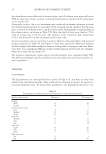
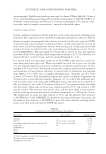
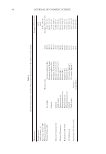
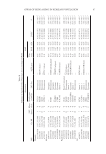
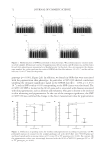
JOURNAL OF COSMETIC SCIENCE 70 analyze multiple human tissues from donors who are densely genotyped to assess genetic variation within their genomes. By analyzing global RNA expression within individual tissues and treating the expression levels of genes as quantitative traits, variations in gene expression that are highly correlated with genetic variation can be identifi ed as expression quantitative trait loci (eQTLs). Our gene expression data are based on this GTEx database. STATISTICAL ANALYSI S Three groups based on tertiles were delimited and scored based on the range of measure- ments and the number of samples for each skin phenotype. The total score was calculated by integrating the measured scores of the skin phenotypes (Table III). In addition, we performed association analysis through linear regression between the total score for the “target phenotype for GWAS” and the genetic variants, and the results of this analysis were adjusted by age. Most of the statistical analyses were performed using PLINK version 1.9 (https://www.cog-genomics.org/plink/) and SPSS (IBM SPSS Statistics Inc., New York, NY). p-values were not adjusted for multiple tests. p 1.0 × 10⁻⁵ was considered statistically signifi cant. RESULTS STUDY POPULATIO N AND TH E RESULTS OF SKIN MEASUREMENTS Table I summarizes the measurement information for the skin indicators wrinkles, moisture content, melanin/erythema, pigmentation, brightness, oil content, and sensitivity. In this study, we analyzed 1,079 subjects with a mean age of 40.81 years. The skin phenotypes were measured for each feature at two different sites, and the mean and standard deviation (SD) were recorded in units of the measuring devices. The average and SD values of the measurements for the fi ve skin phenotypes of wrinkles, moisture content, pigmentation, oil content, and sensitivity are presented in Table I. In addition, we assigned codes to each measurement item to unify the different values for each phenotype and measurement in- strument (Table I). In addition, we identifi ed the distribution of the measurements for each code to identify trends in skin phenotypic changes with age (Supplementary Figure 1). GWAS FOR EACH SKIN PHEN OTYPE We performed a GWAS of Korean women, in whom the skin traits wrinkles, moisture content, pigmentation, oil content, and sensitivity were measured (Table III). A total of 23 SNPs showed signifi cant p-values (p 1.0 × 10⁻⁵) according to the GWAS of the skin phenotype (Table II and Figure 1), which matched the MAFs in the reference database [Korean Reference Genome Database (KRGDB) http://coda.nih.go.kr/coda/KRGDB/index. jsp Ensembl DB, https://asia.ensembl.org]. For the wrinkle phenotype, we found four SNPs, rs117381658 (FCRL5), rs1961184 (REEP3), rs1929013 (ADSS), and rs7042102 (SPTLC1), among which rs117381658 showed the most signifi cant correlation (β = 0.952, p = 1.52 × 10⁻⁸) with skin phenotype changes for wrinkles (Figure 2A) and presented a

GWAS OF SKIN AGING IN KOREAN POPULATION 71 Table III Normalization and Classifi cation of Skin Measurements Phenotype Code Evaluation Target phenotype for GWAS Tertile criteria Total score formula Total score range (min ~ max) Wrinkle W101 1: 0 d x 17.89 (W101 tertile) 4–12 2: 17.89 d x 22.34 + 3: 22.34 d x W102 1: 0 d x 157.83 (W102 tertile) 2: 157.83 d x 213.25 + 3: 213.25 d x W103 1: 0 d x 21.19 (W103 tertile) 2: 21.19 d x 27.75 + 3: 27.75 d x W104 1: 0 d x 155.36 (W104 tertile) 2: 155.36 d x 206.54 3: 206.54 d x Moisture A101 3: 0 d x 61.53 (A101 tertile) 2–6 2: 61.53 d x 70.07 + 1: 70.07 d x A102 3: 0 d x 67.46 (A102 tertile) 2: 67.46 d x 73.67 1: 73.67 d x Pigmentation M101 1: 0 d x 148.33 (M101 tertile) 4–12 2: 148.33 d x 179.00 + 3: 179.00 d x M102 1: 0 d x 106.00 (M102 tertile) 2: 106.00 d x 131.00 + 3: 131.00 d x R201 3: 0 d x 58.81 (R201 tertile) 2: 58.81 d x 60.93 + 1: 60.93 d x R202 3: 0 d x 62.34 (R202 tertile) 2: 62.34 d x 64.34 1: 64.34 d x Oil L101 1: 0 d x 52.00 (L101 tertile) 2–6 2: 52.00 d x 92.33 + 3: 92.33 d x L102 1: 0 d x 27.00 (L102 tertile) 2: 27.00 d x 51.00 3: 51.00 d x Sensitivity S101 1: nonsensitive, 2: sensitive 1 or 2 min: minimum max: maximum. cluster of fi ve SNPs within ±100 kb that showed a signifi cant correlation of p 0.05 in the GWAS. The genes that showed an association were FCRL3, which mediates an infl ammatory response REEP3, which is involved in cell division and aging ADSS2, which is involved in adenosine regulation and SPTLC1, which is involved in mainte- nance of moisture and skin function. Moreover, in the case of rs117381658, a difference for the value was found as a result of measuring the wrinkle condition of the skin by genotype (Supplementary Figure 2). In particular, in the analysis of variance test of the grading scale value of wrinkle measurement, the wrinkle value increased according to the
Purchased for the exclusive use of nofirst nolast (unknown)
From: SCC Media Library & Resource Center (library.scconline.org)