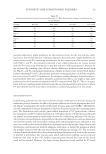
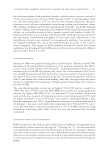
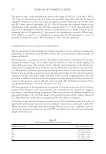
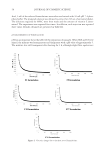
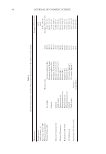
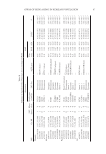
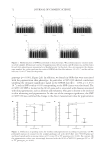
JOURNAL OF COSMETIC SCIENCE 72 genotype (p 0.001, Figure 2A). In addition, we found six SNPs that were associated with the pigmentation skin phenotype. In particular, rs74653330 showed correlations satisfying the strongest signifi cance signal in the GWAS data (β = -1.092, p = 1.04 × 10⁻⁸), and six SNPs with p 0.05 corresponding to the SNP cluster were also found. The rs74653330 SNP is located in the OCA2 gene and is associated with diseases associated with skin pigmentation, such as albinism and melanoma. This gene is known to be involved in skin whitening and pigmentation. In the case of the strongest signifi cance, the SNP rs74653330 was confi rmed the change in the direct measurement value for pigmentation Figure 1. Manhattan plots of GWASs performed on skin phenotype. We performed genetic variation analy- sis of (A) wrinkles, (B) moisture content, (C) pigmentation, (D) oil content, and (E) sensitivity, and the results for each skin phenotype are represented in a Manhattan plot. In the plots, the x-axis represents the chromo- some number the y-axis represents the results of GWAS the blue line indicates 1.0 × 10⁻⁵, and the red line indicates 1.0 × 10⁻⁸ based on the p-value. Figure 2. Differences in grading scales for wrinkles and pigmentation according to genotype. (A) We performed analysis of variance for the wrinkle grading scale with the FCRL5 rs117381658 genotype and found signifi cantly increasing values in CC versus CT or TT genotypes (p 0.001). By contrast, (B) the pigmentation values were increasingly decreased with the OCA2 rs74653330 genotype (CC vs. CT or TT genotypes p 0.001).

GWAS OF SKIN AGING IN KOREAN POPULATION 73 levels (Supplementary Figure 3) moreover, the difference appeared as a result of confi rm- ing the difference by genotype in grading scale of the pigmentation measurement value (p 0.001, Figure 2B). Although there were no strong signals for correlations with skin phenotypic changes, suggestive SNPs were identifi ed for moisture content, oil content, and skin sensitivity. Regarding moisture content, correlations were identifi ed for six SNPs, among which rs9873353 showed a strong correlation (β = –0.567, p = 1.47 × 10⁻⁶). However, there was no gene located near the SNP. We found fi ve SNPs for oil con- tent and two SNPs for skin sensitivity. The SNPs rs308971 (β = –0.325, p = 4.60 × 10⁻⁶) and rs7334780 (odds ratio = 0.635, P = 2.82 × 10⁻⁶) showed the highest association with the oil content and sensitivity of skin, respectively. When looking at the genes associated with these two SNPs, rs7334780 does not have a gene located nearby however, rs308971 is located in the SYN2 gene, which is known to be involved in a neurotransmitter pathway. In particular, its function is associated with the lipid membrane in which neurotransmitters are embedded. SKIN TISSUE EQTLS FOR SNPS IN THE GTEX PORTAL When the GWAS-identifi ed SNPs related to skin phenotype s were searched in the eQTL database (GTEx Portal, https://gtexportal.org/), differences in expression levels in skin tissues according to genotype were identifi ed in fi ve SNPs: rs7042102C T, rs34466224 G A, rs4653497T C, rs308971 G A, and rs9577919C T (Supplementary Figure 4). In sun-exposed skin tissue, rs7042102C T (p = 5.2× 0-12), rs34466224 G A (p = 1.1 × 10⁻⁷), and rs308971 G A (p = 1.0 × 10⁻¹³) showed signifi cant differences in expression according to genotype, and rs4653497T C (p = 1.7 × 10⁻⁴) and rs9577919C T (p = 4.9 × 10⁻⁵) showed altered expression levels associated with genotype in non–sun- exposed skin tissue. The eQTL expression levels for each SNP change gradually with the mi- nor allele homozygous genotype rs7042102C T, rs308971 G A, and rs9577919C T gradually increased in expression, and rs4653497T C gradually decreased in expression. The difference in rs34466224 G A expression level according to genotype was statisti- cally signifi cant, although it showed some deviation. DISCUSSION This study has numerous strengths compared with previous studies. First, most of the re- ported GWAS of skin phenotypes have been performed on pigmentation (25–27), sun sen- sitivity (28,29), and infl ammation (30), whereas this study analyzed representative skin traits, such as wrinkles, moisture content, pigmentation, oil content, and sensitivity. Second, the analysis of the association between skin phenotypes and genes in Koreans is considered important because no such analysis has ever been performed in this population. Third, the sample size of the Korean participants was based on a large research group that included more than 1,000 people, and the statistical verifi cation power was excellent. Because we generated an analytical dataset based on this group, our results are highly reli- able. Finally, our results are meaningful in that the measured skin phenotype values were not analyzed based on individual measurements, but instead were averaged according to the measurement equipment and the measurement site, and scored by tertile. This approach applies universally to the data cleansing method generated through the analysis of the results
Purchased for the exclusive use of nofirst nolast (unknown)
From: SCC Media Library & Resource Center (library.scconline.org)