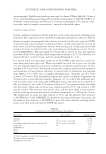
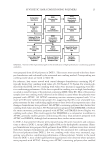
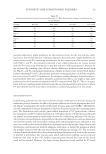
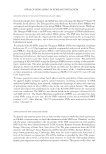
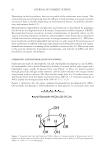
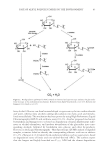
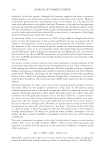
JOURNAL OF COSMETIC SCIENCE 92 Depending on the by-products, the toxicity profi le of the surfactants may change. This mineralization process beginning from the infl uent to fi nal discharge into aquatic systems can last for days to months depending on environmental factors, microbiome distribu- tion, and nutrient levels (1,5). Environmental compatibility of surfactants and chemicals is determined by guidelines laid down by the Organisation for Economic Cooperation and Development (OECD). Environmental hazard assessment includes determination of potential effects on the aquatic (including sediment), terrestrial, and atmospheric zones along with accumulation in food chain and microbiological activity in sewage treatment systems (6,7). APGs have been classifi ed as readily biodegradable and nontoxic in early research (8). Growing use of these surfactants as sulfated surfactant replacements and demand for natural and organic formulations warrants re-scanning of the available ecotoxicity data (9). This review aims at the general chemistry, degradation mechanisms, and toxicity of APGs and their metabolites in aquatic environment. CHEMISTRY AND BIODEGRADATION PATHWAY Surfactants are made of a hydrophobic tail and a hydrophilic headgroup. In case of APGs, the hydrophobic tail is derived from fatty alcohols of coconut and/or palm origin and a hydrophilic sugar, usually D-glucose from corn (Figure 1). These are linked together through glycosidic linkages at the anomeric carbon (carbon linked to two oxygen atoms) using strong acids as catalysts. The alkyl residues range from 6 to 18 carbon atoms, pre- dominantly linear with the degree of polymerization (DP) of 1–3. Commercial grades of APGs usually are monoglucosides with a DP of 1.3–1.7 (1,3). Figure 2 illustrates the two most common biodegradation mechanisms for APGs. One possible mechanism is APG hydrolysis to form glucose or saccharide units and Figure 1. Emp i rical and structural formula of APGs, where n = average number of glucose units and x = number of carbon atoms in the alkyl chain. Example of lauryl glucoside or dodecyl—α-D-glucopyranoside, where n = 1 and x = 12 R = alkyl group.

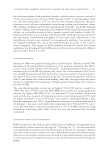
FATE OF ALKYL POLYGLUCOSIDES IN THE ENVIRONMENT 93 fatty alcohol. Glucose can then be metabolized via pyruvate cycle into carbon dioxide and water, whereas fatty alcohols undergo β-oxidation into fatty acids and metabo- lized intracellularly. This mechanism has been proven by using High Performance Liquid Chromatography (HPLC) and anthrone assay (10–13). Another proposed mechanism by Eichhorn and Knepper (11) is based on degradation of linear alkylbenzene sulfo- nates or alcohol ethoxylates, and involves ω-oxidation of the glucosides into corre- sponding alcohols, followed by breakdown into glucose and other by-products. However, in the Liquid Chromatography - Mass Spectroscopy (LC-MS) analysis of degraded samples, scientists failed to identify the corresponding alkanoic acid ions or adducts (11–13). Zhang et al. (14) report the ω-oxidation pathway such as sugar esters, based on degradation rates of linear and oxo-alcohol–derived APGs. The authors report that the longest and highly branched oxo C14–15 APG had the slowest degradation Figure 2. Biodeg r adation pathways for APGs. Based on chemical and spectroscopic analyses, the glucosidic bond cleavage is the predominant mechanism. Redrawn from Zgola-Grześkowiak et al. (10) Eichorn and Knepper (11) Jurado et al. (13).
Purchased for the exclusive use of nofirst nolast (unknown)
From: SCC Media Library & Resource Center (library.scconline.org)