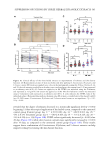
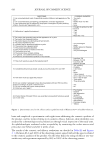
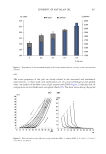
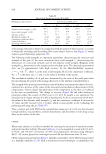
593 SUPPRESSION OF ITCHING BY THREE HERBAL ETHANOLIC EXTRACTS addition, the abundance of secreted β-endorphin in the culture medium was also increased significantly (p 0.01) after 24 h of IL4 stimulation (Figure 9C). Next, we determined whether A houstonianum, B falcatum, or S chinensis affected IL4-induced POMC expression in HaCaT keratinocytes. RT-PCR (Figure 9D), qPCR (Figure 9E), and immunoblot analysis (Figure 9F) showed that pretreatment with A houstonianum, B falcatum, S chinensis, or a combination of the three significantly (p 0.01) reduced IL4-induced POMC expression. Furthermore, ELISA revealed that IL4-induced accumulation of secreted β-endorphin was also significantly (p 0.001) reduced in the culture medium by treatment with A houstonianum, B falcatum, S chinensis, or a combination of the three (Figure 9G). These data demonstrate that A houstonianum, B falcatum, or S chinensis inhibit IL4-induced pruritogenic Figure 8. Effect of the three herbal extracts on the suppression of IL4-induced TSLP expression in HaCaT cells (A and B). HaCaT cells were treated with IL4 (20 ng/mL) for various time periods (0–36 h). Total RNA was isolated, and TSLP mRNA levels were examined by RT-PCR (A) and qPCR (B). GAPDH was used as the loading control (C). HaCaT cells were treated as in (B), and whole-cell lysates were immunoblotted using anti- TSLP antibodies. GAPDH was used as the loading control. Band intensities were measured using Image J (D and E). HaCaT cells were treated with IL4 (20 ng/mL) for 12 h in the absence or presence of A houstonianum (40 μg/mL), B falcatum (20 μg/mL), S chinensis (40 μg/mL), or a combination of the three. Total RNA was isolated, and IL31 mRNA levels were examined using RT-PCR (D) and qPCR (E). GAPDH was used as the loading control (F). HaCaT cells were treated as (E), and whole-cell lysates were immunoblotted using anti- TSLP antibodies. GAPDH was used as the loading control. Relative band intensities were measured using ImageJ. ns: not significant *p 0.05, **p 0.01, ***p 0.001 compared to control (n = 3).

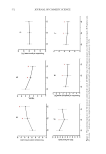
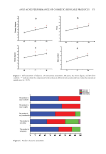
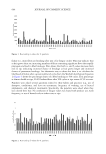
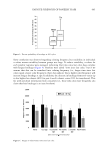
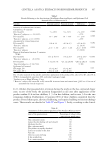
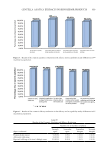
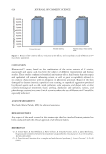
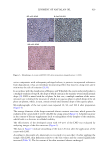
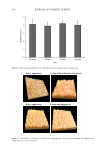
594 JOURNAL OF COSMETIC SCIENCE β-endorphin production and that a combination of the three is more beneficial than each alone. CLINICAL TRIAL TO EVALUATE THE EFFICACY OF THREE HERBAL EXTRACTS FOR ITCHING RELIEF A clinical study was conducted to evaluate the efficacy of the combination of three herbal extracts for improving the skin barrier function and soothing itchy skin. The herbal cream was prepared by mixing 2% ethanolic extracts of A houstonianum, B falcatum, and S chinensis with a base cream. Each of the 33 participants either left the area untreated (control group) or topically applied the cream twice daily on the left or right arm. No difference was observed in skin irritation after topical application of the cream (Figure 10A). Self-recorded scores Figure 9. Effect of the three herbal extracts on the suppression of IL4-induced POMC expression in HaCaT cells (A and B). HaCaT cells were treated with IL4 (20 ng/mL) for various time periods (0–36 h). Total RNA was isolated, and POMC mRNA levels were examined by RT-PCR (A) and qPCR (B). GAPDH was used as the loading control. (C) HaCaT cells were treated as in (B), and the concentration of β-endorphin in the culture medium was determined by ELISA. (D and E) HaCaT cells were treated with IL4 (20 ng/mL) for 24 h in the absence or presence of A houstonianum (40 μg/mL), B falcatum (20 μg/mL), S chinensis (40 μg/ mL), or a combination of the three. Total RNA was isolated, and POMC mRNA levels were examined using RT-PCR (D) and qPCR (E). GAPDH was used as the loading control. (F) HaCaT cells were treated as in (E), and whole-cell lysates were immunoblotted using anti-POMC antibodies. GAPDH was used as the loading control. Relative band intensities were measured using ImageJ. (G) HaCaT cells were treated as in (E), and the concentration of β-endorphin in the culture medium was determined by ELISA. ns: not significant *p 0.05, **p 0.01, ***p 0.001 compared to control (n = 3).
Purchased for the exclusive use of nofirst nolast (unknown)
From: SCC Media Library & Resource Center (library.scconline.org)