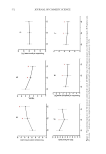
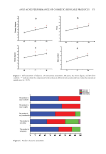
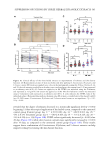
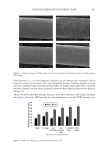
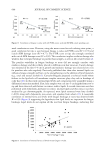
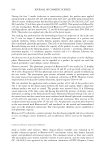
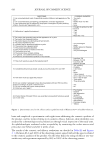
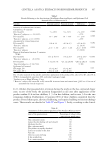
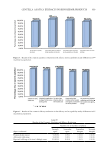
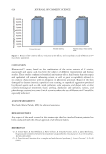
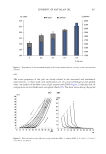
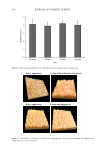
595 SUPPRESSION OF ITCHING BY THREE HERBAL ETHANOLIC EXTRACTS revealed that the degree of itchiness decreased to a statistically significant level (p 0.001) beginning 14 days after topical application of the herbal cream, compared to the untreated control group (Control group: day 0 = 4.76 ± 0.161 day 14 = 4.69 ± 0.163 day 28 = 4.41 ± 0.179. Treatment group: day 0 = 4.89 ± 0.168 day 14 = 3.75 ± 0.224 day 28 = 2.63 ± 0.229 (n = 33)) (Figure 10B). TEWL values significantly decreased (p 0.001) after 28 days (Figure 10C), while skin moisture contents were significantly increased (p 0.001) after 14 days, as compared to the untreated control group (Figure 10D). These results suggest that a combination of A houstonianum, B falcatum, and S chinensis extracts can help improve itching by restoring the skin barrier function. Figure 10. Clinical efficacy of the three herbal extracts on improvements of itchiness and skin barrier function. (A) Representative picture of skin area before and after applying A houstonianum, B falcatum, and S chinensis cream. (B) Cream was applied twice a day in the morning and evening for 28 days. On days 0, 14, and 28, the itch intensity recorded by each subject on a visual analogue scale ranging from 0–10 was expressed as an arbitrary unit (A.U.) (C) Cream was applied as in (B). TEWL was measured using the Tewameter and expressed as 721 g/m2/h. (D) Cream was applied as in (B). The skin hydration content was measured using a Corneometer and expressed as an arbitrary unit (A.U.). A circle indicates the TEWL value of the individual subject. Horizontal lines indicate the mean value (B) or mean + standard error of the mean (C and D) (n = 33). ABS cream: A houstonianum, B falcatum, and S chinensis mixed cream ns: not significant **p 0.01, ***p 0.001.

596 JOURNAL OF COSMETIC SCIENCE CONCLUSION Chronic itch is the most frequently observed symptom of inflammatory skin disorders, (e.g., AD, allergic contact dermatitis, and psoriasis) leading to reduced quality of life due to sleep deprivation and mental distress. The skin itch-sensory pathway constitutes a complex interplay of inflammation, neuronal sensation, and epidermal barrier function. Various herbal formulations are used as the main ingredients in functional cosmetics to soothe itchy skin. This study evaluated the effects of three different herbal extracts (A houstonianum, B falcatum, and S chinensis) on the modulation of itch-inducing factors, including the epidermal barrier component FLG, IL31, TSLP, and β-endorphin, in HaCaT cells. FLG is a structural protein found predominantly in the keratin fibers of keratinocytes, which plays a critical role in maintaining epidermal hydration and skin barrier function. The reduction of FLG expression is associated with skin barrier damage and high susceptibility to itching. Keratinocyte-derived IL31, TSLP, and β-endorphin transmit itch-specific sensitization by binding directly to sensory neurons. Our results demonstrated that the combination of A houstonianum, B falcatum, and S chinensis restored IL4 + IL13–induced reduction in FLG expression and suppressed the expression of IL31, TSLP, and β-endorphin induced by IL4 in keratinocytes. The combination of the three extracts showed no cytotoxicity and higher efficacy than when each was used individually. In addition, since no adverse skin reactions were observed during the clinical investigation, it was considered an effective and safe cream that can help improve itching by restoring the skin barrier function. These findings suggest that a mixture of A houstonianum, B falcatum, and S chinensis can be a beneficial ingredient in cosmetic applications for inflammatory itch. Further comprehensive studies are needed to better understand the molecular mechanism underlying the anti-itch efficacy of these extracts against various skin inflammatory disorders. ACKNOWLEDGMENTS This work was supported by the Seoul R&BD Program (TB201060), Republic of Korea, and by the KU Research Professor Program of Konkuk University. REFERENCES (1) A. Ikoma, M. Steinhoff, S. Ständer, G. Yosipovitch, and M. Schmelz, The neurobiology of itch, Nat. Rev. Neurosci., 7(7), 535–547 (2006). (2) G. Yosipovitch, Dry skin and impairment of barrier function associated with itch — new insights, Int. J. Cosmet. Sci., 26(1), 1–7 (2004). (3) G. Yosipovitch, J. D. Rosen, and T. Hashimoto, Itch: from mechanism to (novel) therapeutic approaches, J. Allergy Clin. Immunol., 142(5), 1375–1390 (2018). (4) G. Yosipovitch and J. D. Bernhard, Clinical practice. Chronic pruritus, N. Engl. J. Med., 368(17), 1625– 1634 (2013). (5) C. Zeidler, M. P. Pereira, F. Huet, L. Misery, K. Steinbrink, and S. Ständer, Pruritus in autoimmune and inflammatory dermatoses, Front. Immunol., 10, 1303 (2019). (6) F. Dalgard, A. Svensson, J. Ø. Holm, and J. Sundby, Self-reported skin morbidity among adults: associations with quality of life and general health in a Norwegian survey, J. Investig. Dermatol. Symp. Proc., 9(2), 120–125 (2004). (7) J. D. Lindh and M. Bradley, Clinical effectiveness of moisturizers in atopic dermatitis and related disorders: a systematic review, Am. J. Clin. Dermatol., 16(5), 341–359 (2015). (8) T. Hoppe, M. C. Winge, M. Bradley, M. Nordenskjöld, A. Vahlquist, H. Törmä, and B. Berne, Moisturizing treatment of patients with atopic dermatitis and ichthyosis vulgaris improves dry skin,
Purchased for the exclusive use of nofirst nolast (unknown)
From: SCC Media Library & Resource Center (library.scconline.org)