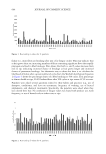
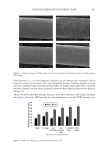
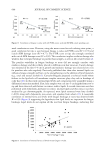
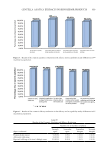
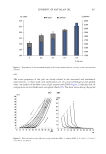
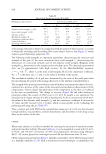
603 FATIGUE STRENGTH OF PANELIST HAIR edges. High damage: any cuticle missing up to 50% of fiber significant cuticle chipping and partial removal of cuticles. Stripped: majority of fiber stripped (must be 50%). Hair Damage Severity Scale (HDSS) was calculated from this assessment: HDSS = (1× low) + (3× medium) + (5× high) + (7× stripped)*(100/175). LIPID MEASUREMENTS For each sample of Caucasian panelist samples ∼0.1 g of hair was cut into 20–40 mm segments and placed in vials (n = 4). First, the hair was extracted gently with hexane to remove the external cetyl and stearyl alcohol and lipids. The hexane extraction consists of extracting the hair with hexane two times then concentrating the dried residue in a second solvent and BSTFA derivatizing reagent for the gas chromatography. Next the internal cetyl and stearyl alcohol and readily extracted internal lipids were extracted using 2:1 then 1:1 chloroform–methanol. The chloroform contained 10 mM dimethylhexylamine (DMHA) and the methanol 1% formic acid. Each extraction was heated for 30 min at 65°C with the hair, then combined, and the dried residue derivatized with BSTFA + 1% TMCS. Cetyl and stearyl alcohol and internal lipids were quantified by gas chromatography (GC) with flame ionization detection using a polydimethylsiloxane capillary column with hydrogen mobile phase. Nonadecanoic acid and eicosanoic acid were used as internal standards. For the sebum, an artificial sebum formula was used containing a mixture of fatty acid, squalene, cholesterol, waxes, and triglycerides. RESULTS CAUCASIAN PANELIST RESULTS The Caucasian panelist hair samples were all between 30 and 45 cm long and were either straight or very slightly wavy (curl pattern I or II according to the L’Oreal curl scale) (7). A 10 cm section was cut at the root and tip end for a total of 50 fibers for fatigue testing. Figure 1 shows the α-value for each panelist’s root and tip samples calculated from the survivial probability after confirming the data fit a Weibull distribution. This α-value is the number of cycles for 63.2% of fibers to break and was found to highly correlate with median cycles to break (0.96 correlation for root and 0.88 for tip across all the samples). The data show high variability between samples, especially for root samples with a maximum α-value for panelist 2,078 of 36,228 cycles and a minimum α-value for panelist 2,147 of 1,726 cycles. The root samples were exposed to some coloring and physical damage but this does not explain this wide variability. Although not studied in this work, protein content or other factors can also impact this difference however, this work does show a correlation of α-value with internal lipids. The average root α-value across all panelists was 6,276 versus 4,536 for tips, showing an overall decrease in fatigue strength as hair became damaged. About 30% of panelists showed a decrease in fatigue of more than 3,000 which was driven in part by oxidative treatments (i.e., hair coloring). About 40% of panelists showed a minor increase or decrease in α-value. Figure 2 shows each panelist’s β-value for root to tip. A decrease in β-value was measured for 80% of panelists and the average dropped from 1.03 to 0.748. The β-value describes the shape of the Weibull distribution and a lower number indicated increased premature

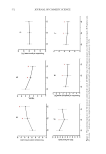
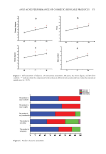
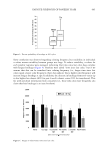
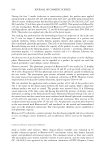
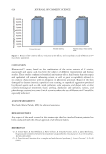
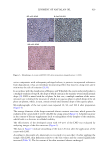
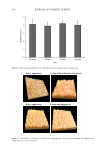
604 JOURNAL OF COSMETIC SCIENCE failure (i.e., more fibers are breaking after just a few fatigue cycles). This may indicate that as hair grows there are increasing numbers of fibers containing significant flaws that rapidly propagate and lead to fiber breakage. Data shows that both α- and β-values decrease from root to tip, indicating increased chance of breakage as hair grows longer and increased chance of premature breakage. An alternative way to show this data is to calculate the likelihood of failure after a given number of cycles from the Weibull distribution (Equation 1). Figure 3 shows the percentage chance of a fiber breaking at 500 cycles. This percentage is almost double at tips, 20.6% broken fibers after 500 cycles at tips versus 11.5% at roots. Panelists were asked several questions related to their habits and practices (e.g., use of shampoo, conditioner, and leave-on treatments, frequency of washing, use of heated implements, and chemical treatments). Specifically, the panelists were asked when they last colored their hair. No correlation of fatigue values was found with product use, wash frequency, or use of heated tools at either roots or tips. Figure 1. Root and tip α-values for 41 panelists. Figure 2. Root and tip β-values for 41 panelists.
Purchased for the exclusive use of nofirst nolast (unknown)
From: SCC Media Library & Resource Center (library.scconline.org)