THE JOURNAL OF THE SOCIETY OF COSMETIC CHEMISTS This edition is published for THE SOCIETY OF COSMETIC CHEMISTS OF GREAT BRI TAIN by _Pergamon _Press, Ltd. Editorial Office: Ashbourne House, Alberon Gardens, London, N.W.11. Publisher's Office: Headington Hill Hall, Oxford ¸ 1965 Society of Cosmetic Chemists of Great Britain VOL. XIV AUGUST 1963 8 SOME ASPECTS OF THE SAFETY OF AEROSOL CONTAINERS G. F. PHILLIPS, M.Sc., A.R.I.C.* Presented at the Symposium on "Aerosols", organised by the Society, at Southport, Lancs., on 25th April 1963. The relevan• consklerafions and al•l•rol•ria•e laboratory •es•s, which SUl•l•Ort official advice on the safe •ransl•or•afion of aerosol tlisl, ensers, are se• ouL A[[enfion is given [o [he construction and l•erformance of con[ainers and l•ro[ecfive cal•s, with l•arficular reference [o [he effec[ of eleva•etl [eml•era•ure and l•ressure. The hazar& associa•etl wi•h [he nature of concentra[e and l•rOl•ellan[s are examined in tle[ail. INTRODUCTION RECOMMEnDATiOnS on the carriage of dangerous goods by sea, which are accepted by the Ministry of Transport as meeting the requirements of the Merchant Shipping (Dangerous Goods) Rules, 1952, are contained in the Report of the Standing Advisory Committee on the Carriage of Dangerous Goods and Explosives in ships, commonly known as the "Blue Book"L In Section 10, "Other Dangerous Goods", there is an entry requiring all pro- posals for shipment of aerosol dispensers to be referred to the Ministry of *D.S.I.R. Laboratory of the Government Chemist, London, W.C.2. Note: Throughout this paper, unless specified to the contrary, all temperatures are expressed in degrees Centigrade (Celsius), and all pressures in atmospheres absolute. 357

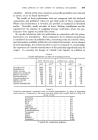
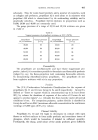
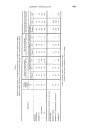
358 JOURNAL OF THE SOCIETY OF COSMETIC CHEMISTS Transport. As part of the analytical and advisory service offered by this laboratory, samples of all such dispensers are examined and the •inistry's •arine Safety Division is advised on suitable packing, conditions of stowage and labelling, within the bounds of any existing precedents and Standing Advisory Committee recommendations. The regulations of the International Air Transport Association relating to the carriage of Restricted Articles by air 2 require aerosol dispensers to be classified according to the hazardous nature of the contents, including propellant(s), if they come within the definitions in the regulations. In doubtful cases, we have given advice to the •inistry of Aviation or, on occasion, to the national airlines directly. Classification of aerosol products is a problem constantly exercising the I.A.T.A. Permanent Working Group on Restricted Articles but, thus far, differences in national standards have prevented agreement on definite performance requirements. In addition to these two areas of responsibility, views are exchanged with British Railways Board technical staff, particularly concerning carriage on rail ferries. The laboratory has, until recently, examined dispensers submitted for certain War Office (Chief Provision Office) Service Contracts. Here the concern has been primarily with storage and use under somewhat rigorous conditions. Otherwise, for civilian use, the laboratory is not directly concerned with retail/wholesale storage, nor the functioning of aerosols dispensers, but nevertheless has an interest in these matters arising from service on the relevant British Standard Container Committee. Quite independently, our Customs Division examines samples of imported aerosol dispensers whilst their interest is confined to the presence of dutiable constituents, any unusual feature in foreign container design is brought to the author's attention. Table 1 Year: 1950 1951 1952 1953 1954 1955 1956 1957 1958 1959 1960 1961 1962 (i) 3 0 2 1 7 2 9 7 8 14 45 142 163 (ii) 0.5 1.25 1.5 2.0 2.5 6.0 8.0 12 17 27 50 55 65 (i) cites the number of different aerosol dispensers examined annually in the Government Laboratory in connection with the Carriage of Dangerous Goods by Sea. (ii) shows the rate of increase of U.K. home sales of such dispensers expressed in million units data to 1956 is taken from Herzka 3. Records of the examination in this laboratory of pressurized con- tainers extend back to at least 1950. But, as will be apparent from Table 1, there has been a dramatic increase in the diversity of pressurized products on which our advice has been sought in the last three years this rise reflects the steady increase of the home sales of these products. How- ever, whilst it has been held desirable that every encouragement should be
Purchased for the exclusive use of nofirst nolast (unknown)
From: SCC Media Library & Resource Center (library.scconline.org)