J. Soc. Cosmet. Chem., 26, 573-580 (December 1975) Shorter Methods for Evaluating Antidandruff Agents JAMES J. LEYDEN, M.D., KENNETH J. MCGINLEY, and ALBERT M. KLIGMAN, M.D., Ph.D.* Presented December 2, 1974, SCC Annual Meeting, New York City Synopsis-Two schedules are described in which the efficacy of ANTIDANDRUFF AGENTS can be assessed in panels of 10 subjects. The first employs shampooing twice weekly for 3 weeks with clinical grading and CORNEOCYTE COUNTS (quantification of desquamating cells) once weekly and after a one-week follow-up. In the second, the test agent is applied once daily for 5 weekdays for 2 weeks. Corneocyte counts and CLINICAL GRADING are done 4, 8, and 12 days after the last exposure. With the corneocyte technique, both schedules can be employed to evaluate CYTO- STATIC AGENTS on nondandruff subjects. INTBODUCTION Evaluation of antidandruff preparations has been hampered by the lack of standardized schedules and, especially, by the lack of reliable modes of assessment. Gross visualization is the usual means of appraisal. It is hardly surprising that different observers often disagree when evaluating the same agent. Recently, we described an objective procedure for quantifying desquama- ting horny cells and demonstrated its usefulness in the appraisal of antidan- druff agents (1). This procedure, the corneocyte count, employs a nonionic detergent to sample a defined area of the scalp. The surfactant disperses the collected horny cells and allows them to be counted in a hemocytometer. Corneocyte counting adds objectivity to the evaluation of antidandruff agents, but does not supplant careful clinical evaluation. In dandruff there is both an increased shedding of horny cells and a greater quantity of visible *Department of Dermatology, School of Medicine, University of Pennsylvania, Phil- aldelphia, Pa. 573

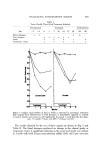
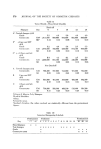
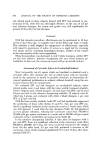
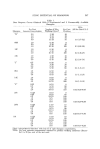
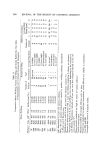
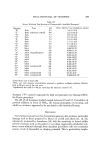
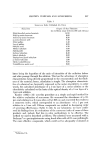
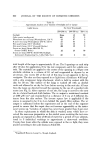
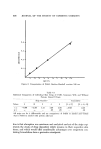
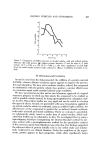
574 JOURNAL OF THE SOCIETY OF COSMETIC CHEMISTS scales or squames (2). Corneocyte counting measures the quantity of horny cells, while clinical grading assesses the amount of scales. We have previously demonstrated that with effective antidandruff agents, twice weekly shampooing for 1 month results in significant decreases in grades and counts. In this report, we will describe two shorter modifications, namely, daily shampooing for 10 days and twice weekly shampooing for 3 weeks. In addition, we shall show that agents exerting cytostatic effects may be studied in subiects free of dandruff by measuring the effect on the corneocyte count using either of the 2 schedules. Clinical Grading The grading scheme, based on a 10-point scale, has been previously de- scribed (1). The amount of scaling is estimated by scraping the scalp at multiple sites with a wooden tongue blade. Subjects lnust not have used an active agent for i month. Pretreatment grading is done 4 days after a bland shampoo. Test panels consist of 10 subjects with grade 5 dandruff or higher ( grade 4 represents mild dandruff and grade 5 moderate dandruff). Corneocyte Count This procedure has been described in detail elsewhere (3). One ml of buffered 0.1%-Triton-X-100 is placed in a 3.8 square centimeter glass cup placed on a sinall area of the scalp froin which the hair has been clipped. The surface is rubbed 1 rain with a teflon rod, the wash fluid is aspirated, and af- ter repeating this procedure, the two samples are pooled. The eel] suspension is agitated mechanically, and the eelIs counted in a Fuehs-Rosenthal hemocy- tometer. Only one site is sampled since we have demonstrated that the counts do not vary in different areas (1). Statistics Because corneocyte counts are log-normally distributed, the values are transformed into logarithms and expressed as the geometric mean count per square centimeter. Mean grades were calculated arithmetically. Statistical significance for reduction of corneocyte counts is measured by the students' T-test. Twice Weekly Shampooing-Three Week Schedule The protocol is outlined in Table I. Two pretreatment bland shampoos are employed to achieve base line levels. The subjects are then shampooed twice weekly 6 times. Grades and counts are obtained on days 0, 7, 14, and 21-always 4 days after the last shampoo. Bland shampoos are then resumed on days 22 and 24 with a final assessment on day 28.
Purchased for the exclusive use of nofirst nolast (unknown)
From: SCC Media Library & Resource Center (library.scconline.org)