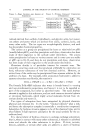
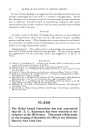
SOME PROPERTIES OF ZIRCONIUM COMPOUNDS SIGNIFICANT TO THE COSMETIC TECHNOLOGIST* By WARREN B. BLUMENTHAL Chief, Chemical Division, Titanium Aq/oy Mfg. Division, National Lead Company, Niagara Falls, N.Y. IN RECENT YEARS the laboratory with which I am associated has noted and given publicity to a number of properties of zirconlure chemicals which appear to render them suitable for a variety of cosmetic applications. Pursuant to our suggestions, several manufacturers have experimented with promising zirconlure compounds in cosmetic formulations, and a num- ber of favorable results have been brought to our attention. The observation of fundamental properties of zirconium compounds favorable to cosmetic applications and the encouraging early field reports prompted us to sponsor several studies in outside laboratories on the formulation of zirconlure cosmetics and their toxicology. It is the purpose of this paper to outline the pertinent facts about zirconlure chemistry and some practical information that has resulted from the aforementioned studies. Our cosmetic studies overlap the pharmaceutical field somewhat, but I think we will not really be departing from our subject in not limiting this discussion to strictly cosmetic technology. PERTINENT BASIC ZIRCONIUM CHEMISTRY Zirconlure chemistry is conspicuously ramified and complex because this element forms a wide variety of both electrovalent and covalent com- pounds. In the electrovalent manifestations, the simple ions Zr +4, Zr +a, and Zr +ø- apparently do not exist (1), but the element serves as the central atom or atoms in a large variety of complex cations and complex anions (2, 4). In the covalent compounds, the normal valence of 4 is always manifested, but coordination numbers of 5, 6, 7, and 8 are commonly realized (3). Table 1 gives some examples ofzirconium cations and anions, their formulas being indicated by their general behavior and stoichiometry. Table 2 gives examples of simple tetracovalent compounds of zirconium and of complex compounds in which the higher coordination numbers are realized. The ions are generally hydrated. The anions shown contain * Presented at the December 11, 1952, Meeting, New York City.

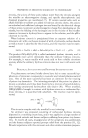
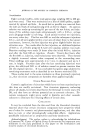
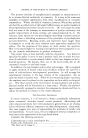
70 JOURNAL OF THE SOCIETY OF COSMETIC CHEMISTS TABLE 1--SOME CATIONS AND AmONS or ZIKCONIUM Cations Anions ZrO(OH) * ZrO(SO4)= - - ZrO** Zr•Oa(SO4)•-- Zr•Oa - • Zr (SO4)• - - Zr•O• * * ZrO(OCH•COO)a .... Zr•Os .... ZrFo - - ZrF=--- TABLE 2--TYPICAL COVALENT COMPOUNDS OF ZIKCONIUM Normalcovalence (4): ZrCla, ZrBra, ZrI4, Zr(OC2Hs)4 Coordination No. 5: NaZrC15 Coordination No. 6: K•ZrF6, Na•ZrOa Coordination No. 7: (NH4)aZrF7 Coordination No. 8: Zr(NH•)sCI4, (NH4):- H2ZrO(SO4)a, (CI•- COCH: COCHa) 4Zr radicals derived from sulfuric, hydrofluoric, and glycolic acids, but numer- ous others are known which are derived from oxalic, carbonic, lactic, and many other acids. The ion types are morphologically distinct, and each has its peculiar chemical properties. The cations as a group are precipitated by bases at relatively low pH's (usually below pH 3), and they precipitate acid dyes observation has been made of their migration to the cathode under electrolysis. The anions resist precipitation by bases to various extents and in some cases are stable at pH's up to 10-12, and they do not precipitate acid dyes observation has been made of their migration to the anode under electrolysis. Zirconlure dioxide is of particular interest for cosmetic uses. The naturally occurring oxide and that produced artificially by calcination are hard, refractory substances of very low chemical activity. However, an active form of the oxide may be precipitated from aqueous solution by the addition of a base. For example, when ammonium hydroxide is added to aqueous zirconlure oxychloride, the reaction is ZrOC12 + 2NH•OH + (x -- 1) H•O --• ZrO•.xH•O + 2 NI-hC1 (I) The formula ZrO•,.xH•,O indicates that water is loosely bound in varying and non-stoichiometric proportions, and hence it is not to be regarded as part of the compound, but rather as adsorbed water. The name hydrous zirconia is applied to this substance, and not such names as zirconia hydrate or zirconlure hydroxide, which imply actual molecules formed from zir- conium dioxide and water (5). Two types of adsorption have been recognized by physical chemists: physical and chemical (6). In the latter, "residual valences" play a role, and hence the adsorption complex is essentially a coordination compound. Adsorption by hydrous zirconia appears to be of the chemical type, and in what follows I shall represent adsorption by the usual symbols for the co- ordinate bond. It is characteristic of hydrous zirconia to undergo exchange adsorption that is, when in contact with many other substances, it releases its adsorbed water and adsorbs the other substances in its place. If citric, tartaric, benzoic, salicylic, or certain other acids are added to a slurry of hydrous
Purchased for the exclusive use of nofirst nolast (unknown)
From: SCC Media Library & Resource Center (library.scconline.org)