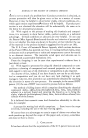
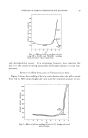
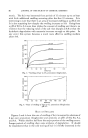
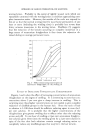
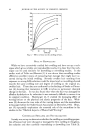
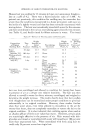
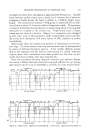
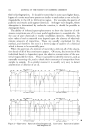
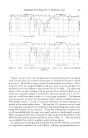
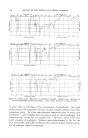
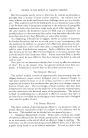
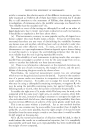
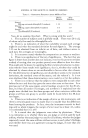
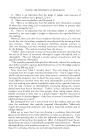
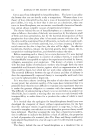
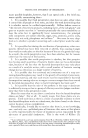
SWELLING OF HAIR IN THIOGL¾COLATE SOLUTIONS 97 waving lotion. Probably in the center of tightly wound curls which are repeatedly saturated with the waving lotion a condition approaching com- plete immersion exists. However, the outside of the curls are exposed to the air so that the normal waving time for most home permanents of one hour or more (including the winding time) is probably less severe than thirty minutes immersion in the waving lotion. DenBeste (5) suggests that the reduction of the keratin occurring on complete immersion in a huge excess of ammonium thioglycolate is four times the reduction ob- tained during an average permanent wave. 330 J i i i 300 120 270 • 240 60 • 1•0 150 • 120 9O 6O 0 1 2 3 4 5 6 PERCENT THIOGLYCOLIC ACID Fig, 5: -Effect of increasing concentration of ammonium thioglycolate on the swelling of hair. EFFECT OF INCREASING THIOGLYCOLATE CONCENTRATION Figures $ and 6 show the effect of increasing concentrations of ammonium thioglycolate on the degree of swelling. It is interesting to note that con- centrations above 3 per cent give a sharp increase in swelling. This is surprising since these higher concentrations are not needed to give complete reduction of disulfide groups in the human hair. Since the ratio of hair to solution is 1: 100 there should be sufficient reducing agent in even the 1 per cent solution. It is probable that the higher concentrations of the thioglycolates give greater swelling due to effects other than the reducing action and pH. In one hour of swelling a 4 per cent ammonium thioglyco- late solution gives three times the swelling given by a 2 per cent solution in spite of the fact that both solutions contain enough reducing action to completely reduce any disulfide groups that may be in the hair keratin.

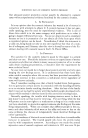
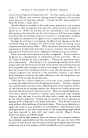
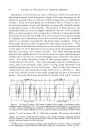
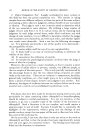
98 JOURNAL OF THE SOCIETY OF COSMETIC CHEMISTS $$o $oo •7o 240 210 180 150 120 90 60 30 0 I I I I 6 % THIO 5% 4% 3% 30 60 90 120 MINUTES Fig. &--Effect of time on the swelling of hair. ROLE OF RESWELLING While we have extensively studied hair swelling and have set up a tech- nique which gives reliable and reproducible results, it is clear that this tech- nique can be used similarly for deswelling or reswelling studies. In the earlier work of Valko and Barnett (1) it was shown that reswelling studies offered an excellent means of measuring hair damage that might have oc- curred during the initial swelling. Severely swollen hair resulting from exposure to strong LiBr solutions could be rinsed and on reswelling showed exactly the same swelling rate and degree of swelling as the original un- swollen hair. These data are confirmed by the findings of Steele at Prince- ton (4) showing that immersion in LiBr involves no permanent chemical change in the hair. It was also found that when the hair was damaged by alkaline hydrolysis or by reduction it was extremely difficult to restore it to its original condition. Hamburger (6, 7) studied the damaging effect of waving lotions on the physical and elastic properties of the hair. Whit- man (8) discusses the true roles of the waving lotions and the neutralizers in his paper before the Toilet Goods Association in December, 1952. Brun- net (9) repeatedly emphasizes the essential role of the neutralizer in his studies in the "Medical Aspects of Home Cold Waving." CONTROLLED SWELLING AND NEUTRALIZATION A study was set up to determine whether the swelling or reswelling proper- ties of human hair were changed or damaged by first swelling in thioglyco- late solution and then carefully neutralizing or deswelling (see Table 3).
Purchased for the exclusive use of nofirst nolast (unknown)
From: SCC Media Library & Resource Center (library.scconline.org)