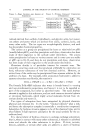
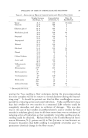
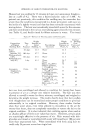
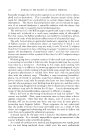
114 JOURNAL OF THE SOCIETY OF COSMETIC CHEMISTS TABLE 1.•Os•oscovic REAt•rCS AFTER 48-HouP. TEs•r Before After Exercise Exercise Group 1 400 mg. untreated chlorophyll (5 students) 1.13 1.3 Group 2 400 rag. copper chlorophyll (5 students) 0.5 1.0 Group 3 No chlorophyll (10 students) 0.8 1.13 Now, let us examine this chart. What is wrong with this work? 1. The number of subjects used is pitifully small. There were 20 in all, of whom only five used the chlorophyllin salt. 2. There is no indication of what the variability around each average might be and what the standard deviation for each figure is. The average 1.13 can be obtained from an infinite set of data, and without access to such data the averages are meaningless. 3. It is not even stated whether the computations are means or medians. 4. There is no application of the test of significance. The fact that one figure is lower than another does not indicate, even by this poverty-stricken method of testing, that one product proved more effective than the other. This could only be shown by applying further statistical evaluation to deter- mine whether these results were significant that is, whether they could be obtained by chance alone or are attributable to factors other than chance. For the determination of significance, one should have access to the standard deviations, the standard errors of the means, and the value of t. It is not even disclosed that these determinations were made by or for the authors. 5. There is no evidence that the subjects were comparable to each other before the test and that they gave the same odor score at that time. In a previous part of the same paper, several readings are given for the 20 ath- letes, but they all consist of averages, and nowhere is it explained how the people were divided into 'the three groups and what variations within the groups and from one group to another could be found before this 48-hour test began. 6. There is no indication of the margin of error on this instrument, and there is certainly good reason to doubt that it is smaller than the differences found among the products. In fact, since the instrument records its find- ings only as whole integers, the margin of error must be at least q-1, unless it is contended that it is 7. It is stated that the judgments were taken by physicians. There is no indication as to whether there was one judge or several used for each athlete, whether the same judge was used for all athletes, whether the judges separately tested the same athletes without access to each other's findings, and whether there was any agreement among the judges, if more than one was used.

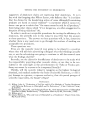
TESTING THE EFFICIENCY OF DEODORANTS 115 8. There is no indication that the judge or judges were unaware of whether each athlete was in group 1, 2, or 3. 9. There were no placebos used for group 3. 10. There is no indication that the athletes were themselves unaware of what they were using, and no precautions were taken to prevent their prejudice during the test. 11. There is no indication that the individual athlete or athletes were fetested by the same judge or judges to determine the reproducibility of the readings. However, these and other errors would be relatively minor, if it were not for the fact that the authors completely misunderstand the meaning of their own statistics. They draw conclusions therefrom directly contrary to their own findings, and they overlook conclusions that are substantiated by the findings. The authors conclude from the above: "Table 1 shows a greater increase of measurable underarm odor following the use for 48 hours of untreated chlorophyll, copper chlorophyl], and no chlorophyll. This test followed a six-day period of medication with the specially prepared chlorophyll. "The specially prepared chlorophyllins effectively reduced the underarm odor before and after vigorous basketball exercise in the 20 college students tested using 200 rag. daily." Now, what does Table ] actually show? The only thing that can be concluded from the meager statistics provided is this--that if copper chloro- phyllin reduced underarm body odor, then nature's untreated chlorophyll increased the underarm odor to about the same extent. Furthermore, the small differences between those who took chlorophyllins and the controls who took nothing were almost completely wiped out by a period of exercise, with the odor of those on chlorophyllins increasing during the exercise period more than that of the others. Table 1, in fact, indicates that when students were divided into the three groups, those taking copper chloro- phyllin increased in body odor to a greater degree--whether measured in percentage or in absolute figures--than those on nature's untreated chloro- phyll and those on control. But nothing of that sort is even hinted at by the authors, who can only draw the conclusion that specially prepared chlorophyllins "effectively reduce the measurable underarm odor both in industrial workers and in college athletes." Allow me to warn that I am not drawing a conclusion from this brief glance at the literature that chlorophyll has no value as a deodorant. I am merely demonstrating that its value has definitely not been proved. The great mass of the work on the deodorant effect of chlorophyll must be ex- cluded from the realm of scientifically acceptable experimentation. Maybe chlorophyll does work wonders, maybe not. No conclusion is justified save that, if it is of value, this has not yet been experimentally shown.
Purchased for the exclusive use of nofirst nolast (unknown)
From: SCC Media Library & Resource Center (library.scconline.org)