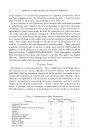
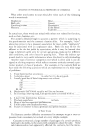
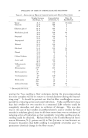
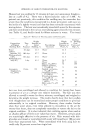
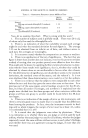
SWELLING OF HAIR IN THIOGLYCOLATE SOLUTIONS 99 Human hair was swollen for 15 minutes in 6 per cent ammonium thioglyco- late at a pH of 9.2. There was a hair-to-solution ratio of 1:100. As pointed out previously, this condition for swelling may be somewhat less severe than the conditions encountered in a home permanent cold wave on the inside of a tightly wound curl that has been normally resaturated with waving lotion. The hair was immediately rinsed with water for five minutes and then neutralized in the various neutralizing agents listed for ten minutes (see Table 4), and finally rinsed for fifteen minutes in water. The rinsed TABLE 4--EFFECT OF NEUTRALIZING ON RESWELLING Increase Weight Weight in Swelling Composition Time Increase on Increase on Over of Original of Initial Neutralizing Exposure to Untreated Swelling Bath Exposure Swelling, % Treatment Water, % Hair, % Water 60 days Lithium bromide, 70% 180 days Ethylene glycol, 100% 120 days Perfluorobu tyric acid, 95% I day Ammonium thioglycol ate, 6%, pH 9.2 15 min. 120 31.5 87.7 47.0 81 5 Water 31.5 ... Water 32.3 ... Water 31.5 ... Water 30.7 •Water 89 i•5 Borax, 1%, pH 9.0 76 144 Sodium perborate, 1%, pH 9.0 71 128 Sodium perborate, 1%, pH 3.5 57 82 Hydrogen peroxide, 1%, pH4.2 56 80 Potassium bromate, 1%,pH3.5 47 50 Tartaric acid, 1%, pH 2.0 45 43 I Boric acid, 1%, pH [ 4.8 39 24 hair was then centrifuged and allowed to condition for twenty-four hours in presence of air at a 20 per cent relative humidity. The hair was then allowed to reswell in water for thirty minutes, centrifuged, and weighed to determine the weight increase. The results clearly show that hair swollen with thioglycolate can be neutralized under proper conditions to give hair substantially in its original condition. However, these studies further show that water alone, even when allowed to recondition in the air for twenty-four hours, does not completely neutralize or restore the hair to its original condition. It is also indicated that oxidizing agents when used at an alkaline pH are of little more value than water. However, certain acids are surprisingly effective in the presence of air. Hair treated with thio- glycolate and rinsed or neutralized with water will reswell over 180 per cent more than unprocessed hair. When neutralized with boric acid, hair re- swells only 24 per cent more than virgin hair.

100 JOURNAL OF THE SOCIETY OF COSMETIC CHEMISTS In view of these findings it is suggested that controlled neutralization can produce undamaged hair even after it is swollen in thioglycolates. Severe hair damage is not a necessary result of overprocessing if proper neutraliza- tion is achieved. Careful control of neutralizing conditions wilt consis- tently produce hair in finer condition than has been possible under methods frequently used in the past. SUMMARY A study_is made of the effect of thioglycolate solutions on the swelling of hair. Concentrations above 4 per cent at a pH above 9.0 give markedly greater swelling action. While thioglycolate causes reduction and hydrol- ysis of the hair, a careful control of neutralization can restore the hair more nearly to its original preswollen quality. .dcknowledgment: The authors wish to acknowledge the assistance of L. Star and L. Como which made this work possible. We also wish to express our appreciation for the continued advice and suggestions of Dr. E. I. Valko. BIBLIOGRAPHY (1) Valko, E. I., and Barnett, G., "A Study of the Swelling of Hair in Mixed Aqueous Sol- vents," J. Soe. CosME•r•e CHEMIS•rS, 3, 2 (1952). (2) Chamberlain, N.H., and Speakman, J. B., Z. E/ectrochemie, 37, 374 (1931). (3) Eckstrom, M. E., Jr., "Swelling Studies of Single Hair Fibers," J. Soe. CosMETIC CHEM- iSTS, 2, 4 (1951). (4) Steele, R., "Recent Developments in the Structure of Keratin Fibers," Ibid., 3, 2 (1952). (5) Reed, R. E., DenBeste, M., and Humoiler, F. L., "Permanent Waving of Human Hair-- The Cold Process," Ibid., 1, 2 (1948). (6) Hamburger, W. J., Morgan, H. M., and Platt, M. M., "Some Aspects of the Mechanical Behavior of Hair," Proc. Sci. Sect. Toilet Goods Alssoc., 14, 10 (December, 1950). (7) HamN•rger, W. J., and Morgan, H. M., "Some Effects of Waving Lotions on the Me- chanical Properties of Hair," Ibid., 18, 44 (December, 1952). (8) Whitman, R., "The Role of Neutralizers in Cold Wave Processes," Ibid., 18, page 27 (December, 1952). (9) Brunner, M. J., "Medical Aspects of Home Cold Waving," Alrch. Dermato/. and Syphi/oL, 64, 316-320 (1952). FLASH The Medal Award Committee has just announced that Dr. E.G. Klarmann has been selected as the recipient of the 1953 honor. The award will be made in the evening of December 10, 1953 at the Biltmore Hotel in New York City.
Purchased for the exclusive use of nofirst nolast (unknown)
From: SCC Media Library & Resource Center (library.scconline.org)