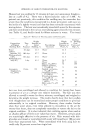
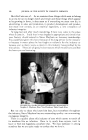
ANALYSIS OF PSYCHOLOGICAL PROPERTIES OF COSMETICS 91 groups at any desired intensity of illumination for time intervals ranging from 1/200 second to several minutes. The proportional odor mixer is used in analysis and design of odor form- ulations, testing of odor intensity, odor masking, and deodorization. Sev- eral odorant vapors can be mixed in the percentages desired by the simple expedient of valve manipulation. In conjunction with classification, the mixer is especially useful for difficult matching problems. These instruments are representative of the working tools of the psychol- ogist concerned with evaluation of the qualities and effectiveness of cosmetic products. The instruments only assist him in precise control of the physi- cal and psychological environment of his trained observers and of con- sumers. Both environments are extremely important and must be con- trolled for psychological inquiry into the behavior of complex human beings, if any valid conclusions are to be drawn. SUMMARY This paper represents an attempt to place in perspective the contribu- tions of the specialist in human behavior to the evaluation of cosmetics. The developments of experimental psychology, extending into the past cen- tury, have only recently been applied to industrial products in general, and toilet goods in particular. The professional relationship of the cosmetic chemist and the psychologist is shown in their combined effort to produce constant and improved con- sumer products. Of greatest significance is the analytical approach in combination, to provide answers to the "why" questions of the cosmetic chemist. Several specific examples are advanced to illustrate the use of direct and indirect approaches with the aid of the projective and the in- strumental for laboratory and field investigations including consumer and trained observers in absolute and comparative analyses of the quantitative and qualitative psychological properties of cosmetics. REFERENCES (1) Wenzel, B. M., "Practical Application of Olfactometry," Proc. Sci. Sect. Toilet Goods ?tssoc., No. 14, 11 (December 1950). (2) ?tm. Dyestu•Reptr.,42, No. 3, 67, 1953. (3) Klein, Samuel, "Olfactory Evaluation of Aromatic Raw Materials," Proc. Sci. Sect. Toilet Goods ?tssoc., No. 11 (May 1949). (4) Bell, J., "Projectire Techniques," New York, McMillan (1946). (5) Guilford, J.P., "Psychometric Methods," New York, McGraw-Hill (1936).

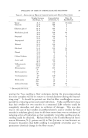
A'STUDY OF THE SWELLING OF HAIR IN THIOGLYCOLATE SOLUTIONS AND ITS RESWELLING* BY D. H. POWERS and G. BARNETT [d/arner-Hudnut Co., Inc., New York, N.Y. IN TaEIR P^PER on the swelling of hair published this year (1) Valko and Barnett studied the effect of nearly one hundred compounds in con- centrated and dilute aqueous solutions on the rate and degree of swelling of human hair. After a review of various methods available for studying swelling they chose the centrifuge method as the leas• tedious and the best suited to give well-defined and reproducible values. Using this technique, a single operator could turn out more than fifty measurements a day. The value obtained for water showing 31 q- 1 per cent swelling was surprisingly close to the value of Chamberlain and Speakman (2) who found a swelling value for hair of 31.18 per cent when working at 100 per cent humidity. Some of the compounds studied are listed in Table 1. While swelling usually came to equilibrium quickly in dilute aqueous solution, when con- centrated solutions were used it frequently took two weeks to four months to reach equilibrium. It was possible to show that swelling alone did not damage the hair althongh care had to be taken to avoid bacterial attack or hydrolyric action. When this type of fiber destruction was avoided the swelling was completely reversible even when the hair was swollen for six months. It was further shown that swelling that would cause a fiber to hold more than 100 per cent of its weight• of solution after centrifuging rarely occurred unless reduction or hydrolysis had occurred. When either hydrolysis, reduction, or oxidation of the hair occurred during swelling, the process was no longer reversible. This swelling proved to be sur- prisingly independent of pH change and was constant from a pH of 4.0 to a pH of 10.0. An excellent study of swelling of single human hair fibers was made by Milton Eckstrom, Jr. (3). He mounted single hairs in a clear Lucite cell under a microscope and measured the rate of increase of diameter when im- mersed in thioglycolate waving lotion and then its rate of deswelling when neutralized in potassium bromate solution. He suggested that in cold * Presented at the December 11, 1952, Meeting, New York City. 92
Purchased for the exclusive use of nofirst nolast (unknown)
From: SCC Media Library & Resource Center (library.scconline.org)