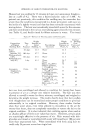
PROPERTIES OF ZIRCONIUM SIGNIFICANT TO TECHNOLOGIST 71 zirconia, the anions of these acids replace water from the zirconia and give the micelles an electronegative charge, and specific electrophoretic and chemical properties are manifested (7). If certain neutral salts such as alkali chlorides or sulfates are added to hydrous zirconia slurry, the anions are adsorbed and suflqcient hydrogen ions are bound by the electrical charge of these anions to prevent an electronegative charge from developing on the micelle, but the holding of the hydrogen ions in the vicinity of the micelles causes an increase in hydroxyl ions to appear in the solution, and the pH is observed to rise (8). When hydrous zirconia is precipitated from an aqueous solution of a zirconlure salt with a carbonate instead of with a hydroxide, carbon dioxide as well as water is adsorbed by the zirconia, and the reaction may be repre- sented ZrOC12 4- Na2CO,• 4- xH20--• ZrO•.xH20-yCO• 4- 2NaC1 4- (1 - y)CO2 (II) The product ZrO2'xH20'yCO2 is called carbonated hydrous zirconia, and is considerably more active chemically than the ordinary hydrous zirconia. For example, it reacts readily with acetic acid to form soluble zirconium acetate, while the ordinary hydrous zirconia does not react with acetic acid (9). PRACTICAL APPLICATIONS AND PROPOSED INTERPRETATIONS The phenomena reviewed briefly above have led to some successful ap- plications of zirconium compounds to cosmetic and related pharmaceutical uses. One of the most successful has been an ointment for the treating of poison ivy dermatitis. The irritating principle of the poison ivy plant is known as urushiol, and it has been found to be a mixture ofcatechol deriva- tives having unsaturated hydrocarbon side chains (10). When urushiol, (HO)2CoHaR is brought in contact with hydrous zirconia or carbonated hy- drous zirconia, it is quantitatively adsorbed. The reaction may be repre- sented ZrO, 4- HO -• O'Zrr'xI• • R (III) The zirconia complex with the urushiol is not irritating. An ointment was prepared consisting of carbonated hydrous zirconia dispersed in a vanishing cream base, and it was applied to a large number of experimental animals and human subjects suffering from poison ivy derma- titis. In nearly all cases, disappearance of the symptoms was accelerated, and the human subjects reported prompt relief from the pruritus (11, 12). Broader experience with this ointment and other similar zirconium prepara-

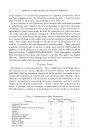
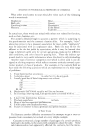
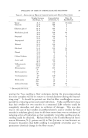
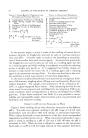
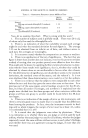
72 JOURNAL OF THE SOCIETY OF COSMETIC CHEMISTS ticns indicate it to exhibit the properties of a general antipruritic, and it has been suggested that the zirconium compounds have a positive thera- peutic action in addition to sequestering certain irritants. It was observed in our laboratory that a worker who customarily exuded a marked body odor ceased to do so when he began to work with zirconium chemicals. The presumption was made that many of the substances re- sponsible for body odors might be fixed by adsorption or other sequestra- tion with a suitable zirconium compound. A carbonated hydrous zirconia ointment was distributed among about twenty volunteers who applied it for a period of time to the axillae and reported satisfactory elimination of odor. The results were brought to the attention of the laboratories of a number of cosmetic and pharmaceutical manufacturers. They requested a soluble zirconium salt of neutral or midly acid reaction which might be applied as a body deodorant in the form of a lotion, and we offered sodium zirconyl lactate, Na2H2ZrO(CHaCHOCOO)a. Two laboratories reported their conclusions from their observations to be that this agent was highly effective. Details of their findings were withheld from us because of their intention to exploit them in proprietary compounds. TOXICITY TESTS Zirconium is a non-toxic element. Not a single case of pathology due to this element is on record. Results of extensive animal tests have been published, showing zirconium compounds to be entirely innocuous under a variety of conditions of topical and oral administration (13, 14). More recently, our laboratory has sponsored studies on the formulation of de- odorant compositions containing zirconlure chemicals, and new toxicity studies on one of these composition. Table $ shows the compositions of a lotion, a powder, and an ointment recommended for use as deodorants. The following is a summary of the findings of toxicity studies on the lotion. TABLE 3--COMPOSITIONS OF BODY DEODORANTS - Per Cents of Ingredients------- Component Lotion Powder Ointment Alcohol SD 40 (ethyl) 10 Boric acid . . '} Carbonated hydrous zirconia, ZrO2 basis .. Glycerin '} Kaolin .. i} Perfume q.s. q.s. Potassium hydroxide .. Precipitated chalk 5} Sodium zirconyl lactate i} 5 Stearic acid .. Talcum powder • Water (+CO2) •6 Zinc stearate .. '• 25 50 1} .0 7}15 ß .
Purchased for the exclusive use of nofirst nolast (unknown)
From: SCC Media Library & Resource Center (library.scconline.org)