112 JOURNAL OF THE SOCIETY OF COSMETIC CHEMISTS 2. Paired Comparison Test: Largely overlooked by many workers in this field has been the paired comparison test. This consists in taking samples from two different subjects, or from two parts of the same subject, and making a direct olfactory judgment, without benefit of any instrument or dilution. The judge in such a test is merely asked to determine which of the two materials is more odorous. By utilizing a large number of judges (I have used from 5 to 15 in various tests), and by repeating each judgment by each judge several times, under blind conditions and with change of code numbers, it is not difficult to determine whether the judges were consistent unto themselves, and with each other, and whether signifi- cant results were obtainable. Such a test has the following advantages: (a) It is precisely and directly a test of the quality to be determined-- the perceptibility of odor. (b) It carries within itself the test of its own reproducibility. (c) It lends itself to an ease of statistical handling to determine the validity of any claims. (d) It necessitates the utilization of controls. (e) It excludes the psychological prejudice involved when the judge is aware of what he is judging. However, this system has a major drawback, in that it requires a direct comparison of unlike objects or persons namely, two different people, or the two armpits of the same person. This is only partially counteracted by the advantage found in that the two objects being compared are under study at the same time. There are no variations in temperature, humidity, general body conditions, etc., that might prove to be a serious handicap when a period of time elapses between one judgment and another. Fur- thermore, the degree of similarity between two subjects before use of a test material and a control can be established by preliminary work. The claims that have been made for deodorants during recent years, and particularly for those containing either chlorophyll or hexachlorophene, should be subject to careful examination. It is not my intention, at this moment, to go into a complete study of the validity of the literature on chlorophyll. Such a literature is far too complex, and would require a separate paper in and of itself. Instead, I should like to summarize the highlights of the experiments, without going into the findings of any specific workers, except that one paper will be used to illustrate how ridicu- lous some of this work may be. On the asset side, I can state that there is only one virtue to the work on chlorophyll, and that is that the product has been experimentally tested, over and over again, by numerous workers. The findings have been pub- lished and the literature is voluminous.

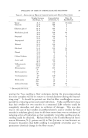
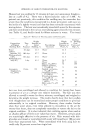
TESTING THE EFFICIENCY OF DEODORANTS 113 The experimental work, however, is of such poor caliber from a scientific point of view that it is hardly worthy of the serious attention that has been forced upon it by the promotional work of advertising men. All in all, it suffers from the following failings, shortcomings, and errors, among others, each of which is not to be found in each article examined, but every paper contains at least one, and usually many of these mistakes: 1. The use of extremely few number of subjects. Findings have even been reported in which only one subject was used! 2. The use of very few judges, usually one judge. 3. The failure to verify this judge's findings by a retest, by himself or others. 4. The failure to present the raw statistical data on which the findings are based. 5. Completely incorrect interpretations of the statistics that are pre- sented. 6. Failure to disclose the nature of the materials tested--both qualita- tive and quantitative. It seems too elementary for words that rm scien- tific periodical with any standing has any right to publicize the claims for a product whose composition is unknown. This position, taken in a cate- gorical statement by the American Medical Association, requires reafFirma- tion. There is good reason to believe that some of the work on chlorophyll was made on deodorants which contained aluminum salts! 7. Failure to exclude judges from a knowledge of the test materials, permitting psychological prejudice to run rampant in the tests. 8. Failure to use any controls in some instances, or adequate controls in others. 9. Failure to use placebos in most instances. 10. Automatic transfer of results obtained with one product to another material of different composition. This is particularly true of serious quan- titative changes in the formulas. It would be possible to choose almost any piece of work reported in this literature and show that it is hardly worthy of acceptance. To illustrate this point, permit me to cite only one article. It appeared, not in some popular journal where everything is slipshod and exaggerated, but in Post- graduate Medicine, written by Drs. Royal M. Montgomery and Henry B. Nachtigal] (2). As the report of an experiment, it is neither better nor worse than most of the writings on chlorophyll. "To further prove the effectiveness of this specially prepared chloro- phyllin, the basketball players were divided into three groups for a two- day test," write these authors. "Group 1 was given 200 rag. daily of raw chlorophyll Group 2 was given 200 mg. daily of a copper salt of chloro- phyll, and Group 3 was given nothing." The authors then present the following table:
Purchased for the exclusive use of nofirst nolast (unknown)
From: SCC Media Library & Resource Center (library.scconline.org)