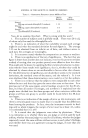
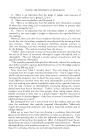
76 JOURNAL OF THE SOCIETY OF COSMETIC CHEMISTS Of course, in common with all other fields of endeavor, cosmetic patents have to be based on novel, useful, and inventive subject matter. 1. P^TENT PROTECTION ON NEW COSME*m CH•.M•C^LS With regard to new cosmetic chemicals, novelty is shown by comparing the allegedly new compounds with those of the prior art. Unless the prior art knew of identical compounds, the requirement for novelty is satisfied. Regarding use or utility, a mere general statement is all that is usually required: for example, "X (the allegedly new compound) is useful in filter- ing out undesirable rays of the sun." However, where you do not know any actual use of the claimed compound and it is merely a new intermediate in a synthesis, you have a difficult problem. Terms such as "X is useful in organic synthesis," or "X is an intermediate for perfumes" are no longer generally held to satisfy the utility requirement. Satisfying the utility requirement is not presently a problem in the cosmetic field but is a very real problem in the drug field. In thilt field many companies may be working on a synthesis involving a large number of steps and as each step is completed patent applications are filed on the intermediates right away (in order to obtain the earliest possible filing date). When the applications are filed on the intermediates, the chemists cannot be sure that they have the right synthesis in mind, and cannot, of course, take the time and expend the money to have the intermediates tested for all possible uses. There is not believed to be any present satisfac- tory solution to this problem from the drug industry's point of view, and the cosmetic industry ought to be glad that this is not one of its "head- aches." The question of what constitutes invention is one which is always de- batable. There is no positive definition of what constitutes invention, only a large number of so-called negative rules. That is to say, these negative rules tell you what is not invention. No one, including the U.S. Supreme Court, has thus far come up with a satisfactory positive rule or a state- ment of what invention is. As a practical matter, if your compound is new and the Examiner cannot find a homologue, isomer or other closely re- lated compound, you should have no great difficulty in obtaining allowance. However, as a practical matter, most new compounds are chemically closely related to known ones, and the Examiner will therefore generally reject you, on the so-called Hass and Susie doctrine (1). You will then have to show that your allegedly new compounds possess unusual and un- expected beneficial properties over those of the cited compound. The Patent OfFice adopts an "I'm from Missouri" attitude, and the best way to establish your point is by experimental evidence. This means that you have to indulge in chemical reasoning to determine what data might swing the Examiner to your side, follow this by chemical work, follow this by

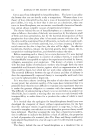
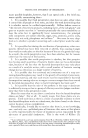
SCIENTIFIC DATA IN COSMETIC PATENT PROGRAM 77 chemical analysis of the results and then (if the results are the desired ones) place them in proper form, that is in affidavits. The original Hass and Susie case dealt with homologous compounds, but the doctrine has been extended by the Patent Office to isomers, including stereoisomers, and the Patent Office Examiners are continually endeavoring to extend the doctrine. Indeed, in one case the Patent Office Examiner ex- tended the doctrine to apply to dyestuffs having an additional C1 over the old compound (2). It was shown that the introduction of this Cl resulted in certain improved properties and hence the Patent Office Ap- peals Board rethsed to go along with the application of the Hass and Susie doctrine to this situation. This doctrine is, however, applied even though beneficial properties of the old compound were not actually known when the new compounds were made. The test which you have to meet is to show that your new com- pound has unusual and unexpected properties over those in fact possessed by the old compound whether or not these properties were known (3). Nevertheless, the Appeals Board of the Patent Office overruled the Patent Office Examiner in another case and held that the Hass and Susie rule did not apply where the claims covered the zinc, copper, and iron soaps of tetra-isobutyl phenol sulfonic acid even though the sodium salt was old (4). It was indicated that the result would have been different if the potassium and lithium salts were asserted as patentable. In summary, it can be seen that experimental evidence is required where the new chemicals involve intermediates or are closely related chemically to known compounds. 2. NF•W COSMETIC PREI'ARATIONS New Cosmetic preparations fall into three possible groups. These are preparations involving: (a) all old ingredients, (b) at least one new ingre- dient, and (c) all new ingredients. (a) With regard to new preparations comprising all old ingredients, the rule is that where the result is merely the sum of the known properties of the components you are doomed to failure without experimental evidence show- ing an unusual or unexpected result. Engaging in polemics or derogatory statements concerning the cited ref- erences or the Examiner do not help. Nor do testimonials from satisfied users or vague statements such as the claimed preparation is "less oily," "non-irritating," etc. If you, however, can show that a new compound is formed in your preparation or that certain conditions are critical or un- expected results are obtained, the Patent Office is likely to allow your claims. It is the belief of the writer that this category offers a great opportunity for the cosmetic chemist. Instead of relying upon vague statements, the
Purchased for the exclusive use of nofirst nolast (unknown)
From: SCC Media Library & Resource Center (library.scconline.org)