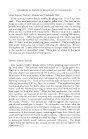
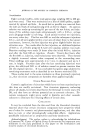
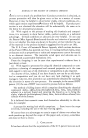
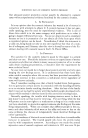
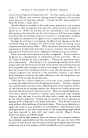
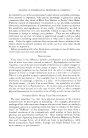
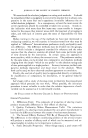
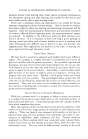
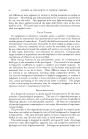
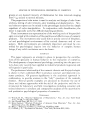
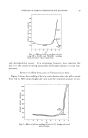
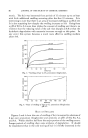
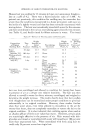
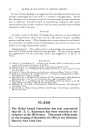
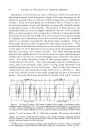
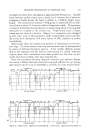
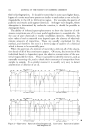
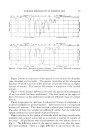
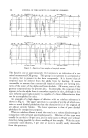
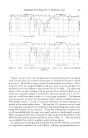
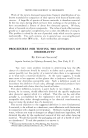
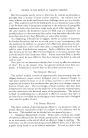
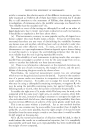
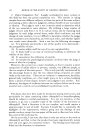
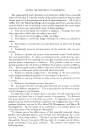
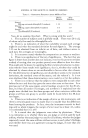
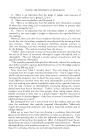
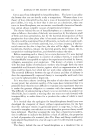
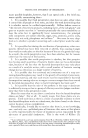
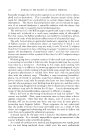
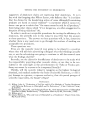
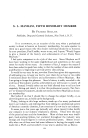
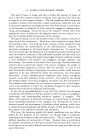
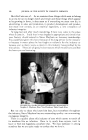
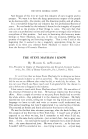
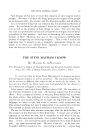
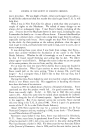
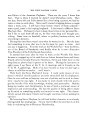
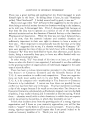
INFRARED SPECTROSCOPY OF ESSENTIAL OILS 107 4OOO WAVE NUMBERS IN CM I WAVE NUMBERS rN 3000 l$0•) 2000 IS0•) 140•) I10•) I• I1• I• • IllI I I i Ii,, • ,I, 80 I WAY LENGTH I MICRONS WAVE LENGTH IN MICRONS •o • WAV• LENGTH IN M•CRONS WAVE LENGTH Figure 6. Upper curve: Spectrum of "myrtle oil." Lower curve: Spectrum of diethyl phthalate. Figure 7 shows at the top the spectrum of acetylated lavandin compared with (center) that of a material purchased as acetylated lavandin, which it was not. Obviously a large amount of some acetate was present. Puri- fying the ester by careful distillation did not result in much change in its spectrum but it was different than any we had in our files. The spectrum told us that we were dealing with an acetate of an alcohol which was of moderate molecular weight if rnonohydric (the ester bands at 8.1 and 9.7 microns would have been weaker in a very large molecule). No benzene ring was present as shown by the absence of the various correlation bands. The double band at 7.2 and 7.4 microns indicated two methyl groups at- tached to the same carbon atom. The band at 11.3 microns was too weak to be regarded as evidence of a terminal unsaturated CH2 group, unless such group were presel•t as an impurity. From this information it seemed not at all improbable that the ester was nopyl acetate or hydronopyl acetate. When samples of these were obtained the spectra showed the identity of the unknown ester with nopyl acetate (lower curve of Fig. 7). This material is now available from several suppliers under various n0mes. In addition to checking essential oils and mixtures for identity, constancy of composition, adulteration, and dilution, infrared spectrophotometry is

108 JOURNAL OF THE SOCIETY OF COSMETIC CHEMISTS WAVE LEN•,TN JN MICRONS WAVE L•:N•,TH IN MICRONS WAYS NUMSSRS IN cM• WAv• NUMBERS IN ½MJ $y•... 4 ooo 3ooo 2• 2• is• J400 r3• 12• i1• • • 7• 625 • BO , I I 6 i i • r I 2 4 WAV[ LENGTH N MICRONS 7 e 9 J0 I J WAVE •EN•TH IN I•ICRONS 4 m•eri•l mislabeled ace•gla•ed la•and•n. Lo•r •r•: Specm]• o• nopsi of great value in working out the composition of natural oils. Any such study involves the separation of these usually complex mixtures into their component parts. In a few cases chemical separations may be made, and distillation is often helpful, but procedures such as chromatography and countercurrent extraction are usually best. However, these yield very small amounts of ma, terials. Infrared spectrophotometry is by far the most universally applicable method for the analysis of these minute quanti- ties of unknown organic compounds.
Purchased for the exclusive use of nofirst nolast (unknown)
From: SCC Media Library & Resource Center (library.scconline.org)