116 JOURNAL OF THE SOCIETY OF COSMETIC CHEMISTS Let us pass from chlorophyll to hexachlorophene. The latter is so unlike the former that one can hardly make a comparison. Whereas there is no theory of how chlorophyll works, but a mass of documentary evidence, of poor caliber, it is true, to show that it does act as a deodorant, when one turns to hexacfilorophene, one enconnters considerable theoretical founda- tion and an almost complete vacuum of experimental evidence. The theory behind the use of hexachlorophene as a deodorant is some- what as follows: that odors of the body are caused not by the inherent smell of fresh and clean perspiration, but by the bacterial decomposition of that perspiration that takes place after it has made contact with the skin. If the skin could be maintained free of all bacteria, no body odor would result. This is impossible, it is freely admitted, but, it is then assumed, if the bac- terial count on the skin is kept low, the odor will be slight. An effective bactericide, therefore, reduces the bacterial growth, hence reduces the de- composition resulting therefrom, and therefore reduces the odor. Before examining such a theory, let us state that even if it were beyond the realm of our imagination to conceive of a fallacy therein, it would still be scientifically inacceptable to replace the experimental method by theory, syllogism, assumption, and conjecture. The history of sci4nce is strewn with the dead bodies of enthusiastic workers who brought forth the most remarkable and fantastic theories, against which no argumentation at the time could be found, but which did not work when subjected to practice. The essential difference between the age of science and that of alchemy is that the experimentally unproved theory is inacceptable until such time as it can be substantiated or disproved. It is true that a theory involving the realm of odor does not lend itself to easy proof, but scientists worthy of the name have reiterated that it is precisely those theories most difficult to translate into experiment that one is under the greatest obligation to examine with the utmost skepticism. The difficulty of substantiating a theory is not an invitation to accept it on blind faith, but is merely a warning that one most not rush forward with irresponsibility to make claims for a product the value of which is most doubtful. It is ironical that the apologists for hexachlorophene should have ever developed the viewpoint of theory without experimentation, for the fact that this substance retains its germicidal power in soap was, in fact, dis- covered in complete contradiction to everything that previous theory would have indicated. Had they accepted the view that a theoretical considera- tion is sufficient to indicate the abilities or lack of abilities, the properties or lack of properties of a material, then Drs. Kunz and Gump would never have placed this phenol into a bar of soap to see if it still retained its germi- cidal value. The theory behind the use of hexachlorophene as a deodorant has so

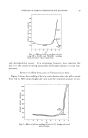
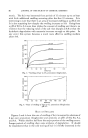
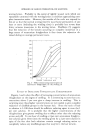
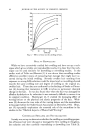
TESTING THE EFFICIENCY OF DEODORANTS 117 many possible loopholes, however, that I can spend only a few brief mo- ments quickly summarizing them: 1. It is possible that fresh perspiration does have an odor, either when it comes from all people or from some, and that the work determining that it is odorless cannot be verified experimentally. Killian defines sweat as "the mixture of excretory products, including water, of the coil glands" and goes on to point out that it "contains practically the same metabolites as does the urine but in significantly lower concentrations the principal solid components are sodium chloride, sugar, urea, ammonia, amino acids, lactic acid, uric acid, phosphates and sulfates." One must be very skep- tical as to whether a product answering such a description would be odor- ] eSS. 2. It is possible that during the sterilization of perspiration, other com- ponents thereof may have been removed or altered, thus causing changes that would not take place on the skin because of the use of a germicidal soap. As a result, the sterile perspiration may have been odorless, but for reasons other than the removal of the bacteria. 3. It is possible that sterile perspiration is odor]ess, but that perspira- tion having small quantities of bacteria therein does not have diminished odor, because of the fact that the bacterial decomposition may take place as a result of a catalytic action, with a small number of bacteria causing change just as obnoxious as a larger number of bacteria. 4. It is possible that the continued and continuous use of a soap con- taining hexachlorophene may result in the growth of bacterial strains resist- ant to this material, and that such strains may be responsible for bacterial decomposition causing odors as strong as or even stronger than those caused by bacterial decomposition when no bactericidal agent has been used.* 5. It is possible that the odor of the perfume in the soap or deodorant is sufficiently strong so that no group of olfactory-sensitive judges can deter- mine that there is less perspiration odor. Does this mean that we can draw a conclusion that the hexachlorophene claims are false? Not at all. It merely means that these claims are un- proved. Until such time as there is a body of acceptable evidence to show that hexachlorophene works as a deodorant, the claims based on the theory cannot be given serious consideration. Parenthetically, I would like to mention that there is, to my knowledge, one--and only one--published piece of literature that seems at first glance to verify experimentally the theory of deodorant action expounded by the advocates of germicidal deodorants. This is the work of Killian (3). * I am informed in a private communication from M. J. Shnitzler, Gillette Safety Razor Co., Boston, Mass., that unpublished studies have been conducted by that company on the skin flora of people who have been using a shaving cream containing hexachlorophene daily over a period of four years, and that no such strains have been encountered.
Purchased for the exclusive use of nofirst nolast (unknown)
From: SCC Media Library & Resource Center (library.scconline.org)