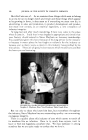
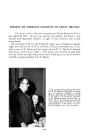
S. L. MAYHAM, FIFTH HONORARY MEMBER By FRAZIER SINCLAIR Publisher, Drug and Cosmetic Industry, New York I, N.Y. IT •S CUSTOMAP.¾, on an occasion of this sort, when a professional society is about to bestow an honorary membership, for some speaker to think up a good reason why this chosen individual should be so honored. As your president, Paul Laufl:er, wrote to me, and I quote "Would I agree to give a r•sum• of the history and achievements of our friend, Steve Mayham." I feel quite competent to do a job of that sort. Steve Mayham and I have been working in the same neighborhood and sometimes on the same street for nearly thirty years. As a matter of fact, I suspect the reason I have been asked to speak here today is that the number of men with similar qualifications is beginning to provide pretty slim picking. It would be very easy for me, now that I have been given this opportunity of addressing you, to keep you tied to your chairs for an hour or two while I reminisced about the history and achievements of Steve Mayham. But I am going to forego this pleasure. Steve's history is safely recorded in the archives of the industry and his achievements are well known to nearly all of you. Instead I would rather use my brief allotted time to tell you how singularly fitting and timely it is that this professional society, THe. Som- •.T¾ Or Cosu•.Tm CH•.•4•STS, should now extend to Steve Mayham an honor- ary membership. But before I do that I should like to change the subject briefly, or, as advertising men say, to build up the background. Today, looking at this large audience, made up of so many professional men in our industry, and realizing that I am talking to a professional society of American cosmetic chemists, I am conscious of a new era in our industry. It seems just a few years ago (actually only about twenty) when hardly any company in our industry employed a chemist. Those were the days of the practical man and the formulator. Most of these men were intelli- gent, hard-working fellows, but scattered throughout the industry were strange and bizarre figures in various professional poses. Almost invari- ably when one of these men had some influence in buying, the supply trade made him a Ph.D. and henceforth it was wise to address him as Doctor. 120

S. L. MAYHAM, FIFTH HONORARY MEMBER 121 The point I want to make, and this is within the memory of many of you, is that the cosmetic industry of twenty years ago had very little use, or respect, for the cosmetic chemist. The few companies which employed a cosmetic chemist, with less than a dozen exceptions, rated him very low in executive importance and expected very little from him as a contribution to the business, as compared to those executives engaged in selling, adver- tising, and packaging. As for the rest of the industry--98 per cent of the companies--none of these saw the slightest reason for any research or, in fact, for anything within the province of the chemist. Perhaps we should not be too harshly critical of the cosmetic industry in these days of her reformation. There were other industries as lame, blind, and halting as this. Not long ago I was reading a rather wonderful book which outlined the achievements of the pharmaceutical industry. A particular paragraph in this book deeply impressed me. It stated here that thirty years ago the pharmaceutical companies produced nothing each year but formula variations of old established remedies and that each year, each company would use this largely meaningless formula variation to make a loud hullabaloo with doctors and druggists, through salesmen and advertising. As a result, at this time, thirty years ago, the pharmaceutical industry had no particular respect from doctor, druggist, the public or from government agencies in contact with the business. It was at this time that insulin, the first of those great discoveries so often called miracles, appeared, to be soon followed by sulfas, the antibiotics, and other great discoveries. Today, pharmaceutical companies each accept courageous research as the first bulwark of their survival. The industry has earned the deepest respect of doctors, druggists, the public and the Government. The chemist in this industry has no occasion to question his critical impor- tance to his company or to have any complexes in regard to other necessary business functions such as selling and advertising. It may be an oversimplification to say this, but I think that the great contribution the chemist can bring to industry, when he is given courageous, enthusiastic and understanding executive support, is integrity. The fruits of his research, on fortunate occasions, are a great boon to mankind and a rewarding repayment to his company, but consistently his work is directed toward the development of products which perform, which have a needed functional purpose and which, because of this performance, earn the respect of the industry's retailers and the public. This year, the American people will spend something over one billion dollars for the products of our industry--an all-time high in constantly expanding annual industry sale over many years. This is a record to bring jubilant speeches, yet we hear few of them. Instead, there is everywhere an industry uneasiness, as if we were all aware that we must leave many of the things we are so used to behind us and we are not quite sure what we can use in their place.
Purchased for the exclusive use of nofirst nolast (unknown)
From: SCC Media Library & Resource Center (library.scconline.org)